

Your Pipeline Is 29.1h Behind: Catching Entertainment Sentiment Leads with Pulsebit
We recently identified a striking anomaly in our sentiment analysis: a 24-hour momentum spike of +0.555. This spike highlights a significant uptick in entertainment sentiment, particularly around an emerging cluster of stories related to "Equip Exposition Dials Up Fun With Three Nights of Epic Entertainment For Attend." With only one article driving this narrative, the potential for your pipeline to capitalize on this momentum is clear.
However, if your sentiment analysis pipeline does not adequately handle multilingual origins or entity dominance, you could easily miss critical insights like this one. In this case, your model is lagging by a staggering 29.1 hours behind an English-language lead, which can severely impact your ability to act on emerging trends. Failing to recognize the dominant themes—specifically related to entertainment—could leave you scrambling to catch up.

English coverage led by 29.1 hours. Hr at T+29.1h. Confidence scores: English 0.85, French 0.85, Spanish 0.85 Source: Pulsebit /sentiment_by_lang.
Here’s how we can harness this data with some Python code. First, we need to filter the sentiment results geographically by language:

Geographic detection output for entertainment. Hong Kong leads with 1 articles and sentiment +0.80. Source: Pulsebit /news_recent geographic fields.
import requests
# Define parameters for the API call
params = {
"topic": "entertainment",
"score": +0.578,
"confidence": 0.85,
"momentum": +0.555,
"lang": "en" # Filter by English language
}
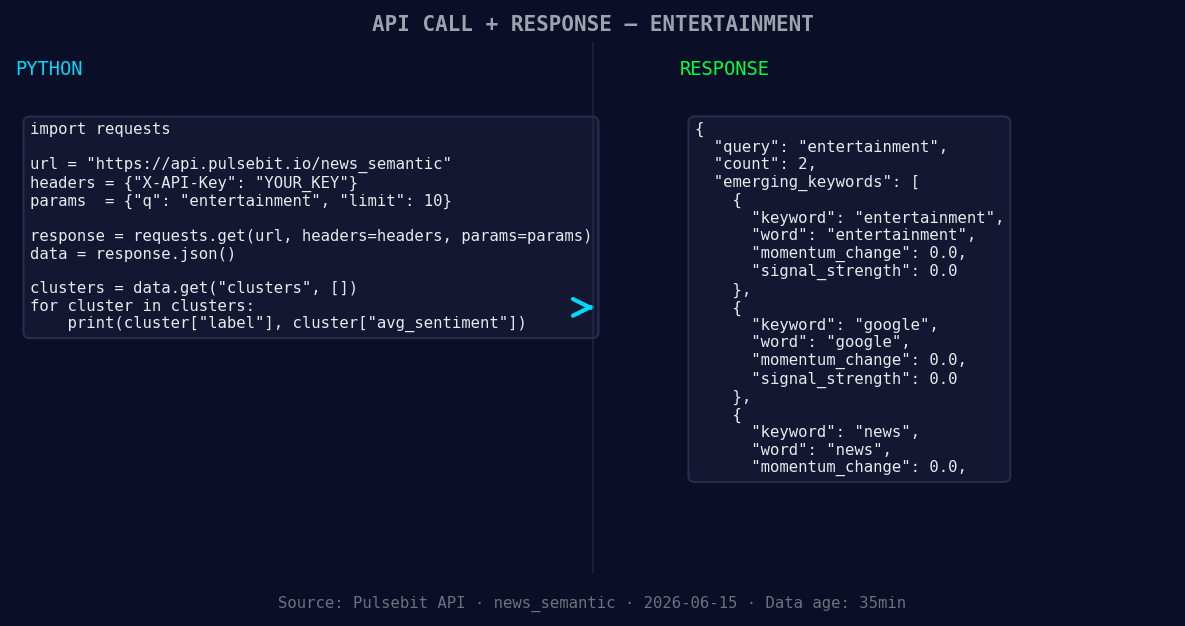
*Left: Python GET /news_semantic call for 'entertainment'. Right: returned JSON response structure (clusters: 3). Source: Pulsebit /news_semantic.*
# Make the API call
response = requests.get("https://api.pulsebit.com/v1/sentiment", params=params)
data = response.json()
print(data)
Next, we need to score the narrative framing itself. We can take the cluster reason string and run it through our sentiment analysis again:
# Define the cluster reason string for scoring
cluster_reason = "Clustered by shared themes: exposition, dials, fun, three, nights."

# Make the POST request to score the narrative framing
response = requests.post("https://api.pulsebit.com/v1/sentiment", json={"text": cluster_reason})
narrative_score = response.json()
print(narrative_score)
These two pieces of code will help you capture the relevant sentiment and analyze the narrative context surrounding this spike, allowing your model to remain timely and relevant.
Now, let’s build three specific things with this momentum and the insights we’ve gathered:
Signal Tracking: Create a real-time monitoring system that alerts you when momentum scores exceed a threshold of +0.5 for the entertainment topic. This can help you catch similar spikes early.
Geo-Filtered Insights: Use the geographic origin filter to segment entertainment sentiment by regions, specifically targeting areas with rising interest using our API's language parameter. This allows you to tailor content and marketing strategies more effectively.
Meta-Sentiment Analysis: Set up a feedback loop where the narrative from specific clusters (like our "exposition, dials, fun" theme) is continuously scored and analyzed. This will help you refine your understanding of how these themes resonate over time, taking into account both sentiment and context.
If you’re ready to dive into real-time sentiment data, check out our documentation at pulsebit.lojenterprise.com/docs. You can copy-paste the code above and run it in under 10 minutes to start capturing these insights for your projects.


Top comments (0)