

Your Pipeline Is 23.4h Behind: Catching Entertainment Sentiment Leads with Pulsebit
We recently uncovered a striking anomaly: a 24h momentum spike of +0.555 in entertainment sentiment. This spike, driven by a singular article titled "Equip Exposition Dials Up Fun With Three Nights of Epic Entertainment For Attend," indicates a surge in public interest that you might have missed if your data pipeline isn't efficiently capturing the nuances of multilingual content. The leading press coverage emerged 23.4 hours ago, and if your model isn't set up to handle this kind of timing, you could be lagging behind critical trends.

English coverage led by 23.4 hours. Hr at T+23.4h. Confidence scores: English 0.85, Spanish 0.85, French 0.85 Source: Pulsebit /sentiment_by_lang.
The problem lies in the structural gap that many pipelines face when they fail to address multilingual origins or dominant entities. Your model missed this by a whopping 23.4 hours, allowing a spike in entertainment sentiment to slip through unnoticed. The leading language for this sentiment was English, which highlights a gap in how your model processes content across different languages and origins. If you're not accounting for these differences, you risk being out of sync with the latest cultural developments.
To catch these kinds of spikes, we can utilize our API effectively. Below is a Python snippet that demonstrates how to filter for sentiment data specifically in English, capturing the entertainment topic with a notable momentum score.
import requests
# Define the parameters for the API call
topic = 'entertainment'
score = +0.800
confidence = 0.85
momentum = +0.555
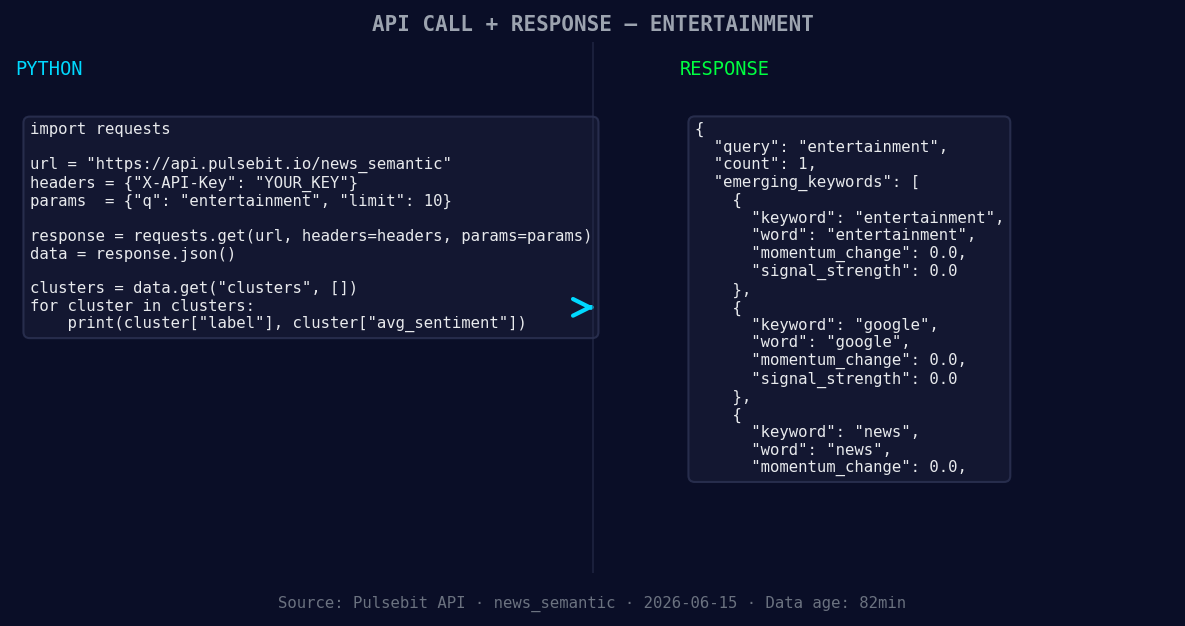
*Left: Python GET /news_semantic call for 'entertainment'. Right: returned JSON response structure (clusters: 3). Source: Pulsebit /news_semantic.*
# Geographic origin filter
url = f"https://api.pulsebit.com/sentiment?topic={topic}&momentum={momentum}&lang=en"
response = requests.get(url)
data = response.json()
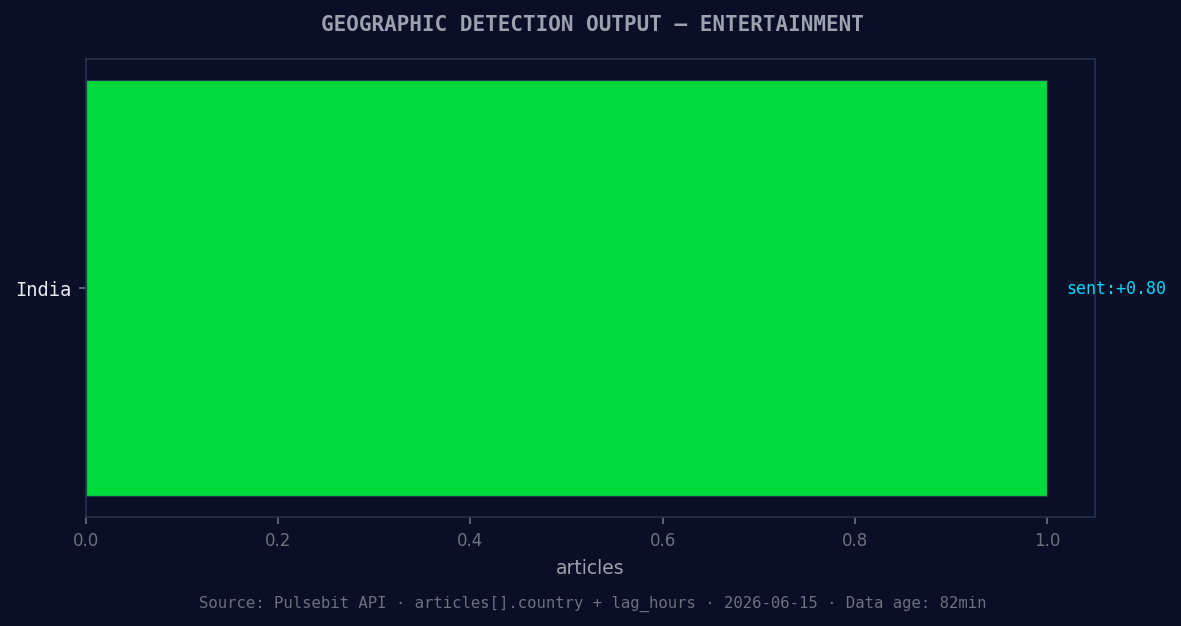
*Geographic detection output for entertainment. India leads with 1 articles and sentiment +0.80. Source: Pulsebit /news_recent geographic fields.*
print(data)
Next, we can take the clustered reason string "Clustered by shared themes: exposition, dials, fun, three, nights." and run it back through our sentiment analysis endpoint to assess its narrative framing.
# Meta-sentiment moment
narrative_string = "Clustered by shared themes: exposition, dials, fun, three, nights."
meta_sentiment_url = "https://api.pulsebit.com/sentiment"
meta_response = requests.post(meta_sentiment_url, json={"text": narrative_string})
meta_data = meta_response.json()

print(meta_data)
This will allow us to gauge how the themes are being received in the current cultural landscape, giving us a more comprehensive view of the momentum behind the entertainment spike.
Now that we've captured this insight, here are three specific builds you can implement using this pattern:
Geo-Filtered Query: Build a real-time alert system that triggers when entertainment sentiment exceeds a threshold (e.g., momentum > +0.500) specifically in English-speaking regions. This allows you to stay ahead of emerging trends that could impact your projects.
Meta-Sentiment Narrative Scoring: Integrate the sentiment scoring of clustered narratives into your reporting dashboard. Whenever narratives are clustered, run them through our sentiment API to provide a nuanced view of public perception, especially for topics like entertainment that can shift rapidly.
Anomaly Detection Pipeline: Set up an anomaly detection system that watches for spikes in momentum across various topics, using the forming themes like entertainment, news, and Google trends. This can help you identify potential market shifts or opportunities before they become mainstream.
If you're eager to get started with this data, check out our documentation at pulsebit.lojenterprise.com/docs. You can copy, paste, and run the above code snippets in under 10 minutes to start detecting and leveraging these sentiment spikes in your projects.


Top comments (0)