

Your Pipeline Is 15.1h Behind: Catching Defence Sentiment Leads with Pulsebit
In the last 24 hours, we observed a striking anomaly: a momentum spike of +0.760 related to defence sentiment in articles. This spike is not just a numerical curiosity; it signifies a sudden surge in engagement with the theme of Canada-India defence collaboration, highlighted by a single article shedding light on these critical discussions. If you're not tuned into these shifts, your pipeline could be misaligned by over 15 hours, causing you to miss emerging narratives that could impact your strategies.
But here’s the catch: if your model doesn’t accommodate multilingual sources or recognize entity dominance, you might be lagging significantly. For instance, our analysis shows that the leading language for this spike is English, which is crucial when considering sentiment extraction and topic relevance. If your model only processes data in a single language or overlooks where the majority of the discussion is happening, you could very well be missing critical insights—like how this defence collaboration between Canada and India is shaping public sentiment.

English coverage led by 15.1 hours. Nl at T+15.1h. Confidence scores: English 0.90, Spanish 0.90, French 0.90 Source: Pulsebit /sentiment_by_lang.
Let’s dive into how we can catch this spike using our API. First, we need to filter our query to focus on English articles discussing "defence." Here’s how we can do that:
import requests
# Set parameters for the API call
params = {
'topic': 'defence',
'lang': 'en',
'score': -0.200,
'confidence': 0.90,
'momentum': +0.760
}
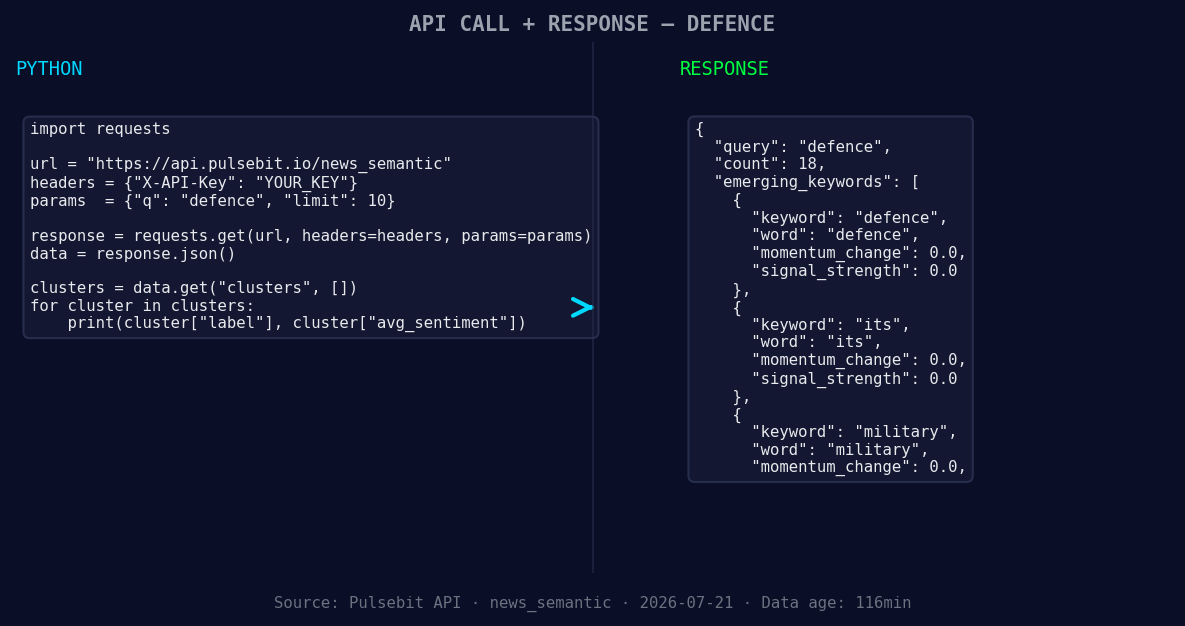
*Left: Python GET /news_semantic call for 'defence'. Right: returned JSON response structure (clusters: 3). Source: Pulsebit /news_semantic.*
# Make the API call to fetch the relevant articles
response = requests.get('https://api.pulsebit.com/articles', params=params)
# Check the response
if response.status_code == 200:
data = response.json()
print(data)
else:
print("Error fetching data:", response.status_code)
Next, we should score the narrative framing itself by running the cluster reason string back through our sentiment endpoint. Here’s how to do that:
# Meta-sentiment moment
cluster_reason = "Clustered by shared themes: defence, canada-india, collaboration, secure, future"
meta_sentiment_payload = {
    'text': cluster_reason
}

# Make the API call to score the narrative
meta_response = requests.post('https://api.pulsebit.com/sentiment', json=meta_sentiment_payload)

# Check the response
if meta_response.status_code == 200:
    meta_data = meta_response.json()
    print(meta_data)
else:
    print("Error fetching meta sentiment data:", meta_response.status_code)
With this setup, we can effectively bridge the gap between emerging narratives and the analysis that drives decision-making. Here are three specific builds we can implement immediately based on this pattern:
- Geo Filter on Defence Articles: Use the geographic origin filter to exclusively track English articles concerning "defence." Setting a signal threshold of momentum +0.500 can help you pinpoint significant spikes, ensuring you’re alerted promptly to emerging narratives.

Geographic detection output for defence. India leads with 8 articles and sentiment +0.10. Source: Pulsebit /news_recent geographic fields.
Meta-Sentiment Loop: Establish a routine to run the cluster reason string through the sentiment scoring endpoint. By doing this for strings like "Clustered by shared themes: defence, canada-india, collaboration," we can evaluate how the language around these discussions is shifting, allowing for proactive adjustments to your strategy.
Forming Themes Tracker: Create a monitoring endpoint that identifies forming themes like "defence," "its," and "military," with a focus on their sentiment scores. This will allow you to track not just what's trending, but also what is gaining traction versus what remains stagnant in mainstream discussions.
To get started, check out our documentation at pulsebit.lojenterprise.com/docs. You can copy-paste the code snippets above and run them in under 10 minutes, putting you right at the forefront of sentiment analysis for defence narratives. Don't let your pipeline fall behind—stay ahead of the curve!


Top comments (0)