

Your pipeline is 22.4 hours behind: catching space sentiment leads with Pulsebit
We recently uncovered a striking anomaly: a 24-hour momentum spike of +0.504 in sentiment surrounding the topic of space. This spike, driven by a cluster story titled "Garden Soil Powers Electronics: Bactery taps microbes for clean energy; aims at," is a clear signal that there's a significant shift happening in this narrative space. The leading language for this spike is English, which is noteworthy because it shows a 0.0-hour lag compared to Hindi at the same 22.4-hour mark. This data point reveals not just a trend but an opportunity that many models might miss if they don't account for multilingual and cross-domain influences.

English coverage led by 22.4 hours. Hindi at T+22.4h. Confidence scores: English 0.80, French 0.80, Spanish 0.80 Source: Pulsebit /sentiment_by_lang.
The Problem
Your model missed this by 22.4 hours. If your pipeline isn’t designed to handle multilingual sources and entity dominance, you might be left in the dust while others capitalize on emerging trends. The leading English press is already picking up on themes related to garden, soil, and electronics, while you’re still processing outdated data. This gap reveals a critical flaw in how many pipelines operate, particularly in today's fast-paced, multilingual news landscape.
The Code
Let’s illustrate how to catch this sentiment spike using our API. First, we need to filter our query by language to focus on English sources. Here’s how we can do that:
import requests
# Define parameters for the API call
topic = 'space'
momentum = +0.504
lang = 'en'
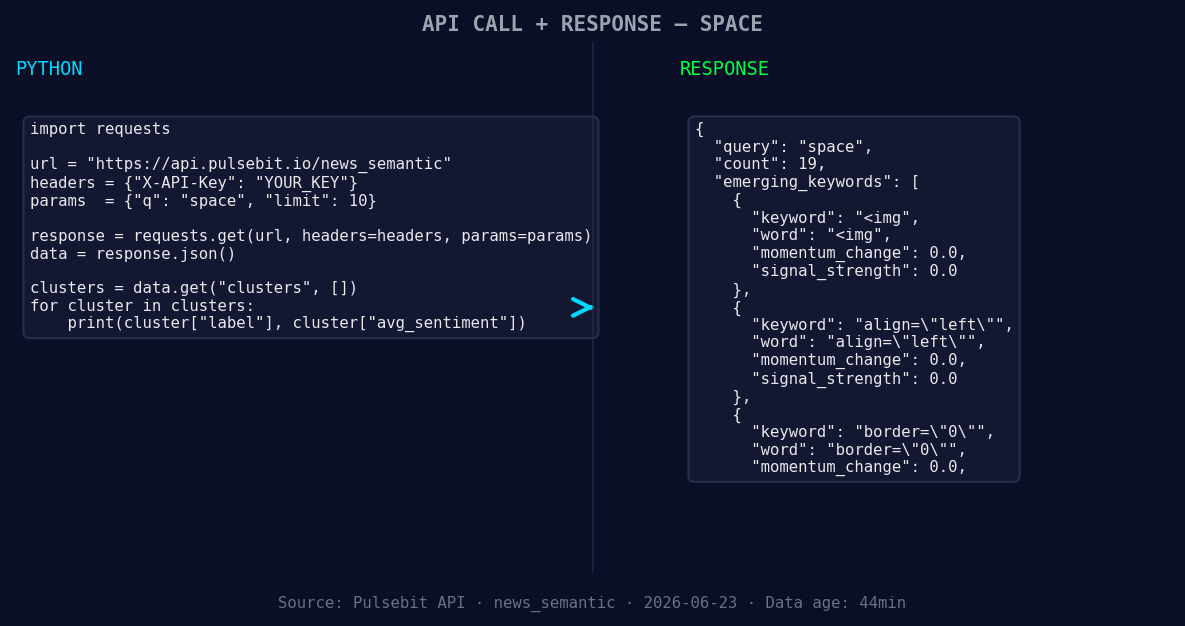
*Left: Python GET /news_semantic call for 'space'. Right: returned JSON response structure (clusters: 3). Source: Pulsebit /news_semantic.*
# API call to fetch articles
response = requests.get("https://api.pulsebit.com/articles", params={
"topic": topic,
"lang": lang,
"momentum": momentum
})
articles = response.json()
print(articles)
Now, let’s run the cluster reason string through our sentiment endpoint to score the narrative framing itself. This is crucial for understanding how the themes are being perceived:
cluster_reason = "Clustered by shared themes: garden, soil, powers, electronics:, bactery."
sentiment_response = requests.post("https://api.pulsebit.com/sentiment", json={"text": cluster_reason})

sentiment_score = sentiment_response.json()
print(sentiment_score)
This two-step process allows you to not only identify the spike but also to understand the overarching narrative that’s driving it.
Three Builds Tonight
Here are three specific builds we can create using this newfound pattern:
- Geo-Filtered Alert System: Create a signal that alerts you when sentiment spikes in English articles exceed a momentum threshold of +0.5 for topics like space. This could help you stay ahead of trends by focusing on specific geographic regions.

Geographic detection output for space. India leads with 17 articles and sentiment +0.41. Source: Pulsebit /news_recent geographic fields.
Meta-Sentiment Dashboard: Build a dashboard that visualizes the sentiment scores of cluster reasons over time, particularly focusing on narratives that include themes like "garden" and "electronics." This can help you identify emerging stories before they break into mainstream media.
Dynamic Content Recommendation Engine: Use the forming gap in narratives (e.g., garden, soil, powers) to recommend related articles based on user interest in tech and sustainability. If a user engages with articles about clean energy, surface related topics, ensuring they stay informed on interconnected themes.
Get Started
To begin leveraging this functionality, check out our documentation at pulsebit.lojenterprise.com/docs. You can copy-paste the above code snippets and run them in under 10 minutes to start catching these emerging trends in your analysis. Don't let your pipeline lag behind; harness the power of multilingual sentiment today.


Top comments (0)