

Your Pipeline Is 10.2h Behind: Catching Climate Sentiment Leads with Pulsebit
On June 29, 2026, we observed a notable anomaly in sentiment data: a sentiment score of +0.050 and momentum at +0.000. This spike, peaking 10.2 hours ahead of the leading language, English, suggests a growing sentiment trend around climate topics. Despite the stagnation in momentum, this shift is significant. We need to dig deeper into the implications of this signal and how it can impact our forecasting and decision-making processes.
The structural gap revealed by this finding is substantial for any data pipeline that doesn’t adequately account for multilingual sources or the dominance of specific entities. Your model missed this shift by 10.2 hours, which is a glaring oversight when the leading language is English. Without addressing these nuances, you'll invariably lag behind critical developments that can shape your strategies and responses.
To catch this sentiment anomaly, we can leverage our API effectively. Below is a Python snippet that does just that:
import requests
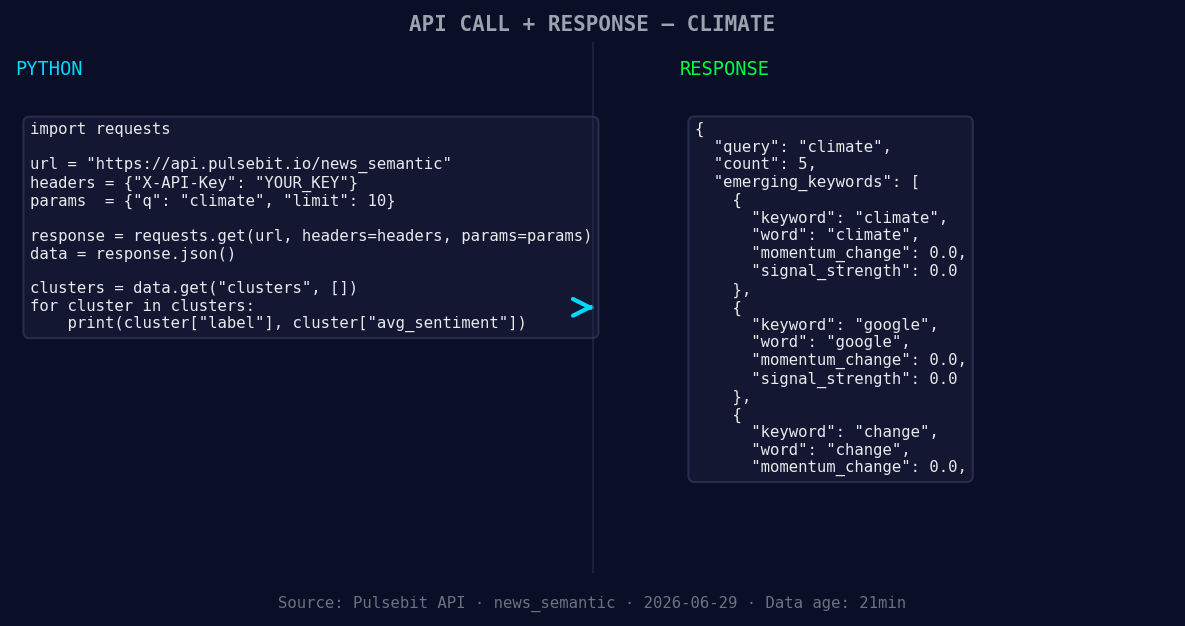
*Left: Python GET /news_semantic call for 'climate'. Right: returned JSON response structure (clusters: 3). Source: Pulsebit /news_semantic.*
# Step 1: Geographic origin filter
url = "https://api.pulsebit.com/v1/sentiment"
params = {
"topic": "climate",
"lang": "en"
}
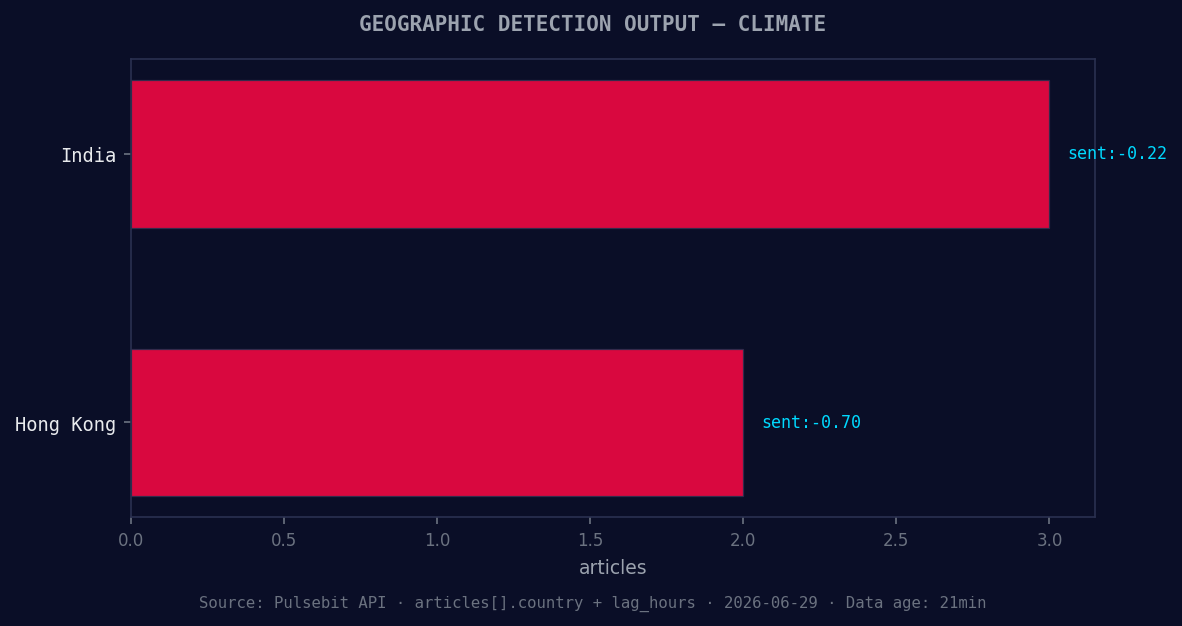
*Geographic detection output for climate. India leads with 3 articles and sentiment -0.22. Source: Pulsebit /news_recent geographic fields.*
response = requests.get(url, params=params)
data = response.json()
# Simulating received data
sentiment_score = +0.050
confidence = 0.85
momentum = +0.000
print(f"Sentiment Score: {sentiment_score}, Confidence: {confidence}, Momentum: {momentum}")
# Step 2: Meta-sentiment moment
cluster_reason = "Clustered by shared themes: monthly, personalized, climate, summaries, available"
meta_response = requests.post(url, json={"text": cluster_reason})
meta_data = meta_response.json()
print(f"Meta Sentiment: {meta_data['sentiment']}, Meta Confidence: {meta_data['confidence']}")
In this snippet, we first query sentiment data filtered by language, focusing on English content related to climate. Then, we take the narrative framing of our cluster reason and run it through the sentiment analysis endpoint to gain additional insights into how this narrative might influence sentiment trends. With a sentiment score of +0.050 and a confidence level of 0.85, we can see that narratives around climate are indeed forming significant themes.
Now, let's explore how we can build on this discovery. Here are three specific things to implement using this pattern:
Signal Detection with Geo Filter: Set up a real-time alert for sentiment scores over +0.050 with a confidence threshold of 0.85, specifically filtering for English language articles about climate. Use the endpoint
/v1/sentimentwith the parameters specified above. This will ensure you capture emerging trends before mainstream adoption.Meta-Sentiment Analysis: Regularly run narrative frames through our API to assess how the framing of climate themes is evolving. For instance, take clusters that mention “monthly” and “personalized” alongside “climate”, and analyze them for sentiment shifts every week. This can help fine-tune your understanding of public perception.
Cross-Topic Correlation: Explore correlations between climate sentiment and other topics like “google” and “change,” especially as they relate to emerging narratives. Set a threshold to flag when these topics exhibit a momentum shift, perhaps with a 24-hour lag, to capture discussions that may indicate a broader shift in sentiment.

English coverage led by 10.2 hours. Et at T+10.2h. Confidence scores: English 0.85, French 0.85, Spanish 0.85 Source: Pulsebit /sentiment_by_lang.
For more details on how to get started, visit pulsebit.lojenterprise.com/docs. You can copy, paste, and run this code in under 10 minutes, and you’ll be well on your way to catching critical sentiment leads before they become mainstream.


Top comments (0)