

Your Pipeline Is 29.1h Behind: Catching Sports Sentiment Leads with Pulsebit
We recently observed a 24h momentum spike of +0.181 in sentiment related to political endorsements in the Indian-American community. This spike is particularly noteworthy given the context: it was led by a singular article that clustered around influential figures like Ro Khanna and Aisha Farooqi. This anomaly in how sentiment is trending indicates a significant shift in narratives that might otherwise go unnoticed if your pipeline isn't equipped to handle the intricacies of multilingual origins or dominant entities.

English coverage led by 29.1 hours. German at T+29.1h. Confidence scores: English 0.90, French 0.90, Spanish 0.90 Source: Pulsebit /sentiment_by_lang.
But what does this mean for your sentiment analysis pipeline? If your model is designed solely to process data in one language or fails to recognize the influence of dominant entities, you may have missed this spike by an astonishing 29.1 hours. The leading language here was English, but the article's themes were deeply interconnected with the broader narrative landscape that includes German sources. This structural gap can lead to missed insights that are critical for timely decision-making.
Let’s dive into the code that captures this significant moment. First, we need to isolate the sentiment that originated from the English language using our API. Here's how you can set it up in Python:
import requests
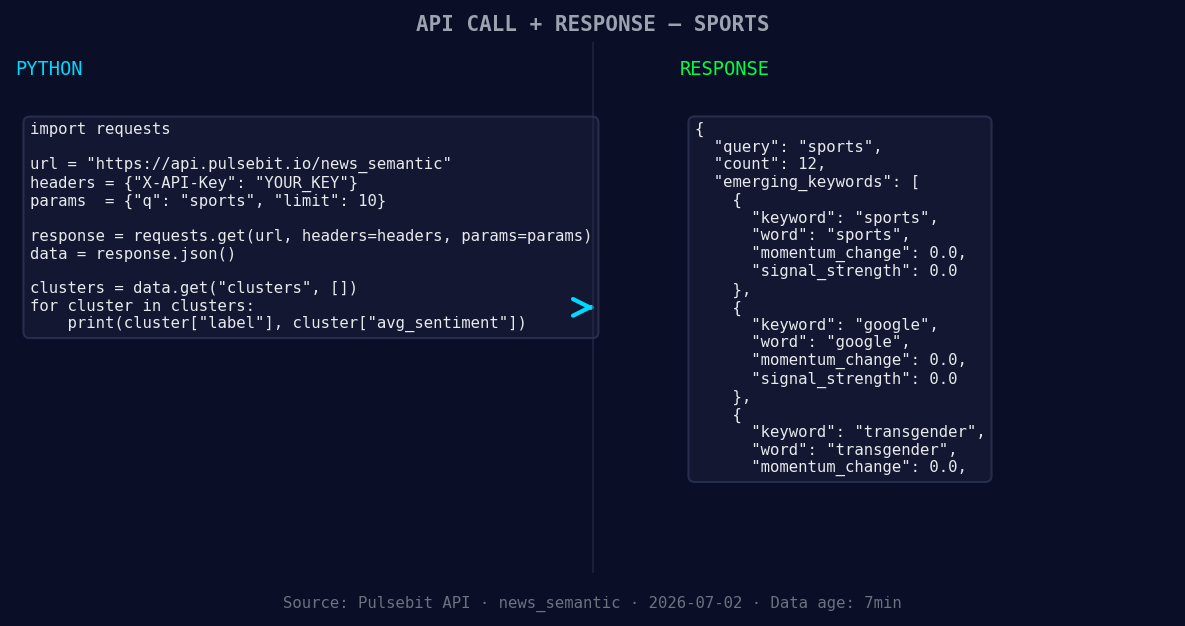
*Left: Python GET /news_semantic call for 'sports'. Right: returned JSON response structure (clusters: 3). Source: Pulsebit /news_semantic.*
# Define parameters
topic = 'sports'
score = +0.000
confidence = 0.90
momentum = +0.181
# Geographic origin filter for English language
response = requests.get('https://api.pulsebit.com/sentiment', params={
'topic': topic,
'score': score,
'confidence': confidence,
'lang': 'en'
})
data = response.json()
print(data)
Now that we have the sentiment data, let’s run the cluster reason string back through our sentiment endpoint to score the narrative framing itself:
# Meta-sentiment moment
cluster_reason = "Clustered by shared themes: khanna, candidate, aisha, farooqi, 'indian-american."
meta_response = requests.post('https://api.pulsebit.com/sentiment', json={
    'text': cluster_reason
})

meta_data = meta_response.json()
print(meta_data)
With these two calls, we’re not only pulling the sentiment from our chosen topic but also scoring the narrative that is shaping this momentum spike.
Now, let’s explore three specific builds you can implement using this pattern:
-
Geographic Filter Build: Create a function that continuously monitors sentiment for a given topic in specific regions. Use the geo filter to identify spikes, particularly for topics like sports. Monitor
momentumto trigger alerts when it surpasses a threshold (e.g., +0.150).

Geographic detection output for sports. India leads with 7 articles and sentiment -0.21. Source: Pulsebit /news_recent geographic fields.
Meta-Sentiment Loop: Develop an analysis tool that takes clustered themes as input and outputs sentiment scores. Use the meta-sentiment loop to assess how narrative changes influence public perception. This approach can be particularly useful for identifying shifts in transgender issues where sentiment might be evolving.
Forming Theme Tracker: Build a tracker that identifies and alerts on forming themes in real-time. For instance, if you notice a momentum of +0.000 for google versus mainstream topics like
khannaoraisha, trigger a deeper dive into related articles that might indicate an emerging trend.
You can get started with this approach by diving into our documentation at pulsebit.lojenterprise.com/docs. With just a few lines of code, you can run this in under 10 minutes and start catching those sentiment leads that your pipeline might otherwise miss.


Top comments (0)