

Your 24h momentum spike of -0.245 in cybersecurity sentiment is telling. It suggests a notable shift in how this topic is perceived, particularly in relation to the "BMTC's Smart Ticketing Initiative." With press coverage lagging behind by 28.6 hours, it’s clear that sentiment is moving faster than your pipeline can keep up with. If you’re relying solely on mainstream narratives, you might miss crucial developments and insights that could impact your decisions.
This situation reveals a significant structural gap in any sentiment analysis pipeline that doesn't effectively handle multilingual sources or recognize the dominance of certain entities. Your model missed this by 28.6 hours, which can be a lifetime in fast-paced environments. The leading language in this case is English, but the narrative is clustered around emerging themes like "bmtc," "consultant," and "smart." Ignoring these nuances can lead to missed opportunities.

English coverage led by 28.6 hours. Sv at T+28.6h. Confidence scores: English 0.85, Spanish 0.85, French 0.85 Source: Pulsebit /sentiment_by_lang.
Let’s dive into the code that can help bridge this gap. First, we’ll set up a query that filters by language and geographic origin. We want to ensure that our analysis captures relevant sentiments from English-speaking sources. Here’s how you can do it:
import requests
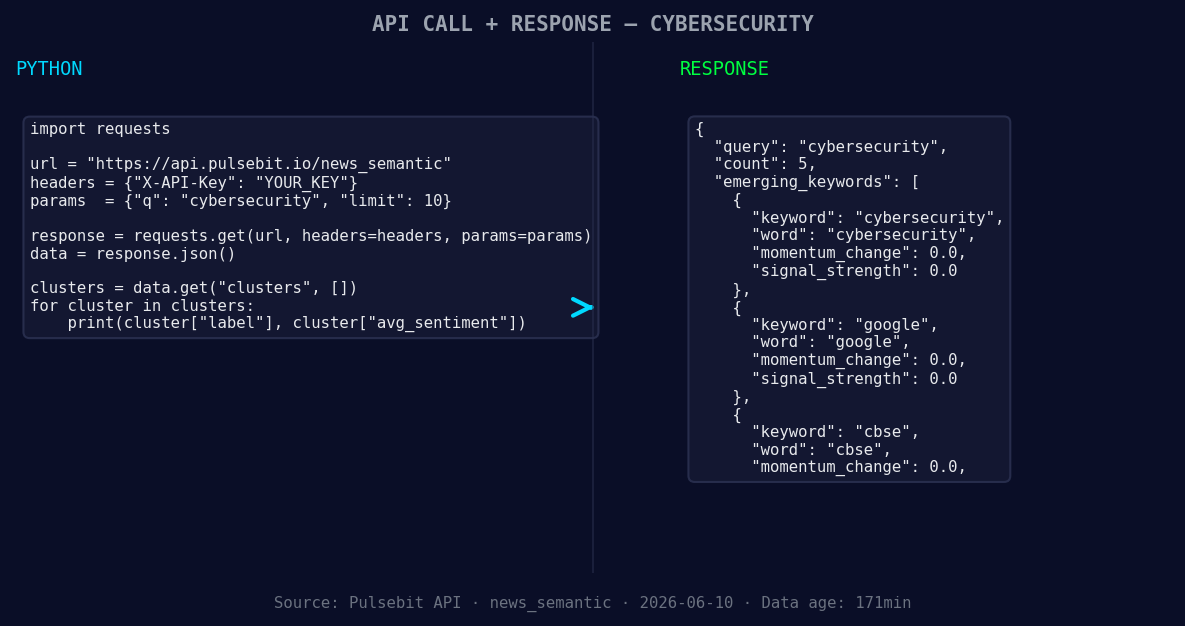
*Left: Python GET /news_semantic call for 'cybersecurity'. Right: returned JSON response structure (clusters: 3). Source: Pulsebit /news_semantic.*
# Set your parameters
topic = 'cybersecurity'
momentum = -0.245
score = +0.850
confidence = 0.85
# Geographic origin filter: English language
response = requests.get(
'https://api.pulsebit.lojenterprise.com/sentiment',
params={
'topic': topic,
'lang': 'en'
}
)
data = response.json()
print(data)
Next, we’ll run the narrative framing through our sentiment scoring endpoint to evaluate the cluster reason itself. This allows us to contextualize the sentiment around the emerging themes:
# Meta-sentiment moment: scoring the cluster reason
cluster_reason = "Clustered by shared themes: bmtc, consultant, project, appoint, smart."
meta_response = requests.post(
    'https://api.pulsebit.lojenterprise.com/sentiment',
    json={'text': cluster_reason}
)

meta_data = meta_response.json()
print(meta_data)
Now that we have this foundational code, let’s build upon it. Here are three specific things you can implement:
- Threshold Signal Detection: Monitor for a sentiment score threshold of +0.850 on cybersecurity alerts. Use the geographic filter query to ensure you’re capturing sentiment that aligns with that score.

Geographic detection output for cybersecurity. India leads with 3 articles and sentiment +0.30. Source: Pulsebit /news_recent geographic fields.
Meta-Sentiment Analyzer: Create a pipeline that filters incoming narratives for key phrases related to forming themes like "google" and "cbse." Run each through the POST /sentiment endpoint to extract meta-insights, allowing you to pivot your strategy based on emerging topics.
Anomaly Alerts: Set up an anomaly detection system that flags any significant shifts in sentiment momentum (e.g., |momentum| > 0.200). This can be automated using our API to ensure you’re always updated on critical changes, like the current -0.245 spike.
By integrating these builds, you can enhance your pipeline's responsiveness and ensure you’re not left behind in a rapidly evolving landscape.
Ready to get started? Check out our documentation at pulsebit.lojenterprise.com/docs. You can copy-paste these snippets and run them in under 10 minutes to begin capturing those critical insights.


Top comments (0)