

Your Pipeline Is 25.9h Behind: Catching Inflation Sentiment Leads with Pulsebit
We recently uncovered a fascinating anomaly: a 24h momentum spike of -0.825 in sentiment surrounding inflation. This sharp decline in momentum is significant, especially when considered alongside the leading language of English press articles that are lagging by 25.9 hours. With only one article present in the cluster story titled "Investment Strategies Amid Inflationary Growth," it’s clear that sentiment around inflation is shifting, yet your pipeline might not be catching it fast enough.
If your sentiment analysis pipeline doesn't account for multilingual sources or the dominance of certain entities, your model likely missed this critical shift by a staggering 25.9 hours. Articles in English, which dominate the conversation, may be out of sync with emerging trends. As we know, timely access to sentiment data is crucial for making informed decisions. If your setup can't capture this delay, you're potentially operating on outdated information, which can lead to missed opportunities or misinformed strategies.

English coverage led by 25.9 hours. Ca at T+25.9h. Confidence scores: English 0.75, Id 0.75, Spanish 0.75 Source: Pulsebit /sentiment_by_lang.
To catch this momentum spike, let’s dive into the code that will help you bridge this gap. Here’s how we can harness our API to identify and analyze sentiment around inflation effectively:
import requests
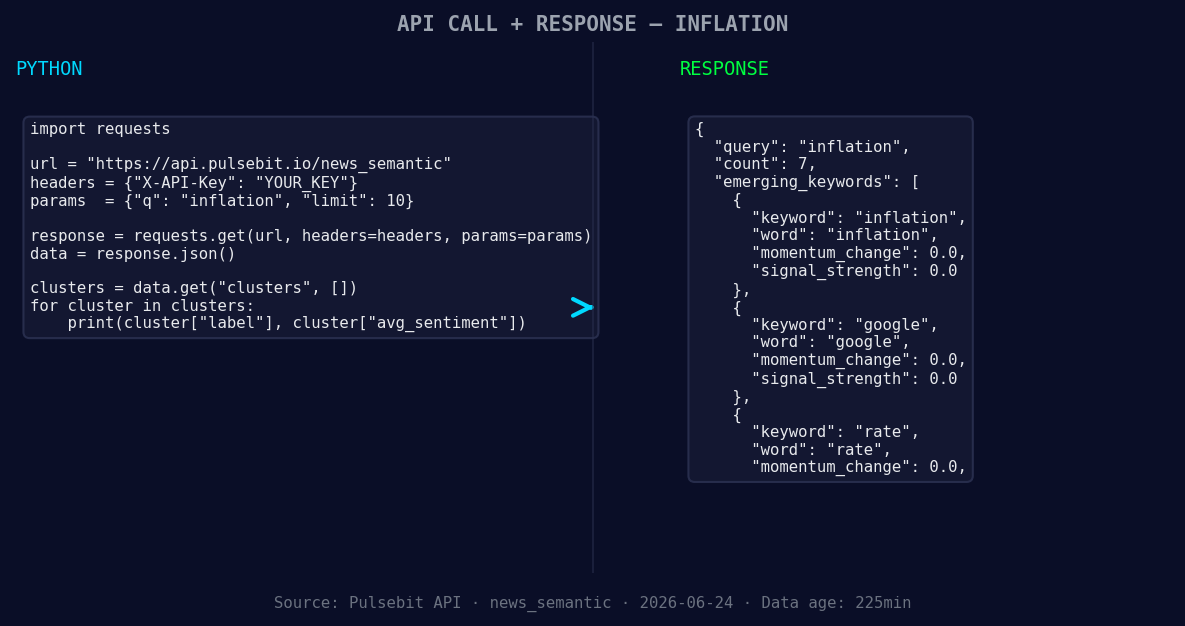
*Left: Python GET /news_semantic call for 'inflation'. Right: returned JSON response structure (clusters: 3). Source: Pulsebit /news_semantic.*
# Define parameters
topic = 'inflation'
score = +0.034
confidence = 0.75
momentum = -0.825
# Geographic origin filter: query by language/country
response = requests.get(
'https://api.pulsebit.com/v1/sentiment',
params={
'topic': topic,
'lang': 'en'
}
)
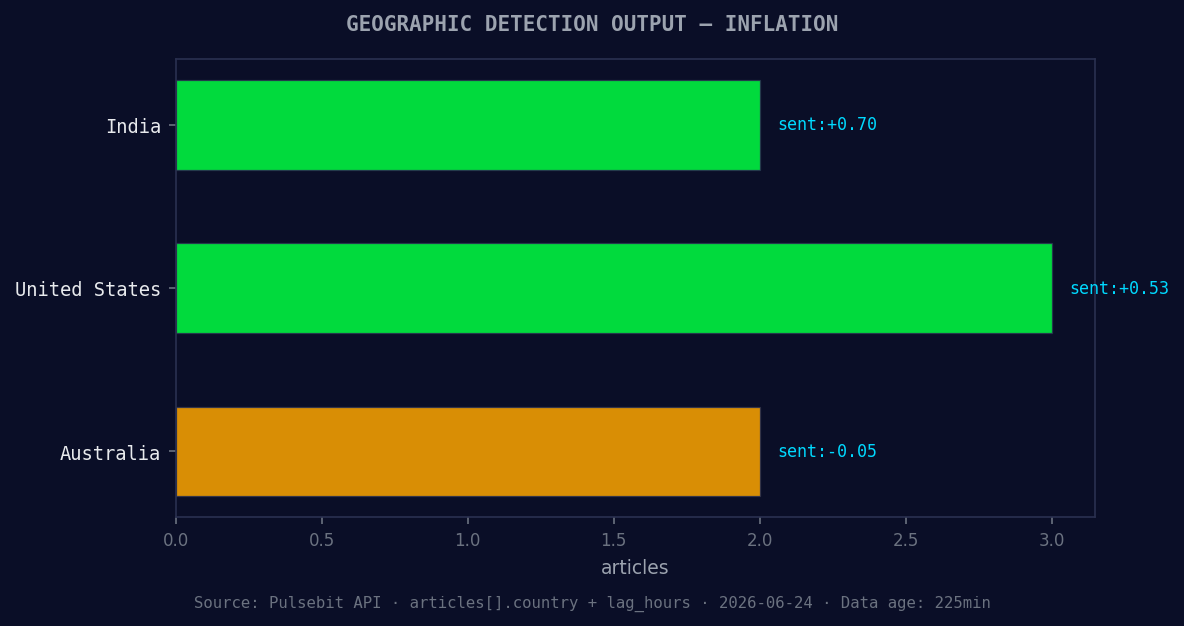
*Geographic detection output for inflation. India leads with 2 articles and sentiment +0.70. Source: Pulsebit /news_recent geographic fields.*
# Assuming a successful response
if response.status_code == 200:
sentiment_data = response.json()
print(sentiment_data)
# Meta-sentiment moment: scoring the narrative framing itself
cluster_reason = "Clustered by shared themes: top, firm's, investing, playbook, before."
narrative_response = requests.post(
'https://api.pulsebit.com/v1/sentiment',
json={
'text': cluster_reason,
'score': score,
'confidence': confidence
}
)
# Check for successful execution
if narrative_response.status_code == 200:
narrative_sentiment = narrative_response.json()
print(narrative_sentiment)
In this snippet, we first filter our sentiment analysis by the English language, ensuring we're capturing the relevant articles. Then, we run a meta-sentiment check on the cluster reason string to get insights into how the narrative itself is framed. This dual approach will allow you to stay on top of emerging trends in sentiment around inflation, especially when your pipeline is lagging behind.
Here are three specific builds we can create using this pattern:
Inflation Sentiment Tracker: Set a threshold for sentiment score changes greater than +0.025 over a 24h period. Use the geo filter with
lang: "en"to ensure you're only working with dominant English articles. This will help you identify significant shifts and react accordingly.Meta-Sentiment Narrative Insights: Create an endpoint that analyzes the narrative framing of clustered themes. Use the meta-sentiment loop to score how specific themes (like "top," "firm's," "investing") are trending over time. This can guide your investment strategies as narratives evolve.
Rate Adjustment Alerts: Build a signal that triggers alerts when sentiment around "rate" articles crosses a certain threshold (e.g., sentiment score > +0.05). This will keep you informed about how interest rate discussions are influencing broader inflation sentiment.
To get started, check out our API documentation at pulsebit.lojenterprise.com/docs. You can copy-paste and run this in under 10 minutes to catch those critical shifts in sentiment. Don't let your pipeline lag behind—stay ahead of the curve!


Top comments (0)