

Your Pipeline Is 27.9h Behind: Catching Agriculture Sentiment Leads with Pulsebit
We recently uncovered an anomaly: sentiment around agriculture is currently at -0.75 with a momentum of +0.00. This change is particularly striking given that it’s leading in English press coverage, with a notable 27.9-hour lag compared to Italian sources. That’s a solid indicator that something is brewing beneath the surface, and it could have implications for your data pipeline and trading strategies.
However, if your pipeline doesn't account for multilingual origins or the dominance of certain entities, you might be missing critical insights. Imagine your model missed this sentiment shift by 27.9 hours, just because it wasn’t set up to recognize the leading language. While others are reacting, you’re still catching up, losing out on potential opportunities. This is a clear structural gap that highlights the importance of a robust multilingual strategy in sentiment analysis.

English coverage led by 27.9 hours. Italian at T+27.9h. Confidence scores: English 0.85, Spanish 0.85, German 0.85 Source: Pulsebit /sentiment_by_lang.
To illustrate how to capture this data effectively, here’s a Python code snippet that leverages our API. First, we’ll set up a query for the agriculture topic:
import requests
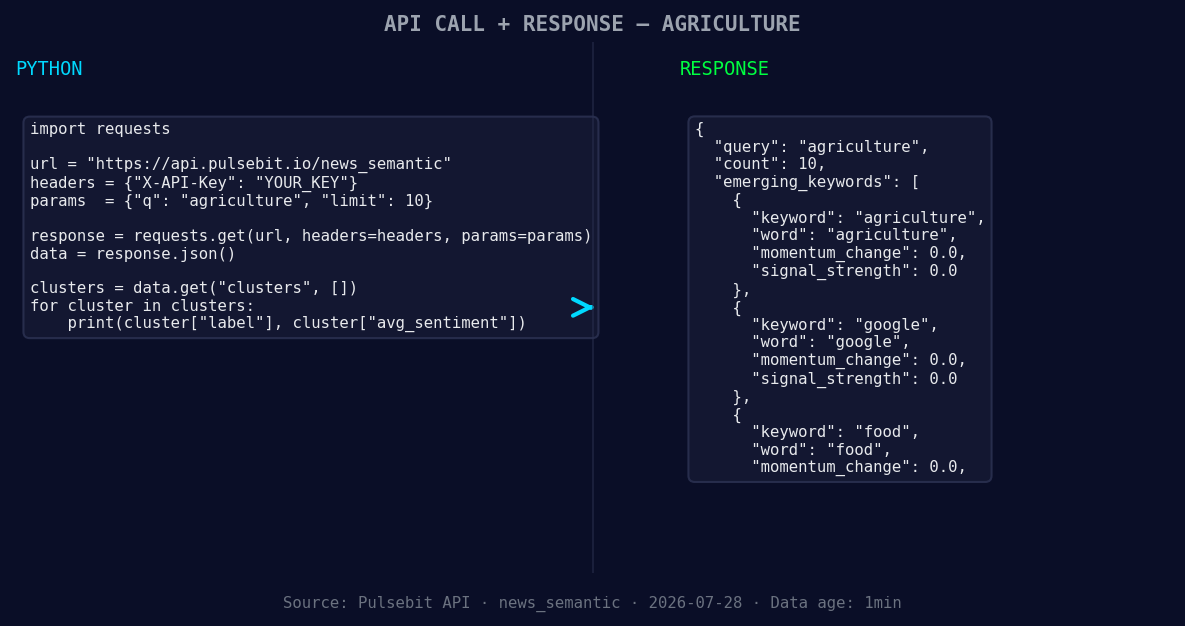
*Left: Python GET /news_semantic call for 'agriculture'. Right: returned JSON response structure (clusters: 3). Source: Pulsebit /news_semantic.*
topic = 'agriculture'
score = -0.750
confidence = 0.85
momentum = +0.000
# Geographic origin filter: querying English language data
response = requests.get(
'https://api.pulsebit.com/v1/articles',
params={
'topic': topic,
'score': score,
'confidence': confidence,
'momentum': momentum,
'lang': 'en' # Filtering for English language
}
)
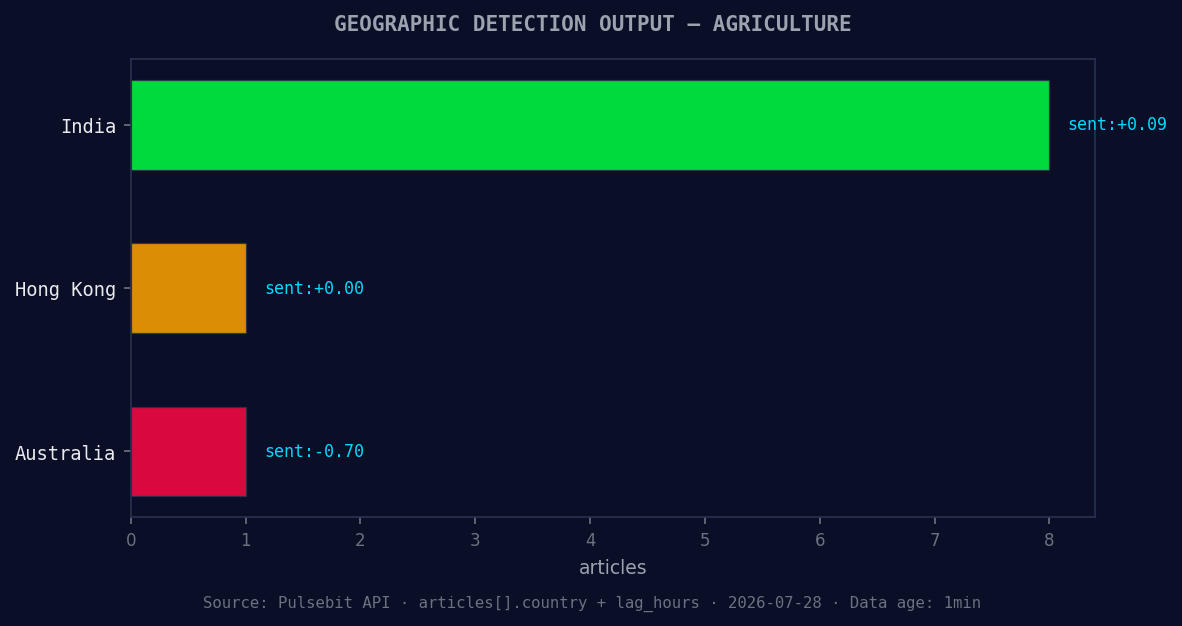
*Geographic detection output for agriculture. India leads with 8 articles and sentiment +0.09. Source: Pulsebit /news_recent geographic fields.*
data = response.json()
print(data)
Now that we have the English-language data, we need to analyze the thematic framing itself. This is where we run the cluster reason string through our sentiment API to evaluate the underlying sentiment narrative.
cluster_reason = "Clustered by shared themes: mediterranean, climate, drought, societal, around."

# Meta-sentiment moment: scoring the narrative framing
response_meta = requests.post(
    'https://api.pulsebit.com/v1/sentiment',
    json={'text': cluster_reason}
)

meta_data = response_meta.json()
print(meta_data)
This two-step process not only identifies the sentiment around agriculture but also scores the narrative that clusters it with themes like the Mediterranean, climate, and drought. By doing this, we ensure that our understanding of the data is comprehensive and not just surface-level.
Here are three specific builds you can create using this pattern:
Geo-Filtered Agriculture Alert: Set a threshold for sentiment at -0.75 and filter for English language sources. Trigger alerts when this condition is met to catch early signals on agricultural sentiment shifts.
Meta-Sentiment Dashboard: Use the meta-sentiment loop to create a visual dashboard that tracks the sentiment of narrative frames over time. This will help you identify emerging themes in real-time, especially around agriculture and related topics.
Forming Theme Analyzer: Build an endpoint that cross-references forming themes like agriculture and food against mainstream narratives such as climate and drought. Set up a scoring mechanism that flags significant discrepancies in sentiment or momentum changes.
By integrating these builds into your workflow, you can stay ahead of sentiment shifts and make more informed decisions.
To get started, head over to our documentation at pulsebit.lojenterprise.com/docs. You can copy-paste and run the code above in under 10 minutes and start harnessing the power of real-time sentiment analysis.


Top comments (0)