

Your Pipeline Is 22.3h Behind: Catching Hardware Sentiment Leads with Pulsebit
We recently stumbled upon a striking anomaly: a 24h momentum spike of -0.539 in sentiment surrounding hardware. It’s interesting to note that this spike was led by English press coverage, which was positioned 22.3 hours ahead of other languages. This is a clear indication that there are significant shifts in sentiment that your pipeline might miss if it doesn’t account for multilingual sources or the dominance of certain entities.

English coverage led by 22.3 hours. Ca at T+22.3h. Confidence scores: English 0.90, Spanish 0.90, French 0.90 Source: Pulsebit /sentiment_by_lang.
If your model isn't designed to handle these nuances, you might be lagging behind by a considerable margin—22.3 hours, to be exact. The dominant narrative here was emerging from English sources, with key terms like "first" and "hardware" echoing through the cluster. This structural gap highlights a critical oversight in many pipelines: they often fail to capture the full spectrum of sentiment across languages, leading to missed opportunities in trend analysis.
To catch this spike, we can utilize our API effectively. Here’s how you can do it in Python:
import requests
# Define parameters for the API call
topic = 'hardware'
score = +0.259
confidence = 0.90
momentum = -0.539
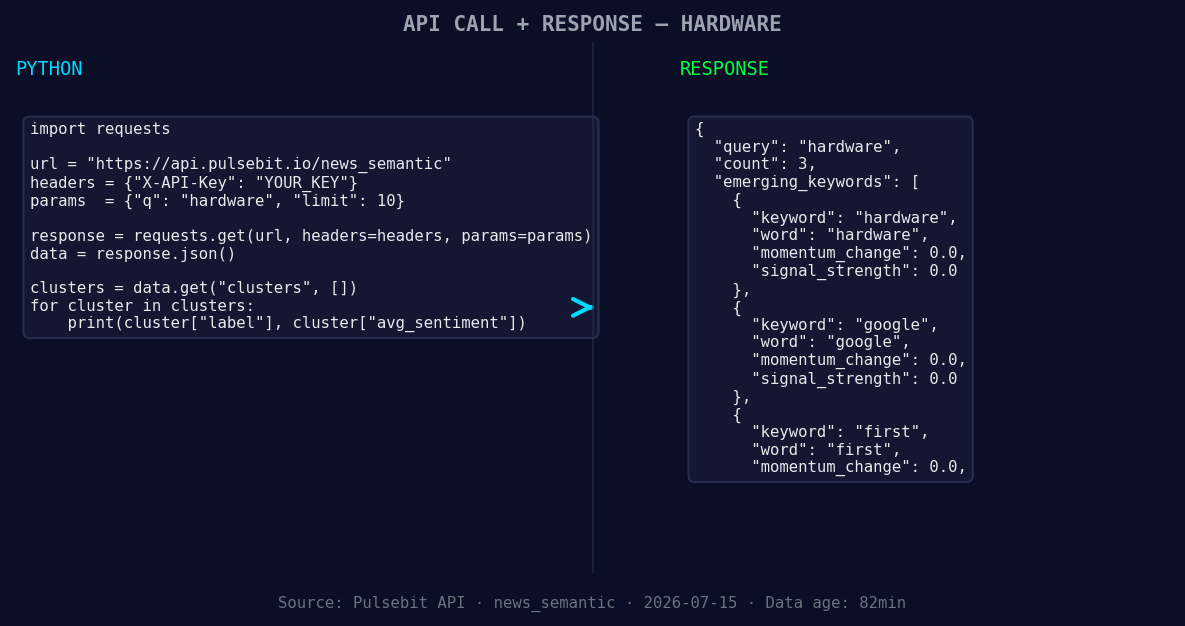
*Left: Python GET /news_semantic call for 'hardware'. Right: returned JSON response structure (clusters: 3). Source: Pulsebit /news_semantic.*
# Geographic origin filter: query by language using param "lang": "en"
url = "https://api.pulsebit.com/sentiment"
params = {
"topic": topic,
"lang": "en",
"confidence": confidence
}
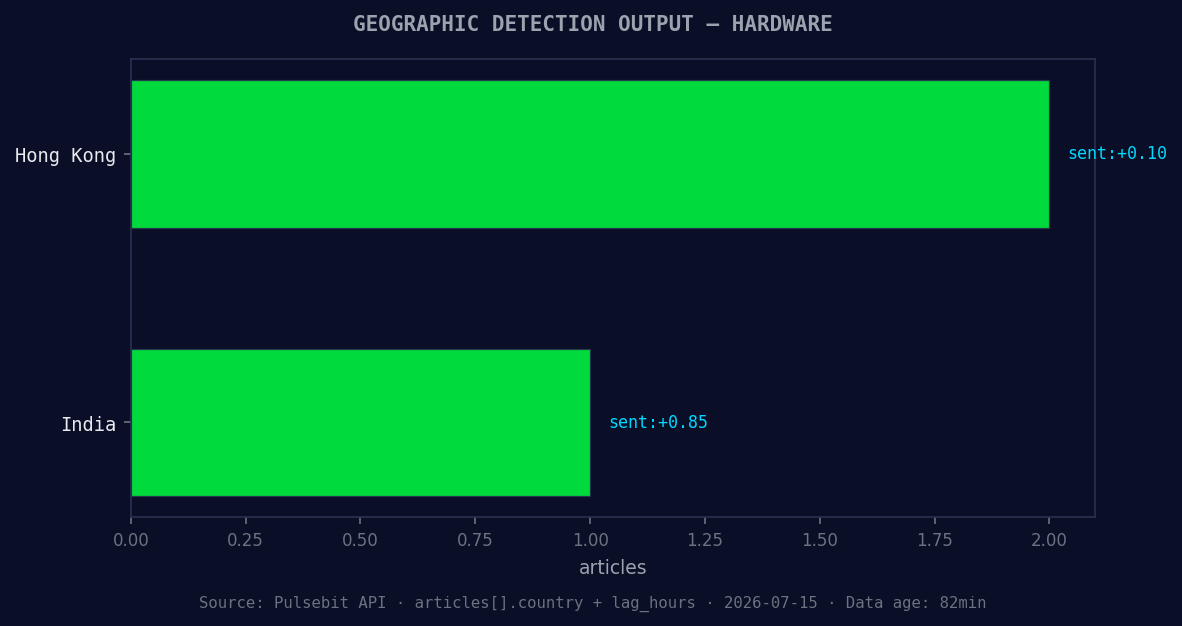
*Geographic detection output for hardware. Hong Kong leads with 2 articles and sentiment +0.10. Source: Pulsebit /news_recent geographic fields.*
# Make the API call
response = requests.get(url, params=params)
data = response.json()
print(data)
# Meta-sentiment moment: run the cluster reason string through POST /sentiment
cluster_reason = "Clustered by shared themes: first, hardware, speaker, device, will."
meta_sentiment_url = "https://api.pulsebit.com/sentiment"
# POST request for sentiment analysis on the meta-narrative
meta_response = requests.post(meta_sentiment_url, json={"text": cluster_reason})
meta_sentiment_data = meta_response.json()
print(meta_sentiment_data)
This code captures the essence of the emerging trend in hardware sentiment and runs it through our sentiment scoring. The first API call filters sentiment based on English-language articles, while the second analyzes the narrative framing around these articles.
Here are three specific builds you can implement based on this anomaly:
Geo-Filtered Hardware Sentiment: Use the geographic origin filter to regularly monitor sentiment in regions where English is predominant. Set a threshold for momentum spikes, such as -0.5, to trigger alerts for significant drops in sentiment.
Meta-Sentiment Analysis on Clusters: Implement a function that processes your cluster narratives through a meta-sentiment analysis loop. Every time you find a cluster with a score above +0.1, run its narrative through the sentiment endpoint to assess its framing and gauge potential shifts in public perception.
Dynamic Threshold Alerts: Create alerts that trigger when the sentiment score for topics like “hardware” falls below a certain threshold, say +0.25, while simultaneously monitoring for rising trends in mainstream topics like “first” and “speaker.” This dual approach can offer a more comprehensive view of the landscape.
If you’re ready to catch these opportunities, head over to our documentation at pulsebit.lojenterprise.com/docs. You can copy, paste, and run this in under ten minutes, getting you up to speed with the latest hardware sentiment.


Top comments (0)