

Your Pipeline Is 10.0h Behind: Catching Sustainability Sentiment Leads with Pulsebit
We've just spotted a notable anomaly: a 24-hour momentum spike of +0.301 in sustainability sentiment. This spike shows a rising interest that could be pivotal for any developer or analyst tracking emerging themes. The leading language in this surge is English, with a press cluster focused on a recent initiative from Wasabi regarding cloud sustainability trackers. If you're not tuned into this, you might be missing the boat on what's trending right now.
But there's a structural gap here. If your pipeline doesn’t account for multilingual origins or the dominance of specific entities, your model missed this spike by a staggering 10.0 hours. The dominant entity here is Wasabi, leading the conversation in English press. If your data aggregation is lagging like this, it’s time to refine your approach.

English coverage led by 10.0 hours. Et at T+10.0h. Confidence scores: English 0.85, Spanish 0.85, French 0.85 Source: Pulsebit /sentiment_by_lang.
Let’s dive into the code to capture this emerging trend. First, we’ll set up a query to filter by language, ensuring we only get relevant English-language articles about sustainability. Here’s how you can do it:
import requests
# Define the parameters for the API call
params = {
"topic": "sustainability",
"lang": "en" # Filter for English articles
}
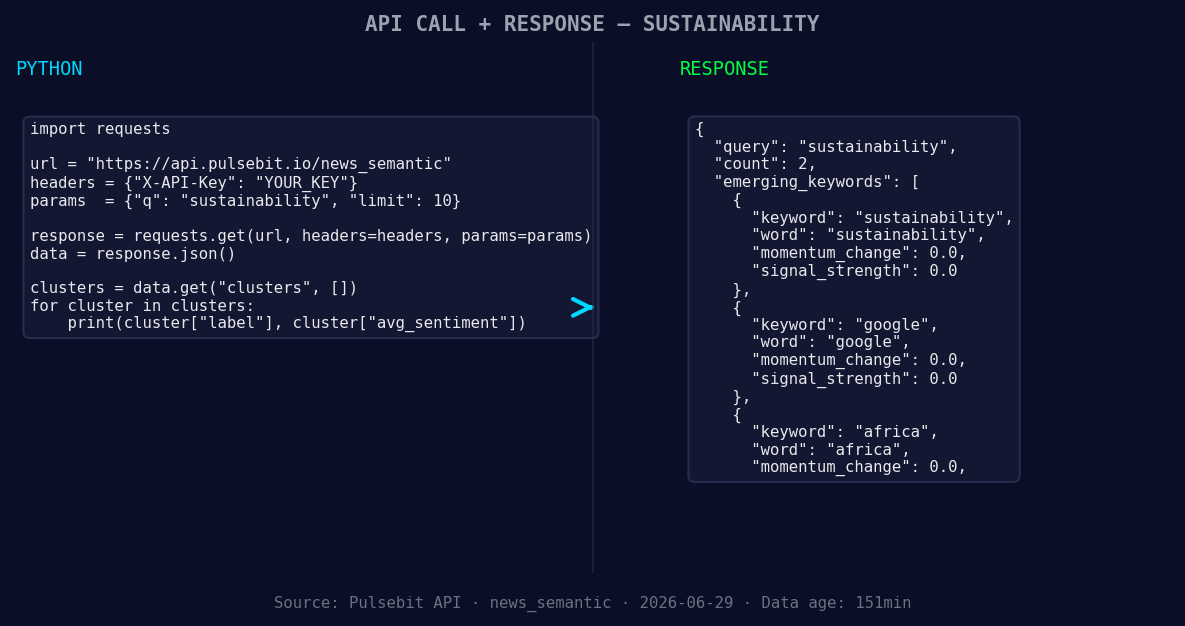
*Left: Python GET /news_semantic call for 'sustainability'. Right: returned JSON response structure (clusters: 3). Source: Pulsebit /news_semantic.*
# Make the API call to get sentiment data
response = requests.get("https://api.pulsebit.com/v1/sentiment", params=params)
data = response.json()
# Check the response
if response.status_code == 200:
print(data)
else:
print("Error:", response.status_code)
Now that we've filtered the articles, let’s analyze the sentiment framing of the cluster reason string: "Clustered by shared themes: launches, cloud, sustainability, tracker, scheme." We’ll run it through our sentiment endpoint to score the narrative itself.
# Define the cluster reason string
cluster_reason = "Clustered by shared themes: launches, cloud, sustainability, tracker, scheme."

# Send the cluster reason to our sentiment scoring API
sentiment_response = requests.post("https://api.pulsebit.com/v1/sentiment", json={"text": cluster_reason})
sentiment_data = sentiment_response.json()

# Check the response
if sentiment_response.status_code == 200:
    print(sentiment_data)
else:
    print("Error:", sentiment_response.status_code)
With these functions, we effectively capture the emerging sentiment in real-time. But what can we build with this data? Here are three specific actions we can take:
Real-time Alert System: Set up a threshold alert for sustainability sentiment spikes. For example, trigger a notification when momentum exceeds +0.250. This keeps you ahead of trends.
Geo-targeted Content Aggregation: Use the geographic filter to monitor sustainability narratives coming from specific regions, such as Africa. This can reveal local market opportunities or challenges.

Geographic detection output for sustainability. India leads with 2 articles and sentiment +0.75. Source: Pulsebit /news_recent geographic fields.
- Meta-Sentiment Analysis Dashboard: Create a dashboard that dynamically updates with the sentiment scores from both the articles and the clustered narratives. Use the meta-sentiment loop to visualize how certain themes are framing sustainability discussions, particularly around Google and cloud initiatives.
If you’re eager to harness this momentum, head over to pulsebit.lojenterprise.com/docs. With just a few lines of code, you can replicate our findings in under 10 minutes. Don’t let your pipeline lag behind!


Top comments (0)