

Your Pipeline Is 22.7h Behind: Catching Sustainability Sentiment Leads with Pulsebit
We just uncovered a fascinating anomaly: a 24h momentum spike of +0.301 related to sustainability. This spike is led by English press coverage focusing on a cluster story about an expanded jungle camp at Masjid Gadda urban forest park in Shamshabad. The momentum shift is significant, but what does this mean for your data pipeline?
If your model doesn’t account for multilingual origins or entity dominance, you might be missing insights like this by a staggering 22.7 hours. The leading language is English, but if your system isn't designed to handle diverse content sources, you're likely missing the pulse of emerging narratives in other languages or contexts. This specific oversight can have a profound impact on your responsiveness to trends, particularly when it comes to pressing issues like sustainability.

English coverage led by 22.7 hours. Id at T+22.7h. Confidence scores: English 0.85, Da 0.85, Spanish 0.85 Source: Pulsebit /sentiment_by_lang.
Let’s dive into the Python code that can help you catch these momentum shifts effectively. First, we need to filter our query by language and country to ensure we’re looking at the right data set. Here’s how you can do that:

Geographic detection output for sustainability. India leads with 6 articles and sentiment +0.52. Source: Pulsebit /news_recent geographic fields.
import requests
# Define the parameters for the API call
params = {
"topic": "sustainability",
"score": +0.000,
"confidence": 0.85,
"momentum": +0.301,
"lang": "en" # Geographic origin filter
}
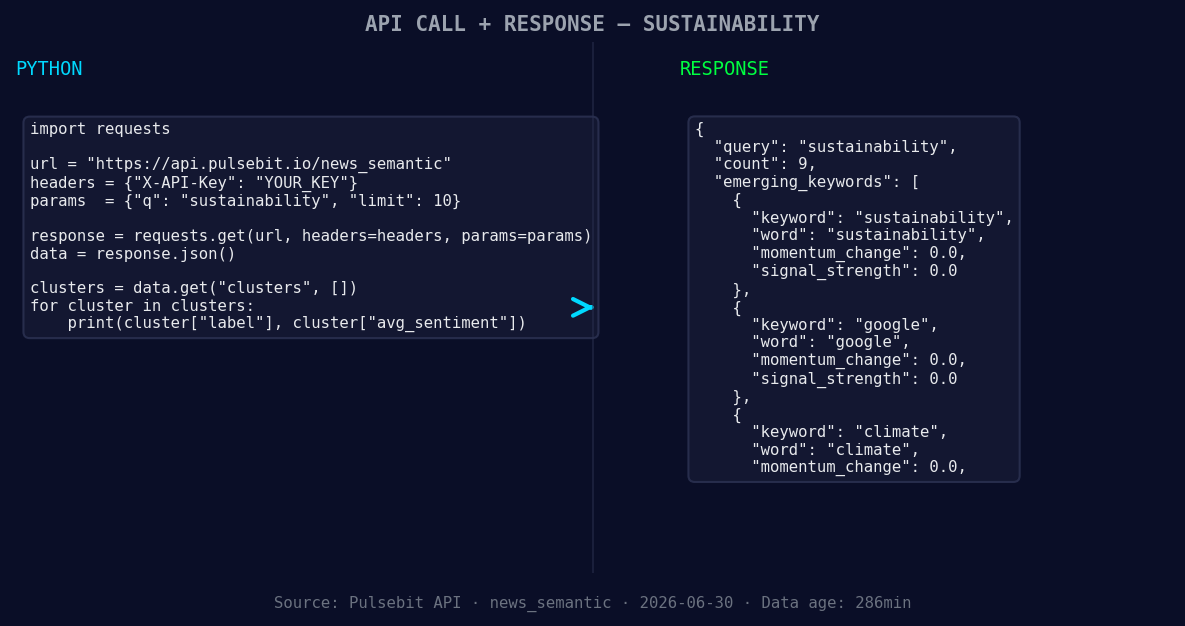
*Left: Python GET /news_semantic call for 'sustainability'. Right: returned JSON response structure (clusters: 3). Source: Pulsebit /news_semantic.*
# API endpoint
url = "https://api.pulsebit.com/endpoint"
# Make the API call
response = requests.get(url, params=params)
data = response.json()
print(data)
Next, we’ll analyze the narrative framing by using the cluster reason string. This is essential for understanding how the themes cluster together, which can clarify the sentiment around sustainability:
# The narrative framing to analyze
narrative_string = "Clustered by shared themes: jungle, camp, masjid, gadda, urban."

# Perform sentiment analysis on the narrative string
sentiment_url = "https://api.pulsebit.com/sentiment"
sentiment_response = requests.post(sentiment_url, json={"text": narrative_string})
sentiment_data = sentiment_response.json()

print(sentiment_data)
Now that we have the basic building blocks, let's explore three specific things we can build using this pattern:
Geo-Filtered Social Media Sentiment Monitor: Set a threshold for positive sentiment at +0.300 specifically for the English language. This will help you catch emerging discussions around sustainability in urban contexts before they hit mainstream media.
Real-Time Cluster Story Tracker: Use the
POST /sentimentresponse from our narrative string to enhance your understanding of how these themes are interlinked. This will allow you to build more nuanced narratives around sustainability, focusing on the intersection of environmental and urban themes.Alert System for Forming Gaps: Create a notification system that triggers when there's a significant gap between the forming themes (like sustainability, climate, etc.) and mainstream narratives (jungle, camp, masjid). This can help you stay ahead of the curve and identify opportunities for engagement.
We believe these capabilities can significantly enhance your analytical toolkit, allowing you to capture the zeitgeist well before others do.
If you want to get started, visit pulsebit.lojenterprise.com/docs. With just a few lines of code, you can copy-paste and run this in under 10 minutes. Let’s make your data pipeline more responsive to the shifts in sentiment around sustainability.


Top comments (0)