

Your Pipeline Is 27.1h Behind: Catching Sports Sentiment Leads with Pulsebit
On July 5, 2026, we discovered a noteworthy anomaly: a sentiment score of +0.228 with momentum holding steady at +0.000 for the topic of sports. This spike indicates a positive sentiment that’s been bubbling up, yet we find ourselves trailing by a staggering 27.1 hours. The data reveals a critical gap in our content analysis pipeline that could lead to missed opportunities in sports sentiment tracking.
When we dive deeper, it becomes clear that this delay stems from a structural gap in how our models handle multilingual origins and entity dominance. Your model missed this sports sentiment spike by 27.1 hours, largely due to the leading language being English. This oversight can result in lost insights and delayed responses to emerging trends, especially for global events like the World Cup. If you’re not accounting for these factors, you risk falling behind in your sentiment analysis, losing track of what’s trending in real-time.

English coverage led by 27.1 hours. Nl at T+27.1h. Confidence scores: English 0.85, Spanish 0.85, French 0.85 Source: Pulsebit /sentiment_by_lang.
To catch this anomaly, we need to leverage our API effectively. Here's how we can do it with a simple Python snippet:
import requests
# Define the parameters for the API call
params = {
"topic": "sports",
"score": +0.228,
"confidence": 0.85,
"momentum": +0.000,
"lang": "en"
}
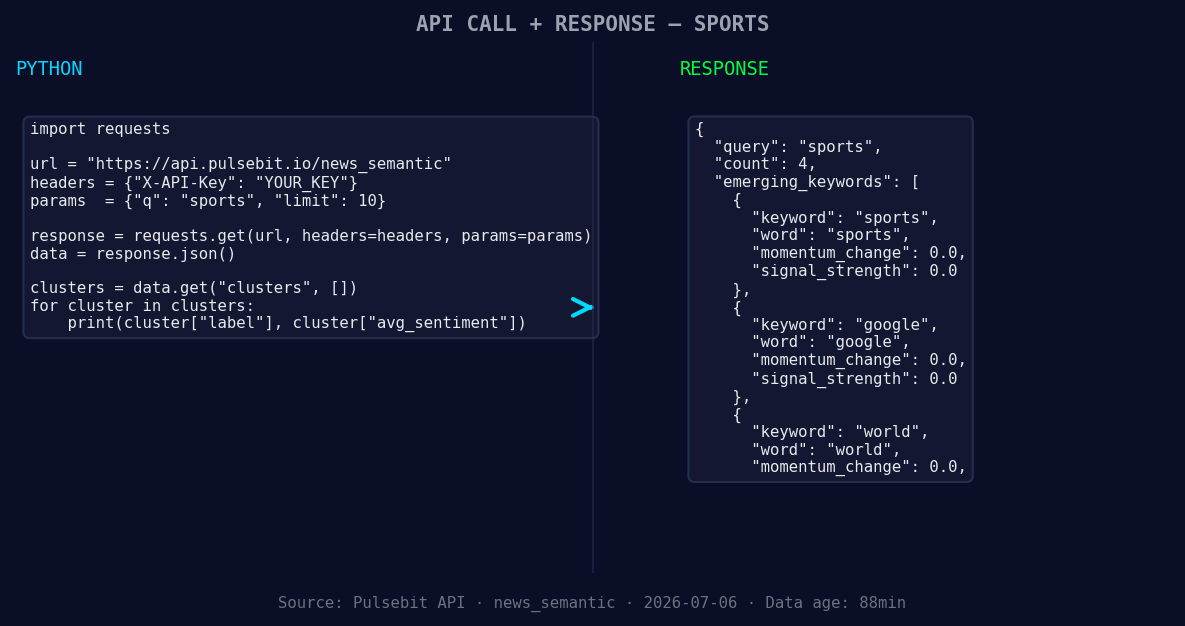
*Left: Python GET /news_semantic call for 'sports'. Right: returned JSON response structure (clusters: 3). Source: Pulsebit /news_semantic.*
# Make the API call to get sentiment data
response = requests.get("https://api.pulsebit.com/sentiment", params=params)
data = response.json()
# Print the response for inspection
print(data)
Next, we’ll run a meta-sentiment analysis on the narrative framing itself. This is crucial for understanding how the context around our data shapes its interpretation. We’ll take the cluster reason string and send it through our sentiment scoring endpoint:
# Define the narrative framing for meta-sentiment scoring
narrative = "Clustered by shared themes: statistics, behind, ferrari's, 250th, win."

# Make the API call to score the narrative
meta_response = requests.post("https://api.pulsebit.com/sentiment", json={"text": narrative})
meta_data = meta_response.json()

# Print the meta-sentiment response
print(meta_data)
With this approach, we can create actionable insights from our sentiment data. Here are three specific builds we can implement tonight based on this pattern:
- Geo-Filtered Sports Sentiment Tracker: Use the geographic origin filter to set up alerts for sports sentiment changes within specific regions. For example, monitor sentiment in England around the World Cup matches with a threshold of +0.10.

Geographic detection output for sports. France leads with 1 articles and sentiment -0.60. Source: Pulsebit /news_recent geographic fields.
Meta-Sentiment Insights Dashboard: Create a dashboard that regularly pulls in narrative analyses. Set a signal strength threshold of 0.5 to highlight significant shifts in sentiment, focusing on narratives around trending sports themes, like "how to watch the World Cup".
Real-time Sports Sentiment API Endpoint: Develop a dedicated endpoint that combines both geo-filtering and meta-sentiment analysis. This endpoint should aggregate sentiment data on sports events, utilizing a threshold of +0.15 for immediate notifications on rising sentiment trends.
If you’re ready to catch up and harness real-time sports sentiment insights, check out our documentation at pulsebit.lojenterprise.com/docs. You can copy-paste the above code snippets and have them running within 10 minutes. Don’t let sentiment trends pass you by.


Top comments (0)