

Your Pipeline Is 29.1h Behind: Catching Climate Sentiment Leads with Pulsebit
We just spotted a remarkable anomaly — a 24-hour momentum spike of +0.400 around climate sentiment. Specifically, the English press is leading this momentum with a delay of 29.1 hours, showcasing a gap that could be crucial for any developer relying on timely sentiment analysis. This spike centers around the story "One Man's Climate Record: Billy Barr logs 52 years of snow by hand in Colorado," hinting at a significant shift in climate discourse that your current models may not be capturing in real-time.
The Problem
This 29.1-hour lag highlights a critical gap in pipelines that don’t account for multilingual origins or the dominance of specific entities. When your model isn’t equipped to handle these nuances, you risk missing out on key narratives that are forming and evolving. In this case, your process might have missed recognizing the rising sentiment around climate change, even as it was gaining traction in English-language media. This oversight could mean losing out on actionable insights that other developers are leveraging.

English coverage led by 29.1 hours. Sl at T+29.1h. Confidence scores: English 0.85, French 0.85, Spanish 0.85 Source: Pulsebit /sentiment_by_lang.
The Code
To catch these emerging narratives, we can use our API to filter for relevant sentiment. Let's create a Python script to demonstrate how to capture this momentum.
First, we’ll set up a query to filter for English-language articles on climate:
import requests
# Define the query parameters
params = {
"topic": "climate",
"lang": "en",
}
# Make the API call to get sentiment data
response = requests.get("https://api.pulsebit.com/sentiment", params=params)
data = response.json()
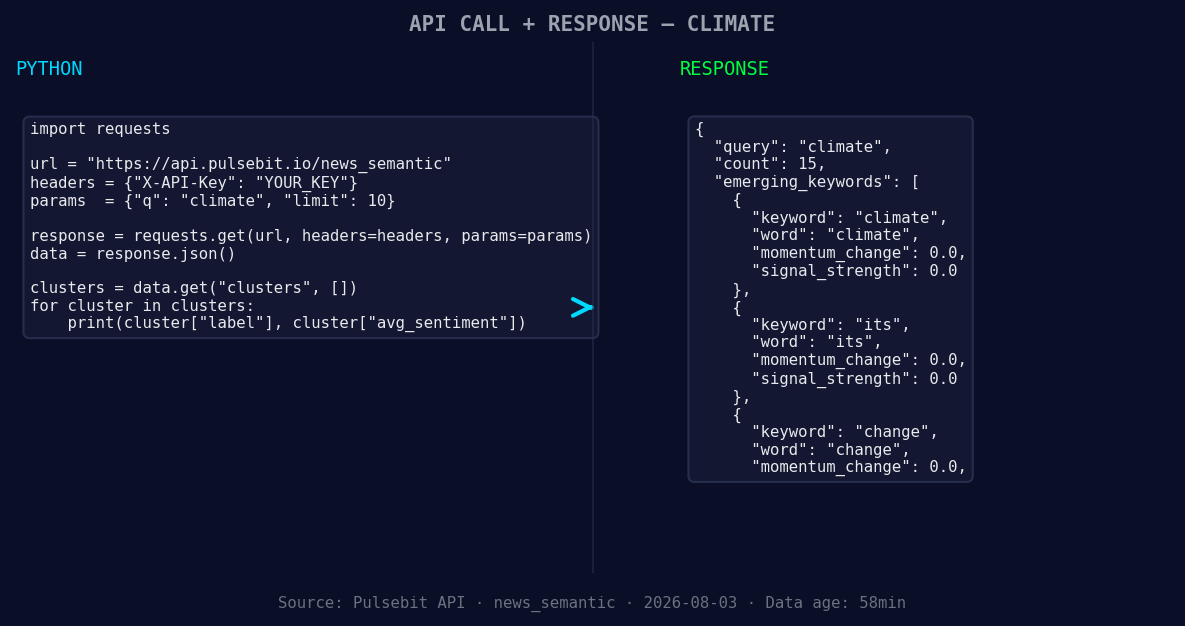
*Left: Python GET /news_semantic call for 'climate'. Right: returned JSON response structure (clusters: 3). Source: Pulsebit /news_semantic.*
print(data) # This should give us the raw sentiment data
Next, we want to analyze the narrative framing that our cluster story represents. We’ll run the cluster reason string back through the sentiment analysis endpoint:
# Meta-sentiment input example
meta_sentiment_input = "Clustered by shared themes: one, man's, climate, record:, billy."

# Make the API call to get meta-sentiment data
meta_response = requests.post("https://api.pulsebit.com/sentiment", json={"text": meta_sentiment_input})
meta_data = meta_response.json()

print(meta_data)  # This will give us the sentiment score for the narrative
This combination of geographic filtering and meta-sentiment analysis allows us to capture not just the data but the underlying narratives shaping it.

Geographic detection output for climate. India leads with 10 articles and sentiment +0.25. Source: Pulsebit /news_recent geographic fields.
Three Builds Tonight
Now, let's talk about three specific builds we can create from this momentum spike:
Geo-Filtered Alert System: Build a system that alerts you when sentiment around "climate" crosses a threshold of +0.200 in English articles. Use the geographic origin filter to ensure you're capturing the right data.
Meta-Sentiment Analyzer: Create a dashboard that visualizes the sentiment scores of cluster narratives, especially focusing on phrases like "climate change" and "climate record." This will help you understand how narratives are evolving over time.
Forming Themes Tracker: Set up an endpoint that tracks forming themes, specifically looking at phrases like "climate," "its," and "change." Compare these with the mainstream narratives to identify lagging topics that could gain traction.
Get Started
You can dive into our documentation at pulsebit.lojenterprise.com/docs. Feel free to copy-paste the provided code snippets and run them in under 10 minutes. This is your chance to catch up on the latest in climate sentiment and leverage it in your projects!


Top comments (0)