

Your pipeline just revealed a striking 24h momentum spike of +0.172 in sentiment surrounding robotics. This spike is particularly unusual right now, especially when you consider that the Spanish press has been leading the charge with a 29.2-hour lead time on this narrative. The cluster story titled "China's Retaliation Threat Over US Robot Import Block" is forming a narrative that you simply can't afford to ignore — three articles are already discussing this theme. If you're not tuned into these multilingual shifts, you risk missing out on crucial market signals.

Spanish coverage led by 29.2 hours. Sv at T+29.2h. Confidence scores: Spanish 0.85, English 0.85, French 0.85 Source: Pulsebit /sentiment_by_lang.
The problem here is that many models are simply not structured to handle this multilingual origin or the dominance of specific entities, leading to significant gaps in your insights. Your model missed this critical information by over 29 hours, while the leading language was Spanish, and the dominant entity was China. This can lead to missed investment opportunities or misguided strategy shifts because you weren't able to capture the sentiment that was evolving in real time.
To catch this anomaly effectively, let’s dive into how we can leverage our API. We’ll start by filtering our data to the Spanish language and then score the narrative framing itself through a meta-sentiment analysis.
Here’s how you can do this in Python:
import requests
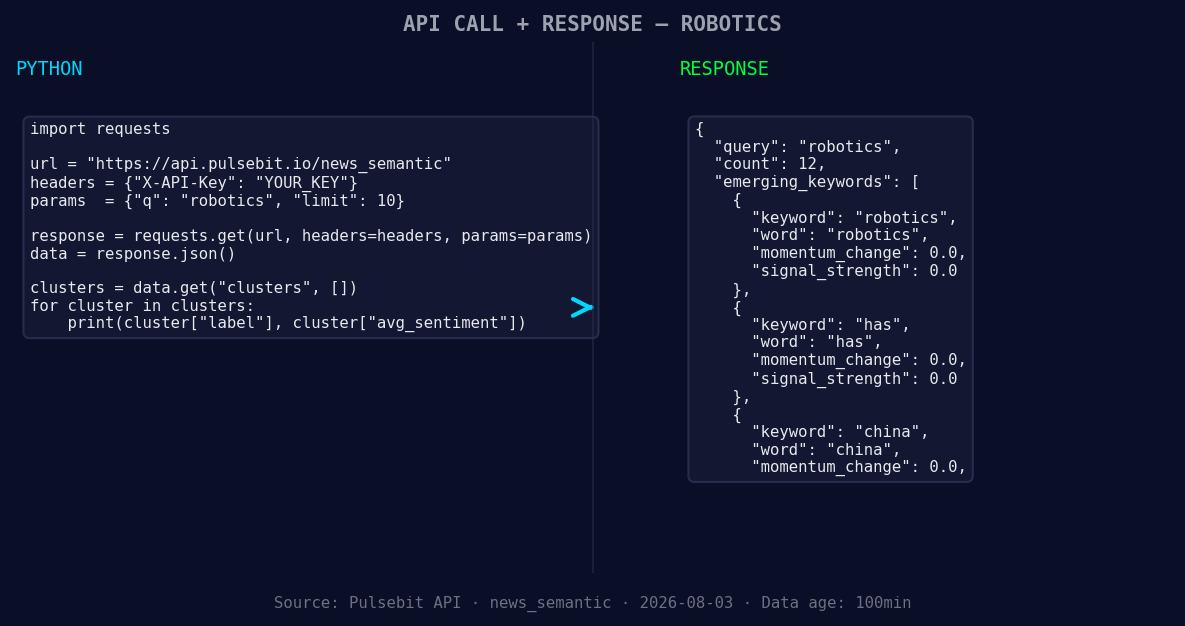
*Left: Python GET /news_semantic call for 'robotics'. Right: returned JSON response structure (clusters: 3). Source: Pulsebit /news_semantic.*
# Step 1: Geographic origin filter
response = requests.get("https://api.pulsebit.com/sentiment", params={
"topic": "robotics",
"lang": "sp"
})
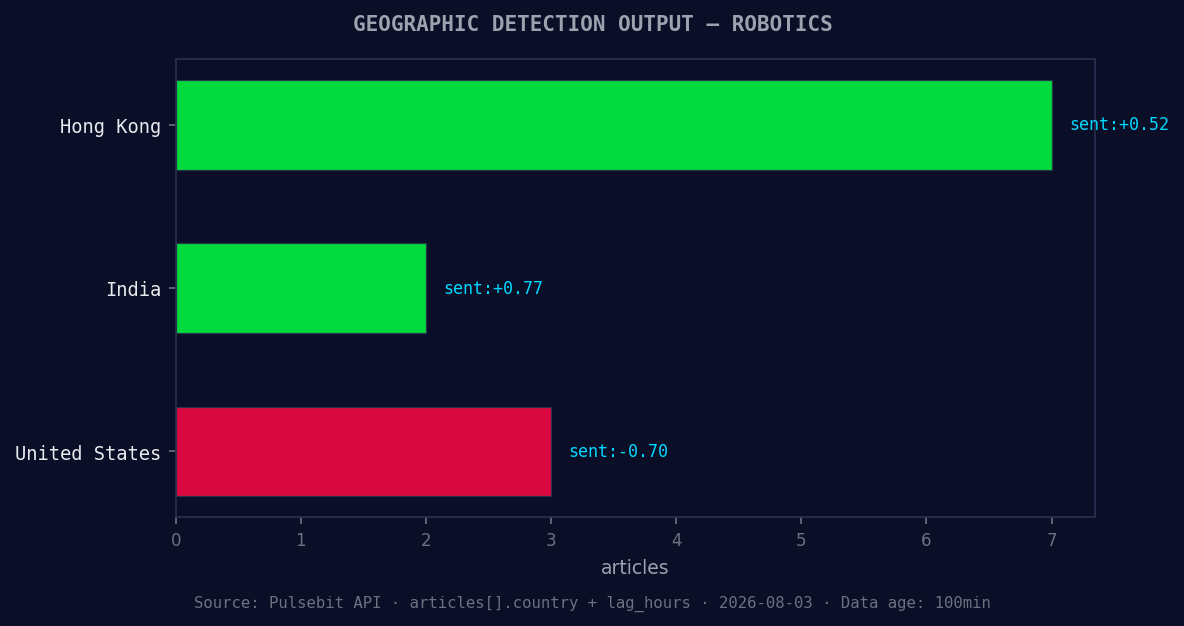
*Geographic detection output for robotics. Hong Kong leads with 7 articles and sentiment +0.52. Source: Pulsebit /news_recent geographic fields.*
data = response.json()
print(data) # Check the output for the sentiment data
# Step 2: Meta-sentiment moment
cluster_reason = "Clustered by shared themes: china, threatens, retaliation, moves, block."
meta_response = requests.post("https://api.pulsebit.com/sentiment", json={
"text": cluster_reason
})
meta_data = meta_response.json()
print(meta_data) # Check the output for the meta sentiment score
In the first part of the code, we query for the topic "robotics" specifically in Spanish. The response will show you the relevant sentiment data, which is crucial given that the leading language here is Spanish.
Then, we run the cluster reason string through our API to score the narrative itself. This dual approach allows us to not just catch the sentiment but also understand the context driving it.
Now that we have our insights, let’s explore three specific builds we can implement with this pattern:
Signal Monitoring with Geo Filter: Set up a continuous signal monitor for the topic "robotics" where you filter for sentiment using the Spanish language. Trigger alerts when momentum exceeds a threshold of +0.15. This will help you stay ahead of emerging trends.
Meta-Sentiment Loop for Narrative Analysis: Create a batch process that scores new cluster narratives monthly. Focus specifically on those that mention "China" and its actions. If the sentiment around these clusters scores over +0.3, flag them for deeper analysis.
Forming Theme Tracker: Build a dashboard that visualizes forming themes against the mainstream narrative. Specifically, track the "robotics" sentiment changes against mentions of "China," "threatens," and "retaliation." Use a threshold of 0.0 for sentiment changes to identify key shifts in public perception.
By implementing these strategies, you can ensure that your insights are timely and relevant, capturing the nuances of sentiment as they evolve.
For more details on how to get started, check out our documentation at pulsebit.lojenterprise.com/docs. You should be able to copy, paste, and run this code in under 10 minutes — making your pipeline not just faster, but smarter.


Top comments (0)