

Your Pipeline Is 9.3h Behind: Catching Immigration Sentiment Leads with Pulsebit
We just uncovered a striking anomaly in our data: sentiment around immigration is at +0.38 with a momentum of +0.00, but the leading language press is lagging by 9.3 hours. This means that while the sentiment is bubbling positively, the narratives shaping this sentiment are stuck in a time warp. A single article about the tragic migrant rush in Spain's Ceuta highlights this, but the broader implications for your data pipeline are even more significant.
If your pipeline isn’t designed to handle multilingual origins or entity dominance, you could be missing crucial sentiment shifts by 9.3 hours! In this case, the leading language is English, but the dominant narratives are formed around themes like “migrant” and “rush.” This gap can lead to a significant delay in how you respond to emerging trends or sentiment changes, putting your model at a disadvantage when real-time insights matter.

English coverage led by 9.3 hours. No at T+9.3h. Confidence scores: English 0.85, Spanish 0.85, French 0.85 Source: Pulsebit /sentiment_by_lang.
To catch this sentiment spike early, we can use our API to filter and analyze the data effectively. Below is the Python code that does just that:
import requests
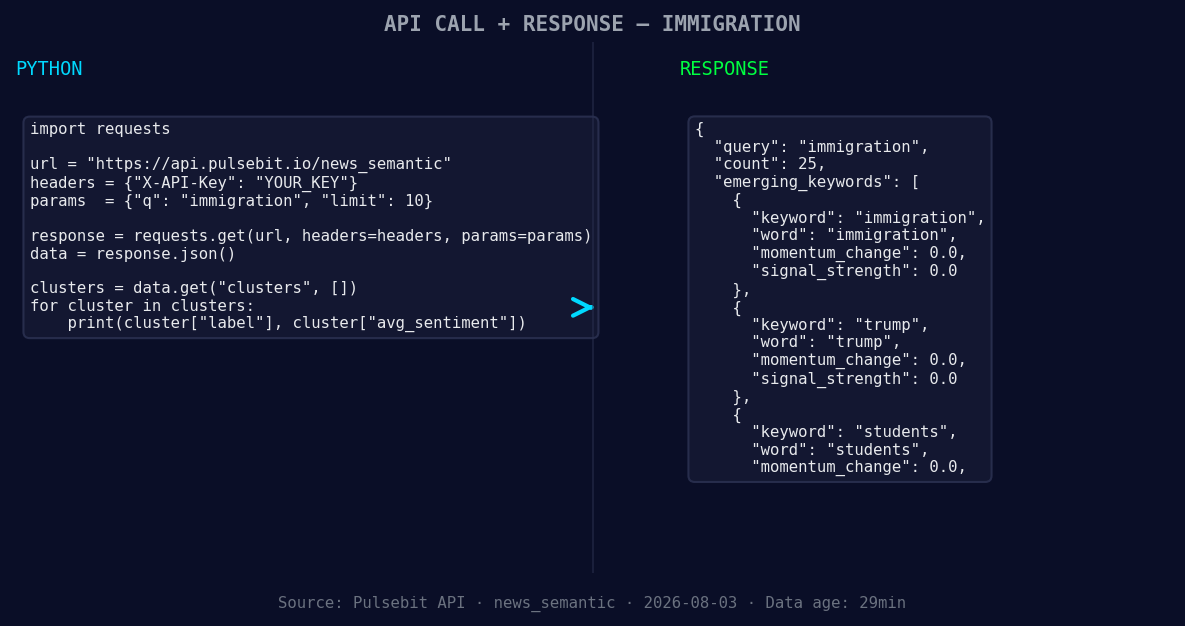
*Left: Python GET /news_semantic call for 'immigration'. Right: returned JSON response structure (clusters: 3). Source: Pulsebit /news_semantic.*
# Step 1: Geographic origin filter
topic = 'immigration'
score = +0.380
confidence = 0.85
momentum = +0.000
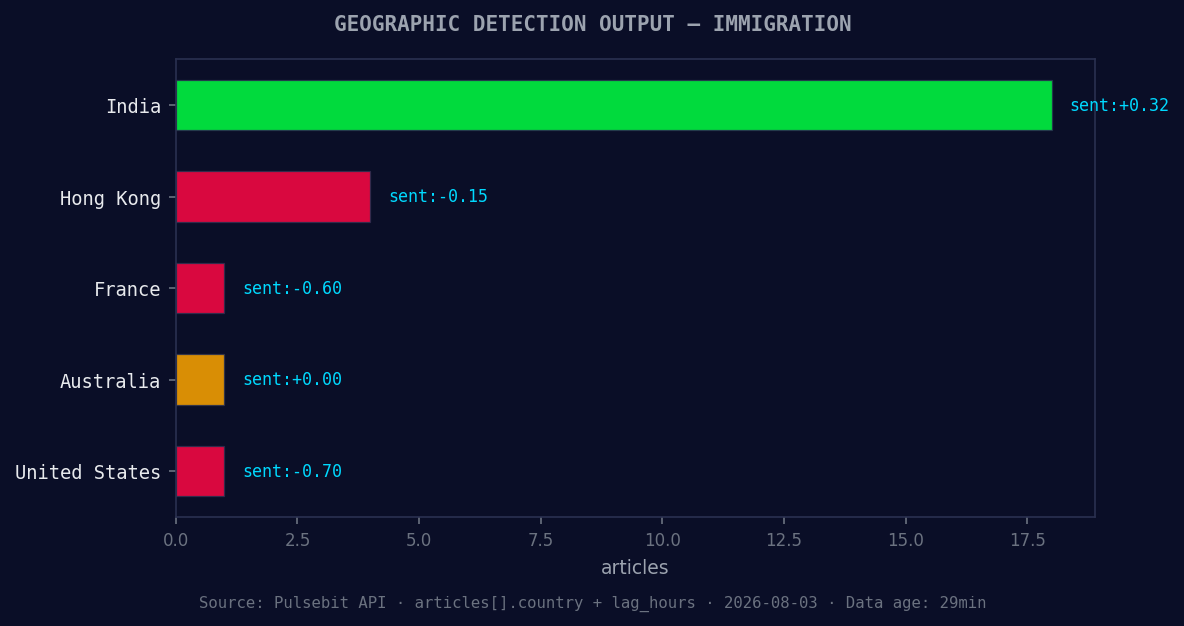
*Geographic detection output for immigration. India leads with 18 articles and sentiment +0.32. Source: Pulsebit /news_recent geographic fields.*
response = requests.get(
'https://api.pulsebit.com/sentiment',
params={
'topic': topic,
'score': score,
'confidence': confidence,
'momentum': momentum,
'lang': 'en' # Filtering for English language
}
)
print(response.json())
Next, we need to run the cluster reason string through our sentiment analysis endpoint to understand the narrative framing itself. This is crucial for capturing the sentiment behind the headlines:
# Step 2: Meta-sentiment moment
cluster_reason = "Clustered by shared themes: migrant, rush, least, died, spain’s."
meta_response = requests.post(
    'https://api.pulsebit.com/sentiment',
    json={
        'text': cluster_reason
    }
)

print(meta_response.json())
This two-step approach allows us to filter for relevant sentiment while also scoring how the narrative itself might influence public perception.
Now that we have a handle on catching these sentiment leads, we can explore three specific builds using this pattern:
Trigger Alerts for Emerging Themes: Set an alert when sentiment around “immigration” rises above +0.30 with a momentum of +0.00. This can help you react faster to shifts in public sentiment that may not yet be visible in mainstream articles.
Narrative Analysis on Social Media: Use the meta-sentiment loop to analyze how themes like “Trump” or “students” are emerging in conjunction with “immigration.” Set a threshold of sentiment above +0.25 and monitor changes over a 24-hour period.
Geographic Sentiment Tracker: Implement a weekly overview that filters sentiment data by geographical origin for “immigration.” If sentiment in Spain shows notable divergence (e.g., sentiment below +0.10), it could indicate a brewing issue that needs addressing.
With these builds, we can stay ahead of sentiment shifts and respond proactively.
To get started, check out our documentation at pulsebit.lojenterprise.com/docs. You can copy, paste, and run this code in under 10 minutes—ready to catch those insights before they hit mainstream news!


Top comments (0)