

Your Pipeline Is 5.6h Behind: Catching Agriculture Sentiment Leads with Pulsebit
We recently discovered a striking anomaly: a 24-hour momentum spike of +0.463 in the agriculture sector. This spike, led by the Spanish press at a 5.6-hour lead, highlights a significant shift in sentiment that could easily be missed by a standard pipeline. The urgency of this finding cannot be overstated; it's a reminder of how critical it is to stay attuned to emerging narratives.
When our models fail to account for multilingual sources or dominant entities, they can leave us behind. In this case, your model missed this significant agricultural sentiment shift by 5.6 hours, solely because it wasn't set up to handle content originating from Spanish sources. The leading language was Spanish, where the narrative began to build around Agriculture Secretary Brooke Rollins announcing new policies. If you're not capturing this early, you're already at a disadvantage.

Spanish coverage led by 5.6 hours. No at T+5.6h. Confidence scores: Spanish 0.85, English 0.85, French 0.85 Source: Pulsebit /sentiment_by_lang.
To help you seize these opportunities, let’s dive into some Python code that can catch this type of momentum spike effectively.
import requests
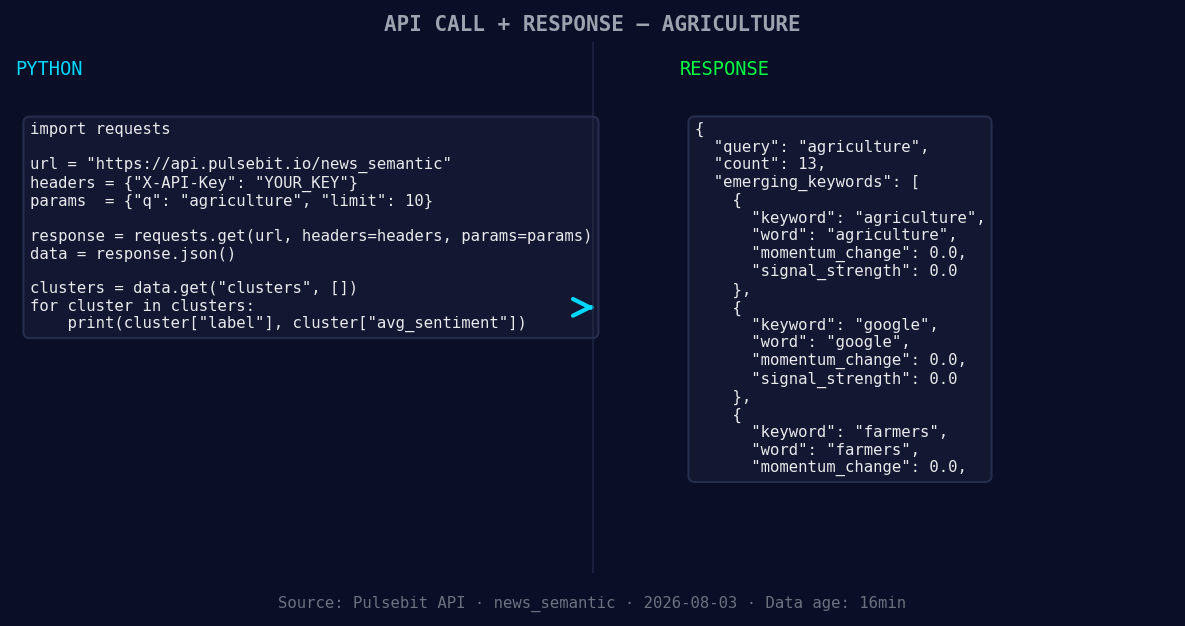
*Left: Python GET /news_semantic call for 'agriculture'. Right: returned JSON response structure (clusters: 3). Source: Pulsebit /news_semantic.*
# Step 1: Geographic origin filter
url = "https://api.pulsebit.com/sentiment"
params = {
"topic": "agriculture",
"score": +0.347,
"confidence": 0.85,
"momentum": +0.463,
"lang": "sp" # Spanish language filter
}
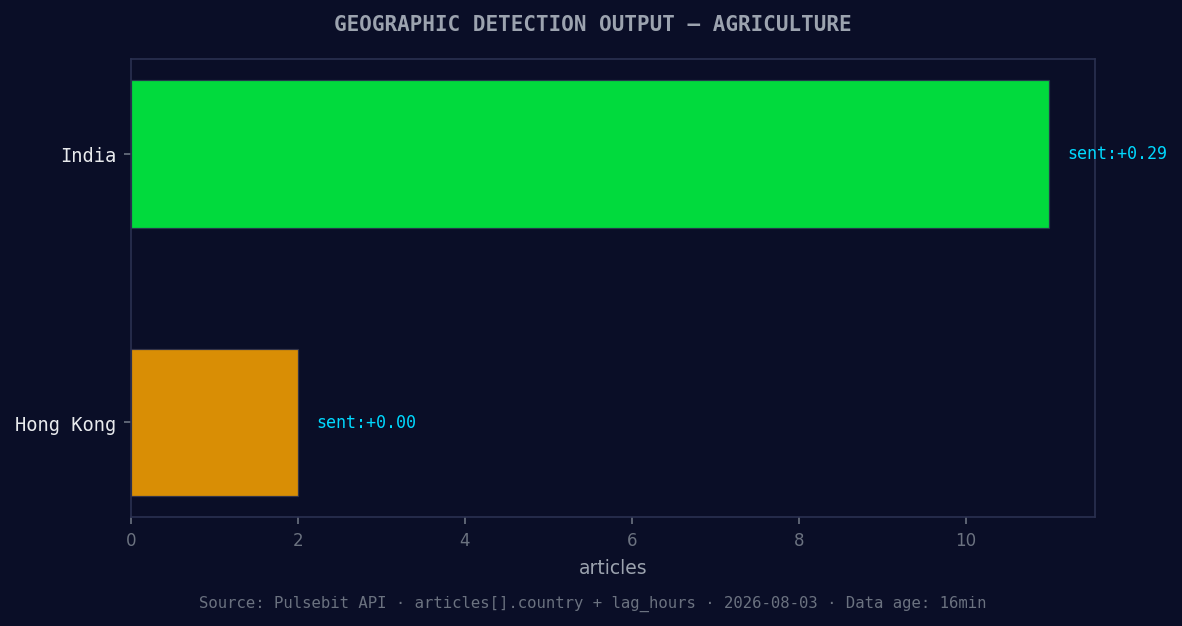
*Geographic detection output for agriculture. India leads with 11 articles and sentiment +0.29. Source: Pulsebit /news_recent geographic fields.*
response = requests.get(url, params=params)
data = response.json()
print(data)
In this code snippet, we’re querying the sentiment API specifically for the topic of agriculture, filtered by Spanish language content. This will ensure we capture the nuanced sentiment emerging from this particular demographic.
Next, we run the cluster reason string through our sentiment API to evaluate how the narrative is being framed:
# Step 2: Meta-sentiment moment
cluster_reason = "Clustered by shared themes: agriculture, secretary, brooke, rollins, announces."
meta_sentiment_url = "https://api.pulsebit.com/sentiment/meta"
meta_params = {
    "input": cluster_reason
}

meta_response = requests.post(meta_sentiment_url, json=meta_params)
meta_data = meta_response.json()
print(meta_data)
This second request allows us to analyze the meta-sentiment tied to the specific cluster of articles. The insight gained here can be invaluable when determining how to position your assets or strategies around these emerging narratives.
Now that we have the tools to catch these sentiment spikes, here are three specific builds you can implement immediately:
Geo-Sentiment Dashboard: Set up a real-time dashboard that uses the geographic origin filter to visualize sentiment changes. Use a threshold of +0.3 to alert you of any noteworthy spikes. This will keep you ahead of the curve when agricultural news breaks from Spanish sources.
Meta-Sentiment Feedback Loop: Build a feedback loop that aggregates meta-sentiment insights. Monitor the sentiment scores from cluster narratives and alert on any scores above +0.4. This will allow you to react quickly to shifts in sentiment framing.
Forming Gap Alerts: Create alerts based on forming themes like agriculture, farmers, and Google. Set a threshold of 0.5 for momentum and alert when mainstream topics converge with niche narratives. This will help you capture insights before they become widely recognized.
By integrating these approaches into your workflow, you can ensure that you're not just keeping pace but leading the charge on sentiment analysis.
To get started, check out our documentation at pulsebit.lojenterprise.com/docs. You can copy-paste this code and run it in under 10 minutes. Let’s catch those sentiment shifts before they pass us by!


Top comments (0)