

Your Pipeline Is 24.4h Behind: Catching Education Sentiment Leads with Pulsebit
We just spotted a significant anomaly: a 24h momentum spike of -0.359 in education sentiment. This drop reveals critical insights into the way sentiment is shifting around training programs, particularly those focused on outcome-based education. The leading language in this sentiment decline is English, which is coming in at a 24.4-hour lag behind Hindi. This is a clear signal that we need to pay closer attention to how multilingual dynamics can affect our data pipelines.

English coverage led by 24.4 hours. Hindi at T+24.4h. Confidence scores: English 0.85, French 0.85, Spanish 0.85 Source: Pulsebit /sentiment_by_lang.
Your model missed this by 24.4 hours. If your pipeline doesn’t account for multilingual origins or entity dominance, you could be missing important shifts in sentiment. In this case, while the English sentiment dropped significantly, the Hindi sentiment was still on the rise. Ignoring this could mean your decisions are based on outdated data, leading you to miss out on emerging narratives in education—particularly around trainers, training, and master programs.
To catch this momentum shift, we can implement a quick Python script using our API. Let’s start with the English language filter to identify clusters related to education.
import requests
# Step 1: Set up the parameters for the query
params = {
"topic": "education",
"lang": "en", # Geographic origin filter
"score": -0.162,
"confidence": 0.85,
"momentum": -0.359
}
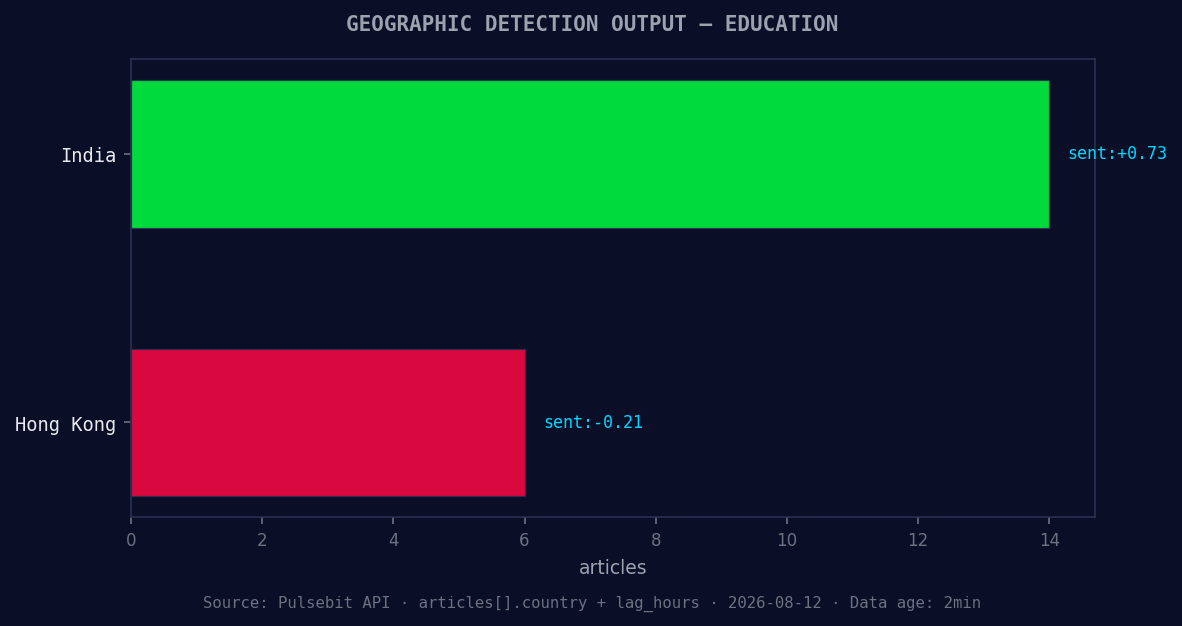
*Geographic detection output for education. India leads with 14 articles and sentiment +0.73. Source: Pulsebit /news_recent geographic fields.*
# Step 2: Make the API call
response = requests.get('https://api.pulsebit.com/sentiment', params=params)
data = response.json()
print(data)

Left: Python GET /news_semantic call for 'education'. Right: returned JSON response structure (clusters: 3). Source: Pulsebit /news_semantic.
This code snippet filters for English language articles related to education, helping us catch the relevant sentiment shifts. Now, to deepen our understanding, we need to run the cluster reason string back through our sentiment endpoint. This will help us score the narrative framing itself.
# Step 3: Analyze the narrative framing
narrative = "Clustered by shared themes: trainers, training, master, outcome-based, education"
narrative_response = requests.post('https://api.pulsebit.com/sentiment', json={"text": narrative})
narrative_data = narrative_response.json()
print(narrative_data)
This second API call examines how the narrative itself is being perceived, providing a meta-sentiment moment that can shape our understanding of the conversation around education.
Now that we have this data, there are three specific builds we can implement based on the insights gained from our analysis:
Geo-Filtered Alert System: Set a threshold for sentiment momentum at -0.2 for English-speaking articles. Trigger alerts when this threshold is crossed, ensuring we catch any significant shifts in sentiment related to education.
Meta-Sentiment Dashboard: Create a dashboard that visualizes the narrative scores from the meta-sentiment loop. Use this to track how language and framing affect overall sentiment in clusters related to education and training.
Forming Themes Tracker: Build a tracker that monitors forming themes in education. Set specific signals for topics like "students" and "school" with a threshold score of +0.00, allowing us to capture emerging discussions versus established narratives around "trainers" and "training."
With these implementations, we can get ahead of the game rather than trailing behind. If you’re ready to dive in and build your own sentiment analysis pipeline, check out our documentation at pulsebit.lojenterprise.com/docs. You can copy-paste and run this code in under 10 minutes to start capturing these insights today.


Top comments (0)