

Your Pipeline Is 20.5h Behind: Catching Healthcare Sentiment Leads with Pulsebit
We recently noticed a striking anomaly: a 24h momentum spike of -0.302 in the healthcare sector. This indicates a significant drop in sentiment that could impact decision-making and investment strategies. The leading language in this context was English, lagging behind Hindi by 20.5 hours, suggesting a potential oversight in how we process multilingual data. This gap can skew your insights, and as developers, we can't afford to miss these critical shifts.

English coverage led by 20.5 hours. Hindi at T+20.5h. Confidence scores: English 0.80, Spanish 0.80, French 0.80 Source: Pulsebit /sentiment_by_lang.
When your pipeline doesn’t accommodate multilingual origins or the dominance of certain entities, you risk being misled by outdated data. In this case, your model missed the drop in sentiment by 20.5 hours, which is a substantial lag. The leading language in this spike was English, yet the dominant narrative emerged from Hindi sources. Ignoring this type of anomaly can lead to misguided strategies and missed opportunities in rapidly evolving sectors like healthcare.
To catch these discrepancies, we can leverage our API effectively. Here's a Python code snippet to detect this momentum spike and analyze it:
import requests
# Define the parameters for the API call
topic = 'healthcare'
score = -0.050
confidence = 0.80
momentum = -0.302
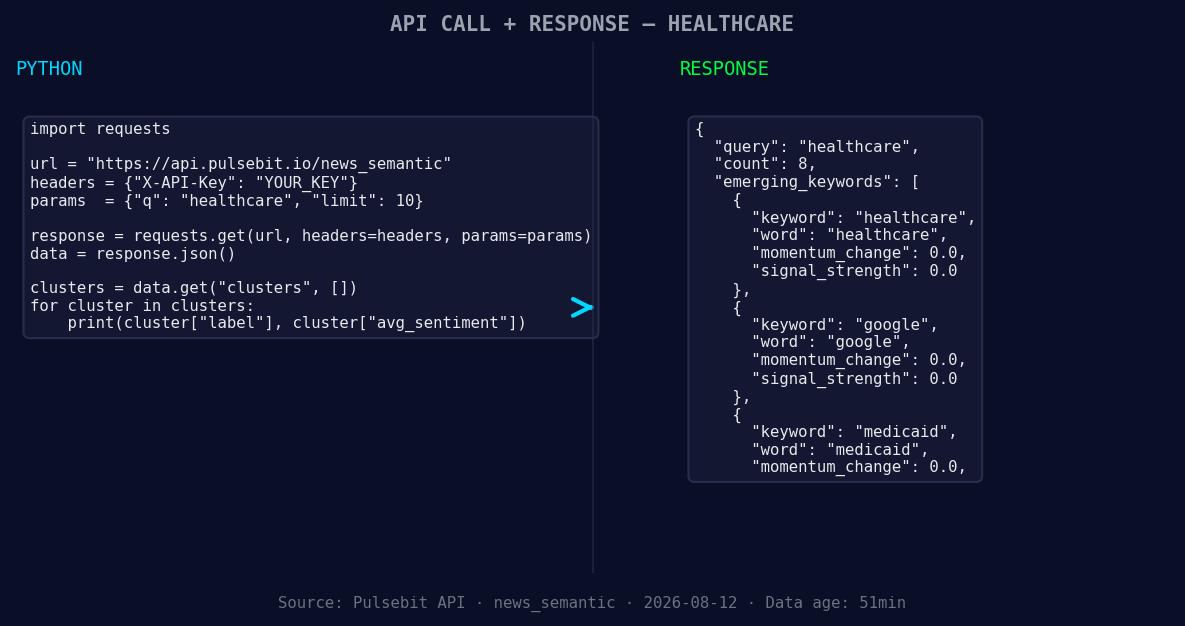
*Left: Python GET /news_semantic call for 'healthcare'. Right: returned JSON response structure (clusters: 3). Source: Pulsebit /news_semantic.*
# Geographic origin filter - querying for English language data
geo_filter_url = "https://api.pulsebit.com/sentiment"
params = {
"topic": topic,
"lang": "en"
}
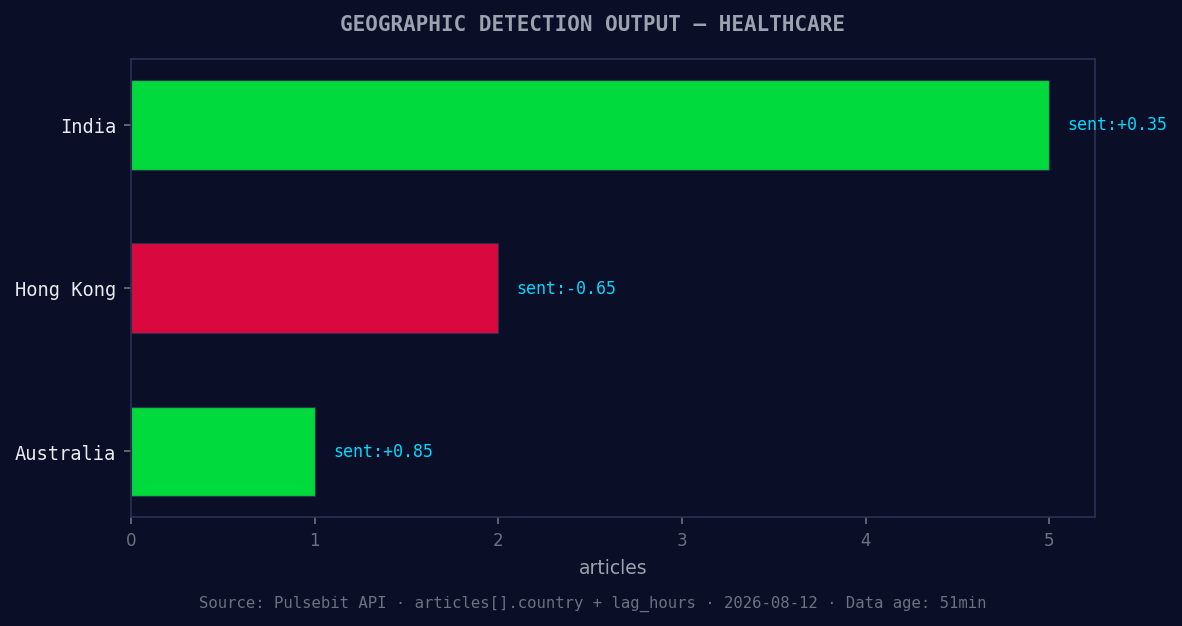
*Geographic detection output for healthcare. India leads with 5 articles and sentiment +0.35. Source: Pulsebit /news_recent geographic fields.*
# Make the API call
response = requests.get(geo_filter_url, params=params)
data = response.json()
print(data)
# Meta-sentiment moment - scoring the narrative framing
cluster_reason = "Clustered by shared themes: state, guidelines, advance, medical, directives."
meta_sentiment_url = "https://api.pulsebit.com/sentiment"
meta_response = requests.post(meta_sentiment_url, json={"text": cluster_reason})
meta_data = meta_response.json()
print(meta_data)
In this code, we first filter our results by language, specifically targeting English. This ensures we capture the relevant sentiment data without the noise from other languages. Next, we run the narrative framing through our API to score its sentiment. This dual approach allows us to catch nuanced insights that might otherwise be overlooked.
Now, here are three specific builds we can implement based on this discovery:
Anomaly Detector: Create a signal that alerts you when the momentum score drops below a threshold (e.g., -0.3) for the healthcare topic while ensuring you filter results by language. This should allow you to catch significant shifts in sentiment early.
Cluster Sentiment Analysis: Use the meta-sentiment loop to evaluate the sentiment of narrative themes clustered around healthcare guidelines. Set a threshold for sentiment scores (e.g., below -0.05) and alert your team when the sentiment around this cluster turns negative.
Formation Monitor: Implement a monitoring system that tracks forming themes like healthcare, Google, and Medicaid against mainstream topics such as state and guidelines. Use the geo filter to ensure you're analyzing the correct language and region for each theme.
These builds will help us stay ahead of sentiment shifts and ensure we’re making informed decisions based on the most accurate and timely data available.
To get started, visit pulsebit.lojenterprise.com/docs. You can copy-paste the code above and run it in under 10 minutes. Let’s ensure our pipelines are as sharp as the insights we aim to uncover.


Top comments (0)