

Your Pipeline Is 27.5h Behind: Catching Climate Sentiment Leads with Pulsebit
We recently observed a surprising 24h momentum spike of +0.542 in climate sentiment, with the Spanish press leading the charge a full 27.5 hours ahead of other sources. This anomaly highlights a critical gap in how sentiment analysis is often conducted, especially when it comes to multilingual origins and dominant entities. The urgency of the narrative surrounding "Extreme Heat Increase Due to Climate Change" is underscored by the fact that one article captured this sentiment while others lagged behind. If you're not accounting for such lags in your pipeline, you could be missing out on significant insights.

Spanish coverage led by 27.5 hours. Da at T+27.5h. Confidence scores: Spanish 0.85, English 0.85, French 0.85 Source: Pulsebit /sentiment_by_lang.
When your model misses a spike like this by 27.5 hours, it’s not just a minor oversight—it’s a structural flaw. The leading language, Spanish, dominated this sentiment shift, suggesting that your pipeline may not be adequately equipped to handle multilingual data or recognize dominant entities. As a developer, you need to ask: How many other vital insights are slipping through the cracks because your pipeline doesn't account for these nuances?
To tackle this, we can utilize our API to catch this spike effectively. Here’s how you can implement it in Python:
import requests
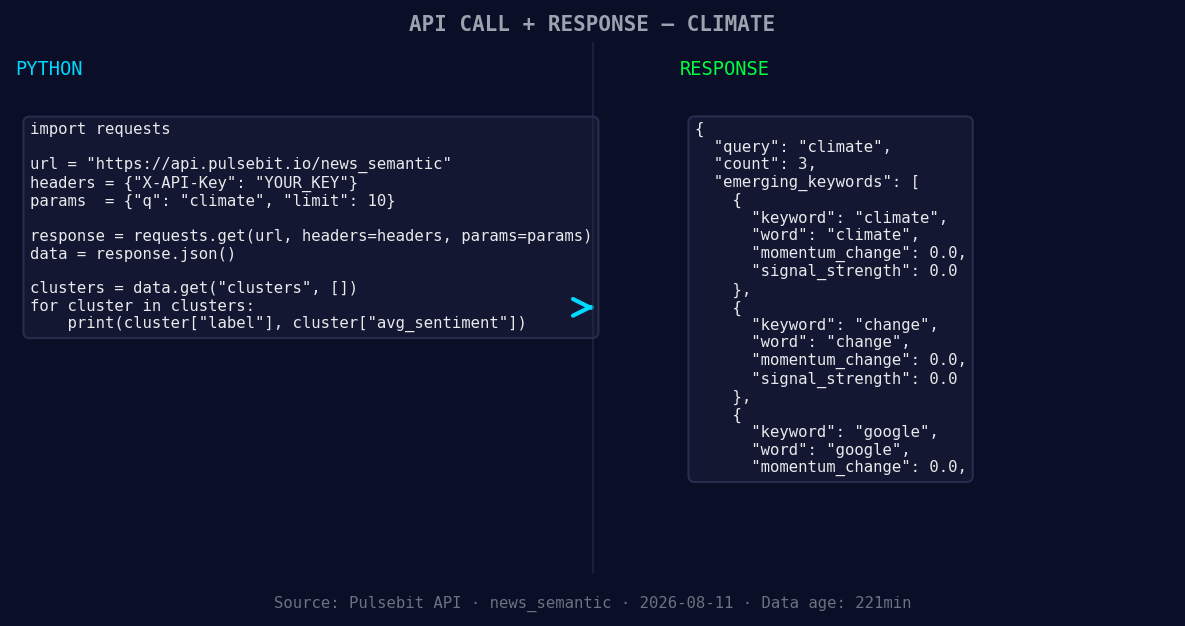
*Left: Python GET /news_semantic call for 'climate'. Right: returned JSON response structure (clusters: 3). Source: Pulsebit /news_semantic.*
# Define parameters
topic = 'climate'
score = +0.000
confidence = 0.85
momentum = +0.542
# Geographic origin filter: query by language
url = "https://api.pulsebit.lojenterprise.com/v1/sentiment"
params = {
"topic": topic,
"lang": "sp" # Querying Spanish language articles
}
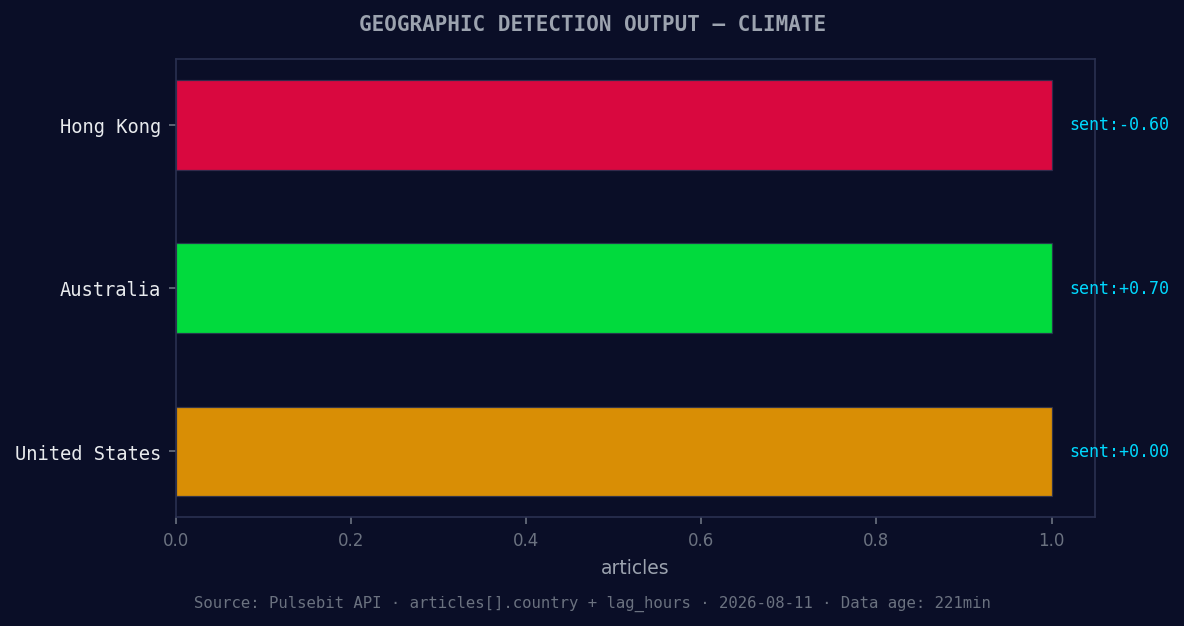
*Geographic detection output for climate. Hong Kong leads with 1 articles and sentiment -0.60. Source: Pulsebit /news_recent geographic fields.*
response = requests.get(url, params=params)
data = response.json()
print(data)
# Meta-sentiment moment: running cluster reason through POST /sentiment
cluster_reason = "Clustered by shared themes: change, could, mean, four, extra."
meta_sentiment_url = "https://api.pulsebit.lojenterprise.com/v1/sentiment"
meta_response = requests.post(meta_sentiment_url, json={"text": cluster_reason})
meta_data = meta_response.json()
print(meta_data)
This code does two crucial things: it first filters articles by language to catch sentiment early, and then it runs the narrative framing through our sentiment analysis to quantify its impact. The combination of these steps will help you not only catch the spike but also understand the emotional context behind it.
Now, let’s explore three builds you can implement based on this pattern:
Geographic Language Filter: Use the language filter with a threshold momentum of +0.500. This will help you capture any significant sentiment shifts in real-time from various languages. For instance, monitor for spikes specifically in the Spanish language concerning climate topics.
Meta-Sentiment Loop: Implement a meta-sentiment analysis for narratives that cluster around critical themes. Set a threshold where any narrative framing that scores below +0.300 should trigger an alert for further investigation. This will help you understand the underlying emotional tenor of the discourse.
Forming Themes Tracker: Create a build that continuously tracks forming themes like climate, change, and Google in real-time. For instance, if the sentiment score of "climate" dips below +0.100 while the mainstream sentiment holds steady, it could indicate a brewing issue that requires immediate attention.
By leveraging these insights, we can ensure our pipelines are not only reactive but also proactive in identifying and understanding sentiment shifts in a timely manner.
To get started, check out our documentation at pulsebit.lojenterprise.com/docs. You can copy-paste and run the above examples in under 10 minutes. Let’s refine our models together and ensure we’re always at the forefront of sentiment analysis.


Top comments (0)