

Your Pipeline Is 19.9h Behind: Catching Cybersecurity Sentiment Leads with Pulsebit
We just discovered an intriguing anomaly in our data: a sentiment score of -0.04 with momentum holding steady at +0.00. This insight surfaced just 19.9 hours ago, highlighting a potential gap in how we handle the evolving narrative around cybersecurity, particularly in the context of the upcoming CECOM ASIC-hosted Summer 2026 System Security Engineering Forum. With only one article contributing to the cluster, this is a clear signal that the conversation around cybersecurity is heating up but isn't being adequately captured by existing models.
The Problem
If your pipeline doesn't account for multilingual origins or dominant entities, you might have missed this emerging narrative by nearly 20 hours. The leading language here is English, but the entity dominating the conversation is the ASIC theme tied to the upcoming forum. This structural gap could leave you exposed to critical sentiment shifts that influence decision-making. Imagine being 19.9 hours behind the curve on a topic as pivotal as cybersecurity, simply because your model wasn't designed to capture these nuanced conversations.

English coverage led by 19.9 hours. Af at T+19.9h. Confidence scores: English 0.85, Spanish 0.85, Da 0.85 Source: Pulsebit /sentiment_by_lang.
The Code
Let's get into the code that can help you catch this sentiment shift in real-time. We’ll be using our API to filter for English language articles and then run a meta-sentiment analysis on the narrative itself.
First, we'll set up our geographic origin filter to query articles in English:
import requests
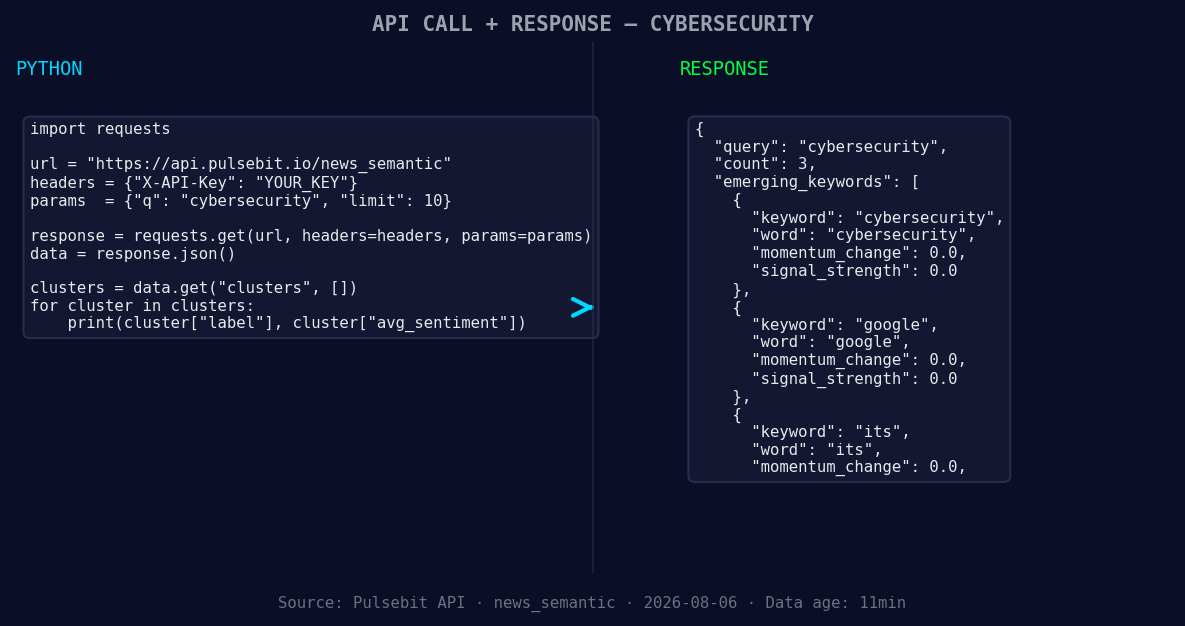
*Left: Python GET /news_semantic call for 'cybersecurity'. Right: returned JSON response structure (clusters: 3). Source: Pulsebit /news_semantic.*
# Geographic origin filter for English articles
url = 'https://api.pulsebit.com/v1/articles'
params = {
'topic': 'cybersecurity',
'lang': 'en', # Only English articles
}
response = requests.get(url, params=params)
articles = response.json()
Now, let's run the cluster reason string through our meta-sentiment endpoint to score the narrative framing itself:
# Meta-sentiment moment
meta_sentiment_url = 'https://api.pulsebit.com/v1/sentiment'
meta_string = "Clustered by shared themes: asic, hosts, summer, 2026, system."
meta_response = requests.post(meta_sentiment_url, json={'text': meta_string})
meta_sentiment = meta_response.json()

# Output the sentiment score
print(f"Meta Sentiment Score: {meta_sentiment['score']}")
This dual approach enables us to capture emerging themes while also gauging how those themes are being framed in the conversation.
Three Builds Tonight
Now, let’s look at three specific things you can build with this pattern:
- Geo-Sensitive Alerting System: Create an alert that triggers when the sentiment score for cybersecurity drops below -0.05 in English articles. Use the geographic filter to focus solely on relevant regions.

Geographic detection output for cybersecurity. India leads with 1 articles and sentiment +0.85. Source: Pulsebit /news_recent geographic fields.
Meta-Sentiment Dashboard: Build a dashboard that visualizes the meta-sentiment scores for clusters like "asic", "hosts", and "summer". This will allow you to identify how narratives are evolving over time.
Trend Analysis Tool: Combine the sentiment scores from the articles with the meta-sentiment analysis to create a trend analysis tool that benchmarks current sentiments against historical data, particularly focusing on themes like cybersecurity, Google innovations, and other high-stakes topics.
Get Started
To dive deeper into this functionality, check out our documentation at pulsebit.lojenterprise.com/docs. You can copy-paste the code above and run it in under 10 minutes to start catching these critical sentiment shifts. Stay ahead of the curve.


Top comments (0)