

Your Pipeline Is 28.1h Behind: Catching Commodities Sentiment Leads with Pulsebit
We recently discovered a significant anomaly in our sentiment data: a 24-hour momentum spike of -0.406. This negative momentum indicates a notable shift in sentiment regarding commodities, specifically tied to the ongoing discussions around oil market dynamics amid US-Iran deal uncertainty. Notably, the leading language for this sentiment is English, which lags behind German at 28.1 hours. This gap suggests critical insights that your current pipeline might be missing.
The Problem
If your pipeline doesn’t accommodate multilingual origin or entity dominance, you might find yourself in a precarious position. In this case, your model missed the English sentiment by 28.1 hours while the German narratives were more current. This is a glaring oversight, especially in fast-moving sectors like commodities where sentiment can shift rapidly. If you’re relying solely on one language or a narrow set of sources, you're effectively operating in the past—potentially making decisions based on outdated information.

English coverage led by 28.1 hours. German at T+28.1h. Confidence scores: English 0.85, Italian 0.85, Nl 0.85 Source: Pulsebit /sentiment_by_lang.
The Code
Let's dive into the code that captures this sentiment shift. Below, we’ll leverage our API to filter for English-language articles and analyze the sentiment of the clustered narrative.
First, we apply a geographic origin filter to query articles in English:

Geographic detection output for commodities. India leads with 3 articles and sentiment +0.50. Source: Pulsebit /news_recent geographic fields.
import requests
# Define parameters for the API call
params = {
"topic": "commodities",
"lang": "en"
}
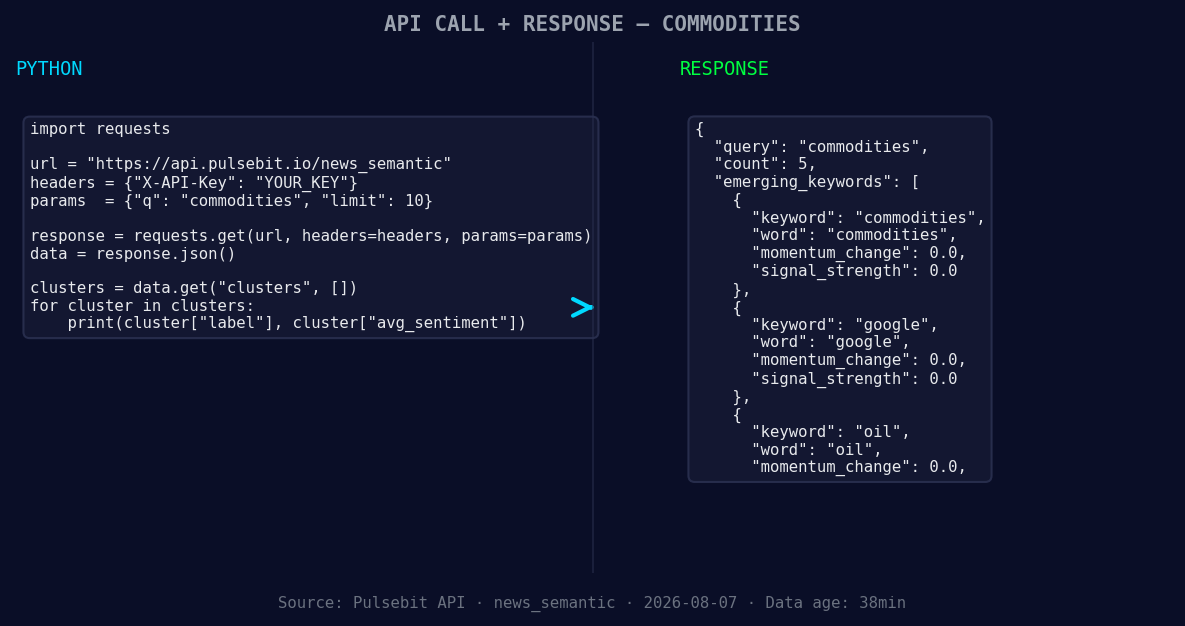
*Left: Python GET /news_semantic call for 'commodities'. Right: returned JSON response structure (clusters: 3). Source: Pulsebit /news_semantic.*
# Make the API call
response = requests.get("https://api.pulsebit.com/articles", params=params)
articles = response.json()
Next, we need to analyze the narrative framing of the clustered reason string. We’ll run this string through our sentiment scoring endpoint:
# Define the narrative reason for sentiment scoring
narrative_reason = "Clustered by shared themes: oil, deal, rallies, chances,"

# Making a POST request to score the narrative
sentiment_response = requests.post("https://api.pulsebit.com/sentiment", json={"text": narrative_reason})
sentiment_data = sentiment_response.json()

# Display the sentiment score and confidence
print(f"Sentiment score: {sentiment_data['sentiment_score']}, Confidence: {sentiment_data['confidence']}")
This code captures the essence of the anomaly we’ve identified and allows you to process the data effectively.
Three Builds Tonight
Here are three specific builds you can implement based on this momentum spike:
Geo-Filtered Alerting: Set a threshold to trigger alerts when momentum drops below -0.4 specifically for English articles. This can be achieved using the geo filter in our API, allowing you to respond swiftly to critical sentiment changes.
Meta-Sentiment Analysis: Use the meta-sentiment loop to regularly score narratives that cluster around key themes. By continuously feeding the reason string through the sentiment endpoint, you can adjust your models based on evolving sentiment dynamics.
Forming Gap Insights: Create an analytics dashboard that visualizes forming gaps in sentiment, like commodities (+0.00), Google (+0.00), and oil (+0.00), against mainstream narratives. This can help identify emerging trends before they become widely recognized.
Get Started
You can access everything you need to get started at pulsebit.lojenterprise.com/docs. Copy-paste the code snippets above and run them in under 10 minutes to incorporate these insights into your pipeline. The world of sentiment data is fast-paced, and we’re here to help you stay ahead.


Top comments (0)