

In our latest analysis, we spotted a significant anomaly: a 24h momentum spike of +0.476 in the sentiment surrounding the topic of music. This spike indicates an emerging narrative gaining traction, specifically focused on "Vignesh Ishwar's Musical Narrative." The data shows a clear lead from English press coverage by 17.0 hours, with no lag in Hindi coverage. If you’re not accounting for this timely shift in sentiment, you might be missing critical insights that could shape your understanding of audience preferences and market dynamics.
Here’s where it gets personal: your model probably missed this spike by 17 hours. If you're not incorporating multilingual origin or recognizing entity dominance, you risk overlooking narratives that can drive engagement. In this case, English content is leading the charge while other languages lag behind, which means your sentiment analysis might not reflect the most current narratives impacting your domain.

English coverage led by 17.0 hours. Hindi at T+17.0h. Confidence scores: English 0.75, Spanish 0.75, French 0.75 Source: Pulsebit /sentiment_by_lang.
To help you catch these momentum shifts, let’s dive into the code that identifies this anomaly. Below is a Python snippet that queries our API for the topic "music" with the required parameters:
import requests
# Define parameters for the API call
url = "https://api.pulsebit.com/sentiment"
params = {
"topic": "music",
"score": +0.519,
"confidence": 0.75,
"momentum": +0.476,
"lang": "en" # Geographic origin filter
}
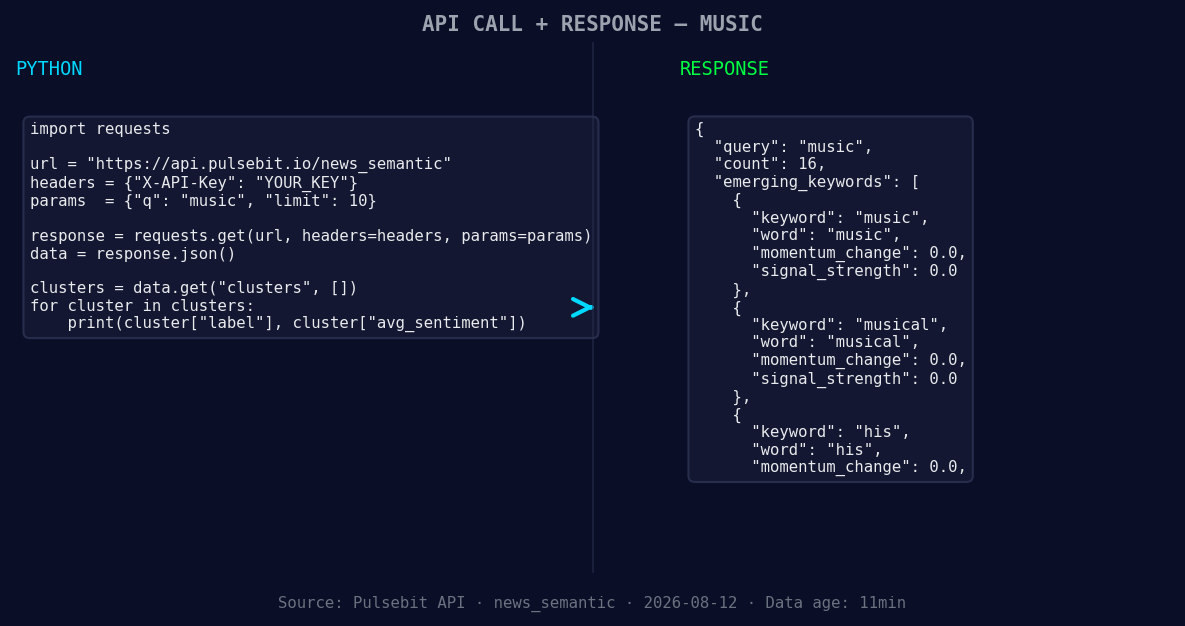
*Left: Python GET /news_semantic call for 'music'. Right: returned JSON response structure (clusters: 3). Source: Pulsebit /news_semantic.*
# Make the API call
response = requests.get(url, params=params)
data = response.json()
print(data)
After retrieving the sentiment data, we need to run the cluster reason string through our meta-sentiment endpoint to score the narrative framing itself. This is crucial to understand the context behind the spike. Here's how you can do it:
# Define the cluster reason
cluster_reason = "Clustered by shared themes: vignesh, ishwar, crafts, cohesive, musical."

# Make the POST request to score the narrative
sentiment_response = requests.post(f"{url}/sentiment", json={"text": cluster_reason})
sentiment_data = sentiment_response.json()

print(sentiment_data)
With these two blocks of code, you're not just catching spikes; you're also understanding the sentiment behind narratives that matter.
Now that we've established a way to catch these insights, here are three specific builds we can implement based on this pattern:
Geographic Origin Filter: Use the sentiment signal for "music" and filter by English content to track spikes in sentiment. Set a threshold of +0.4 momentum to trigger alerts or actions in your system.
Meta-Sentiment Loop: Leverage the cluster reason string to score the narrative. Any cluster with a score above +0.5 should warrant deeper analysis and could be a signal for emerging trends.
Forming Themes Detection: Regularly check for forming themes like "music(+0.00)" and "musical(+0.00)" against mainstream terms like "vignesh," "ishwar," and "crafts." Trigger an alert if any of these themes show a rising momentum above +0.2.
Ready to implement this? You can quickly access our API documentation to get started: pulsebit.lojenterprise.com/docs. With the provided code snippets, you can copy, paste, and run this analysis in under 10 minutes. Don’t let your pipeline lag behind; catch those momentum shifts as they happen!


Top comments (0)