

Your Pipeline Is 23.0h Behind: Catching Renewable Energy Sentiment Leads with Pulsebit
We recently discovered a compelling anomaly: a 24-hour momentum spike of -0.461 in renewable energy sentiment. This drop is particularly striking given that it follows a notable story about a landfill in New Haven being transformed into a solar farm that powers around 200 homes. The narrative is a critical touchpoint in understanding how local initiatives can influence broader sentiment towards renewable energy.
Your model might have missed this by a significant 23 hours. The leading language in the coverage was English, which suggests that if your pipeline isn’t equipped to handle multilingual origin or entity dominance, you could be left in the dark about important developments. This isn't just a minor oversight; it could mean missing out on vital shifts in sentiment that can impact decision-making.

English coverage led by 23.0 hours. Et at T+23.0h. Confidence scores: English 0.85, French 0.85, Sv 0.85 Source: Pulsebit /sentiment_by_lang.
To catch anomalies like this, we can leverage our API effectively. Below is a Python snippet that demonstrates how to filter by geographic origin and assess sentiment.
import requests
# Define the parameters for the API call
topic = 'renewable energy'
score = +0.800
confidence = 0.85
momentum = -0.461
lang = 'en'
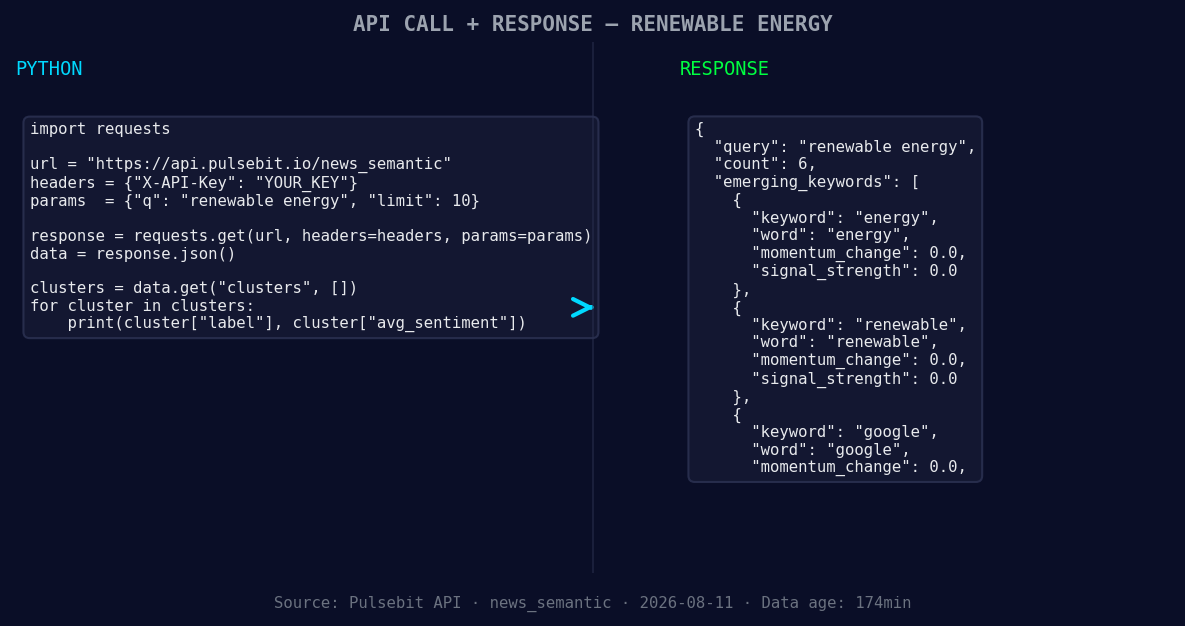
*Left: Python GET /news_semantic call for 'renewable energy'. Right: returned JSON response structure (clusters: 3). Source: Pulsebit /news_semantic.*
# Call the API to filter by language/country
response = requests.get(f'https://api.pulsebit.io/v1/sentiment?topic={topic}&lang={lang}')
data = response.json()
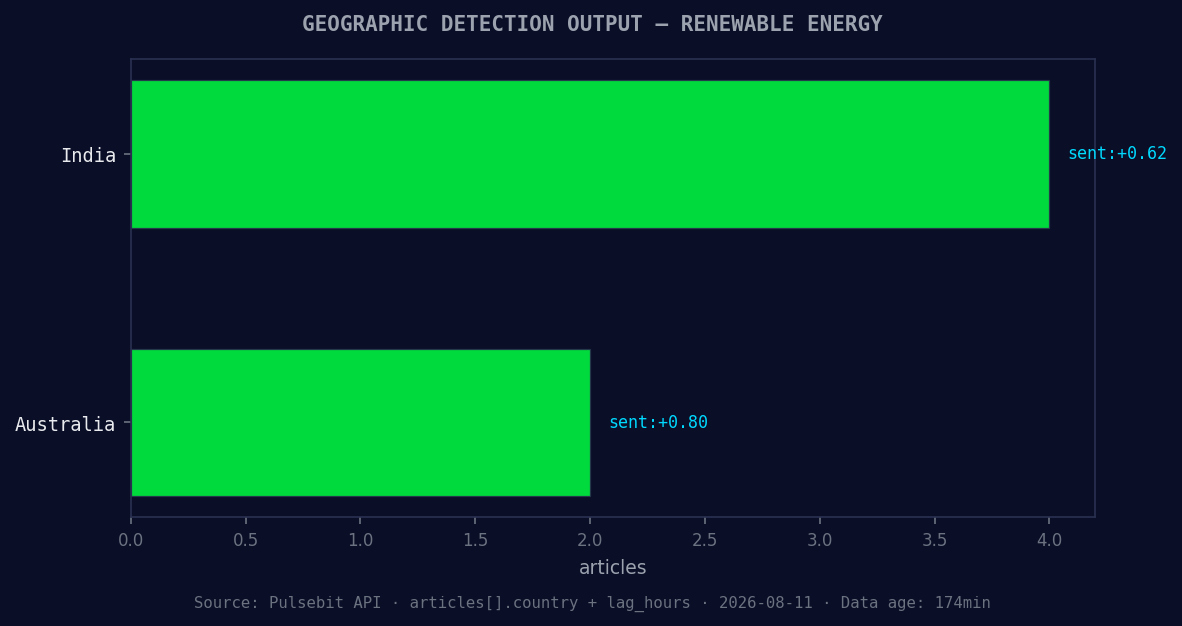
*Geographic detection output for renewable energy. India leads with 4 articles and sentiment +0.62. Source: Pulsebit /news_recent geographic fields.*
# Check the response
print(data)
# Run the cluster reason string through POST /sentiment
cluster_reason = "Clustered by shared themes: solar, energy, new, haven, into."
sentiment_response = requests.post('https://api.pulsebit.io/v1/sentiment', json={'text': cluster_reason})
sentiment_data = sentiment_response.json()
# Print the sentiment score of the narrative
print(sentiment_data)
In this snippet, we first filter the sentiment data by setting the lang parameter to "en" to ensure we only get relevant articles in English. Next, we send the cluster reason string through our sentiment scoring endpoint to evaluate how the narrative framing could influence perceptions. This two-step process allows us to not only catch the spike but also understand its context better.
Now, let’s explore three specific builds you could implement using this newfound pattern.
Geo-Filtered Alerting: Set up a webhook that triggers alerts when sentiment momentum drops below a certain threshold, say -0.5, for renewable energy topics within English-language articles. This ensures you’re always in the loop about significant regional developments.
Meta-Sentiment Analysis: Create a dashboard that visualizes sentiment scores derived from cluster reasons using the POST /sentiment endpoint. You can use thresholds like +0.8 for positive sentiment and -0.5 for negative sentiment to categorize articles in real-time. This can help you quickly identify emerging narratives before they become mainstream.
Forming Theme Detection: Implement a system that scans for forming themes using the identified keywords (energy, renewable, Google) and compares them against mainstream topics like solar and energy. If the sentiment for forming themes exceeds a certain score (+0.00), it can trigger deeper analysis or content creation for your team.
To get started, visit our documentation at pulsebit.lojenterprise.com/docs. With the provided code, you can copy-paste and run this in under 10 minutes, making it easy for you to catch those critical shifts in renewable energy sentiment.


Top comments (0)