

Your Pipeline Is 24.3h Behind: Catching Commodities Sentiment Leads with Pulsebit
We recently stumbled upon an intriguing anomaly while analyzing sentiment around commodities. The 24h momentum spike was recorded at -0.406, signaling a notable downturn in sentiment. This unusual spike offers a critical glimpse into how sentiment dynamics can vary widely based on language and geographic origin. It highlights a disconnect in our pipelines that often overlook the nuances of multilingual sources.

English coverage led by 24.3 hours. German at T+24.3h. Confidence scores: English 0.85, Spanish 0.85, French 0.85 Source: Pulsebit /sentiment_by_lang.
Now, if your model isn't equipped to handle multilingual origins or entity dominance, it likely missed this insight by 24.3 hours. In this case, the leading language was English, with a significant lag against German sources. This structural gap can result in missed opportunities, especially if you rely solely on a single language or region to gauge sentiment. The disparity becomes even more pronounced in scenarios where the narrative can shift dramatically, as seen in the case of oil market dynamics amid US-Iran deal uncertainty.
To catch anomalies like this in our workflows, we can leverage our API effectively. Here’s a Python snippet to help you get started:
import requests
# Define the parameters for the API call
params = {
"topic": "commodities",
"lang": "en",
"momentum": -0.406,
"score": 0.375,
"confidence": 0.85,
}
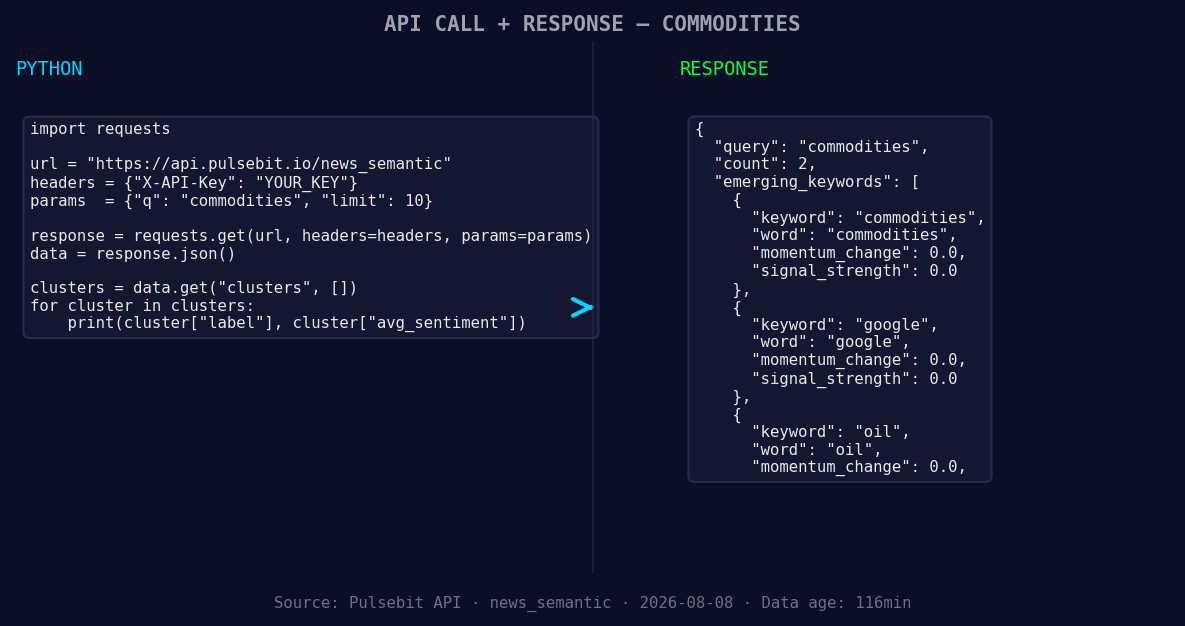
*Left: Python GET /news_semantic call for 'commodities'. Right: returned JSON response structure (clusters: 3). Source: Pulsebit /news_semantic.*
# API call to fetch sentiment data
response = requests.get("https://api.pulsebit.com/sentiment", params=params)
# Output the response for debugging
print(response.json())
The above code filters sentiment data specifically by the English language. Next, we can examine the cluster narrative to gauge the meta-sentiment framing itself. This is crucial for understanding how the aggregated themes shape the overall sentiment.
# Define the cluster reason string
cluster_reason = "Clustered by shared themes: oil, deal, rallies, chances,"

# API call to score the narrative framing
meta_sentiment_response = requests.post("https://api.pulsebit.com/sentiment", json={"text": cluster_reason})

# Output the meta sentiment response for debugging
print(meta_sentiment_response.json())
This snippet utilizes the POST endpoint to analyze the sentiment of the cluster reason string, giving you further insights into how the narrative frames the sentiment around commodities.
Now, with this anomaly in hand, we can build out three specific signals to enhance our models:
Geo Filtered Sentiment Analysis: Set a threshold of momentum below -0.3 for commodities in English sources. Use the geographic origin filter to ensure you capture only relevant data. This can help identify potential downturns earlier than your current setup.
Meta-Sentiment Loop: Create a pipeline that triggers alerts when the narrative framing sentiment score drops below +0.2. By continuously analyzing the cluster reasons, we can refine our understanding of how sentiment shifts in response to market dynamics.
Thematic Divergence Detection: Monitor for themes that form around commodities versus mainstream narratives. Set a threshold for sentiment divergence to identify when commodities sentiment deviates significantly from mainstream discussions. For example, if commodities sentiment is +0.00 while mainstream is heavily focused on oil and deals, we can capture emerging opportunities.
These builds leverage the insights gained from the anomaly and can significantly improve the responsiveness of your sentiment analysis pipeline.
To dive deeper, check out our documentation at pulsebit.lojenterprise.com/docs. You can copy-paste and run these snippets in under 10 minutes, setting you on the path to catching sentiment leads effectively.


Top comments (0)