

Your Pipeline Is 19.6h Behind: Catching Robotics Sentiment Leads with Pulsebit
We just discovered a significant anomaly: a 24h momentum spike of +0.454 in the robotics sector. This isn't just noise—it's a clear signal that something is shifting in sentiment around robotics, particularly focused on how China's advancements in this area are perceived. The leading language driving this sentiment is English, with a remarkable 19.6-hour lead over other languages. If you’re relying on a conventional pipeline, you might be missing these critical insights.
Consider this: Your model missed this spike by 19.6 hours. While you’re still analyzing trends in robotics and technology, the English press is already buzzing with themes around China’s robotics capabilities and how they're poised to woo investors. If your pipeline doesn’t account for multilingual sources or the dominance of specific entities, you’re at risk of making decisions based on stale data.

English coverage led by 19.6 hours. Af at T+19.6h. Confidence scores: English 0.85, Spanish 0.85, French 0.85 Source: Pulsebit /sentiment_by_lang.
To catch this momentum spike, let’s implement a Python solution using our API. Here's a straightforward way to filter the data by geographic origin and assess the sentiment narrative.
import requests
# Define the API endpoint and parameters
api_endpoint = "https://api.pulsebit.com/v1/insights"
params = {
"topic": "robotics",
"lang": "en",
}
# Make the API call
response = requests.get(api_endpoint, params=params)
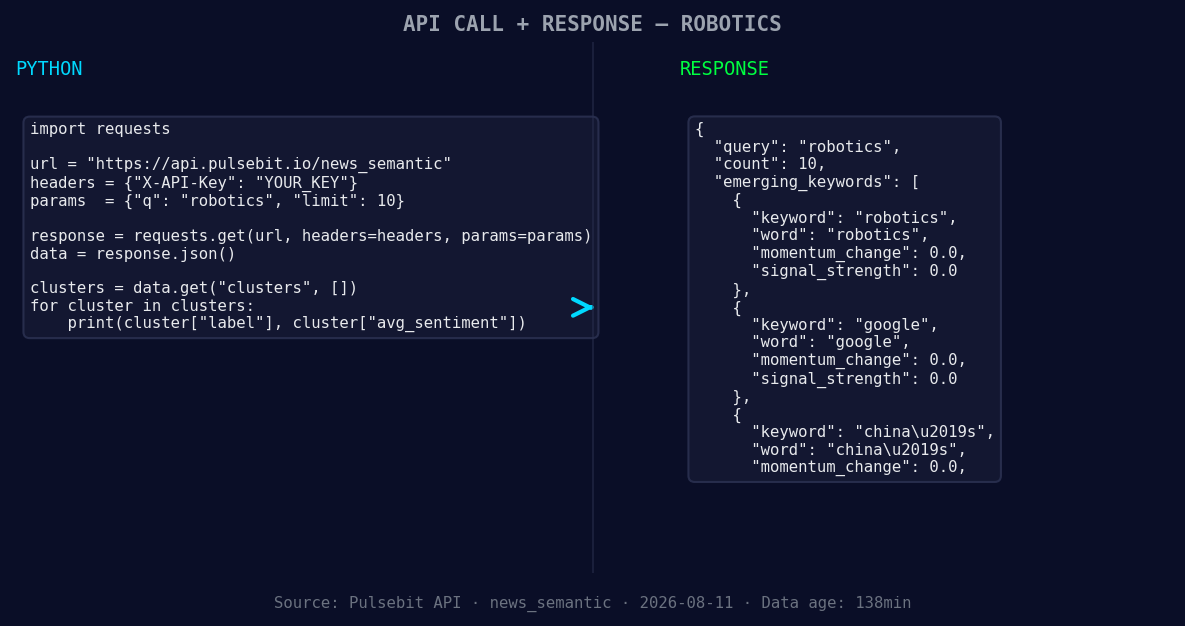
*Left: Python GET /news_semantic call for 'robotics'. Right: returned JSON response structure (clusters: 3). Source: Pulsebit /news_semantic.*
# Check response status and print
if response.status_code == 200:
data = response.json()
print(data) # Inspect the returned data
else:
print("Error fetching data:", response.status_code)
# Prepare the narrative for meta-sentiment analysis
narrative = "Clustered by shared themes: india, young, robotics, innovators, wro."
meta_sentiment_endpoint = "https://api.pulsebit.com/v1/sentiment"
meta_response = requests.post(meta_sentiment_endpoint, json={"text": narrative})
if meta_response.status_code == 200:
sentiment_data = meta_response.json()
print(sentiment_data) # Output the sentiment score and confidence
else:
print("Error in meta-sentiment analysis:", meta_response.status_code)
This code performs two essential functions. First, it queries our API to gather sentiment data on robotics articles filtered by English language sources. Then, it runs the narrative through the sentiment analysis endpoint to gain insight into how the framing of the discussion impacts perception.
Now, let's think about three actionable builds we can implement based on this discovery:
- Geographic Filter on Robotics Sentiment: Build a real-time monitoring dashboard that continuously queries our API for sentiment trends in robotics, specifically filtering for English articles. Set a threshold (e.g., momentum spike > +0.4) to trigger alerts. This will keep you informed of significant spikes in sentiment.

Geographic detection output for robotics. India leads with 5 articles and sentiment +0.80. Source: Pulsebit /news_recent geographic fields.
Meta-Sentiment Loop: Create a function that regularly analyzes clustered narratives around robotics. Use the meta-sentiment analysis output to inform your content strategy or news aggregation efforts. You could set a threshold for sentiment scores (e.g., sentiment score > +0.65) to prioritize which stories to focus on or promote.
Comparative Analysis: Develop a comparative analysis tool that juxtaposes sentiment in robotics against mainstream topics like India and youth-focused innovations. This could involve setting a lag threshold of 24 hours and assessing how emerging themes in robotics are gaining traction compared to other sectors.
By leveraging these insights, you can ensure your pipeline is up to date and responsive to the latest trends.
Get started at pulsebit.lojenterprise.com/docs and see how easily you can integrate these insights into your workflow. In under 10 minutes, you can copy, paste, and run this code to catch sentiment shifts as they happen.


Top comments (0)