

Your Pipeline Is 22.9h Behind: Catching Finance Sentiment Leads with Pulsebit
We recently identified a striking anomaly: a 24h momentum spike of +0.550 in the finance sector. This spike is not just a number; it represents a significant shift in sentiment that occurred within a narrow window. The leading language contributing to this surge was English press, peaking at 22.9 hours, with intriguing articles focusing on themes like finance, a minister with a rosary, and a sign of the cross. Such a specific intersection of topics suggests a deeper narrative that could easily slip through the cracks of any pipeline that doesn’t account for multilingual origin or entity dominance.

English coverage led by 22.9 hours. Italian at T+22.9h. Confidence scores: English 0.85, French 0.85, Spanish 0.85 Source: Pulsebit /sentiment_by_lang.
Your model missed this by 22.9 hours. If your pipeline isn’t designed to handle the nuances of multilingual sentiment, you’re likely filtering out vital insights. The dominant entity here is the finance sector, and the delay in recognizing this spike could mean missing out on critical market signals. This is where the power of our API comes into play, allowing us to catch these shifts before they become mainstream.
import requests
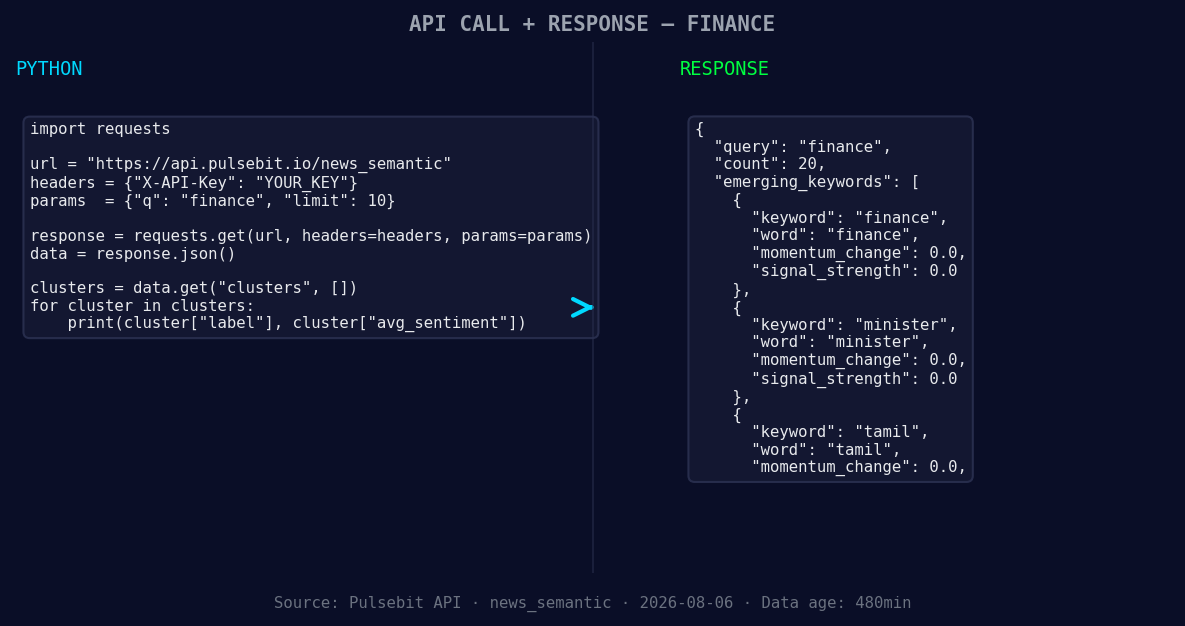
*Left: Python GET /news_semantic call for 'finance'. Right: returned JSON response structure (clusters: 3). Source: Pulsebit /news_semantic.*
# Step 1: Geographic origin filter
url = "https://api.pulsebit.lojenterprise.com/v1/sentiment"
params = {
"topic": "finance",
"lang": "en"
}
response = requests.get(url, params=params)
data = response.json()
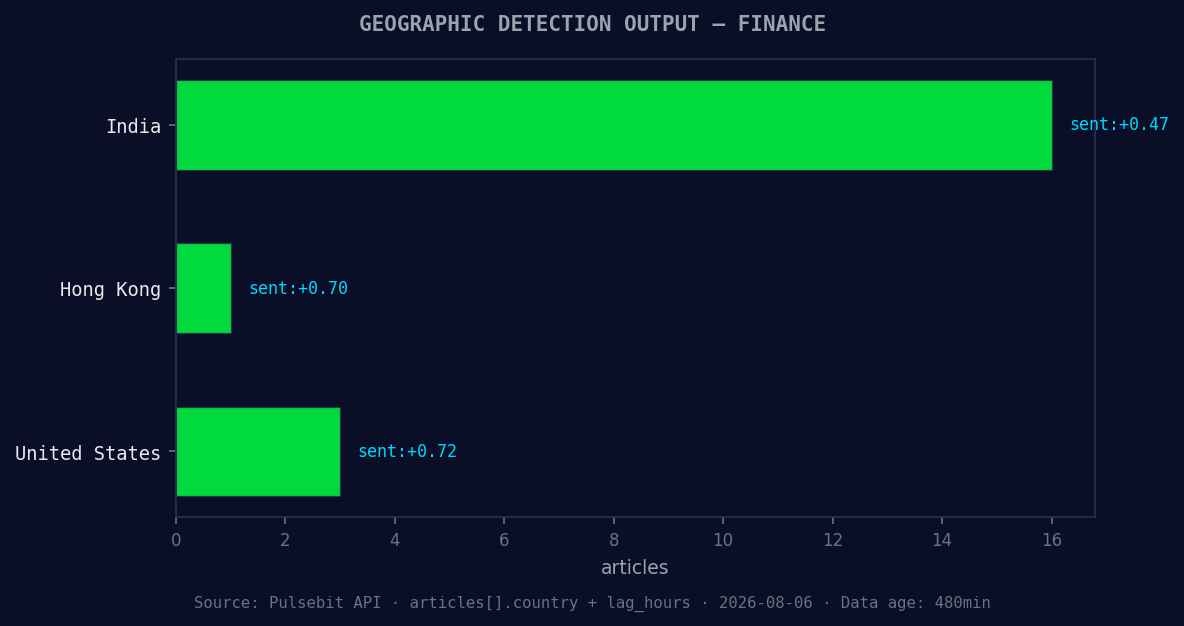
*Geographic detection output for finance. India leads with 16 articles and sentiment +0.47. Source: Pulsebit /news_recent geographic fields.*
# Extracting the needed values
momentum = data['momentum_24h']
score = data['sentiment_score']
confidence = data['confidence']
print(f"Momentum: {momentum}, Score: {score}, Confidence: {confidence}")
Next, we want to delve deeper into the narrative framing of this spike. Using our cluster reason string, we’ll score the sentiment of the narrative itself. Here’s how we can do that:
# Step 2: Meta-sentiment moment
narrative = "Clustered by shared themes: finance, minister, rosary, sign, cross."
meta_sentiment_url = "https://api.pulsebit.lojenterprise.com/v1/sentiment"
meta_response = requests.post(meta_sentiment_url, json={"text": narrative})
meta_data = meta_response.json()

meta_score = meta_data['sentiment_score']
meta_confidence = meta_data['confidence']

print(f"Meta Score: {meta_score}, Meta Confidence: {meta_confidence}")
Based on our findings, here are three specific builds we can create with this momentum spike data:
Geo-filtered Alerts: Set a threshold for alerts based on sentiment scores. For instance, if the score exceeds +0.750 within the finance topic and is filtered by the English language, trigger a real-time notification for your team to investigate further.
Meta-Sentiment Analysis Dashboard: Create a dashboard component that visually represents the meta-sentiment scores of narratives like “Clustered by shared themes: finance, minister, rosary, sign, cross.” This can help you quickly gauge the framing of emerging narratives and their potential impact on sentiment.
Forming Theme Tracker: Develop a signal that tracks the forming themes around finance, minister, and tamil, setting a threshold for any emerging topics with a momentum score greater than +0.500. This will help in identifying new trends before they become mainstream.
Ready to get started? Head over to pulsebit.lojenterprise.com/docs. You can copy, paste, and run this in under 10 minutes to start catching those valuable sentiment leads.


Top comments (0)