

Your Pipeline Is 23.3h Behind: Catching Travel Sentiment Leads with Pulsebit
We recently observed a notable anomaly: a 24h momentum spike of +0.255 in the travel sentiment data. This spike is significant, especially when considering that the leading language driving this momentum is English, with a 23.3-hour lead over Italian. It’s clear that travel sentiment is surging, but if your pipeline isn’t equipped to handle multilingual data or entity dominance, you might be missing critical insights that could inform your strategies.

English coverage led by 23.3 hours. Italian at T+23.3h. Confidence scores: English 0.85, Spanish 0.85, French 0.85 Source: Pulsebit /sentiment_by_lang.
When your model relies solely on a single language or doesn’t account for the dominance of certain entities, you risk being out of sync with emerging trends. In this case, your model missed the travel sentiment spike by a staggering 23.3 hours. This failure to capture the timely shifts in sentiment could mean you're reacting too late to opportunities or threats. The leading language of English is where the action is happening, and if you're only focused on one linguistic output, you’re likely to be stuck behind the curve.
To take immediate action, let’s write some Python code that catches this spike using our API. We’ll filter for English-language articles related to travel and assess their sentiment.
import requests
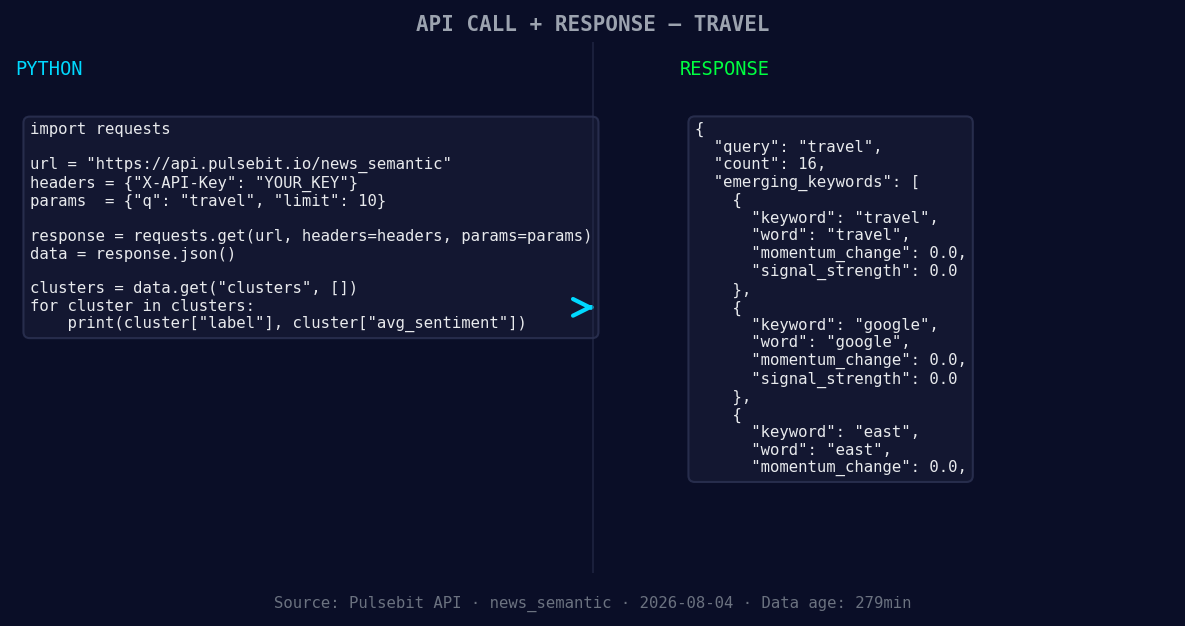
*Left: Python GET /news_semantic call for 'travel'. Right: returned JSON response structure (clusters: 3). Source: Pulsebit /news_semantic.*
# Step 1: Geographic origin filter
topic = 'travel'
params = {
'topic': topic,
'lang': 'en', # Filtering by English language
}
response = requests.get('https://api.pulsebit.com/v1/articles', params=params)
articles = response.json()
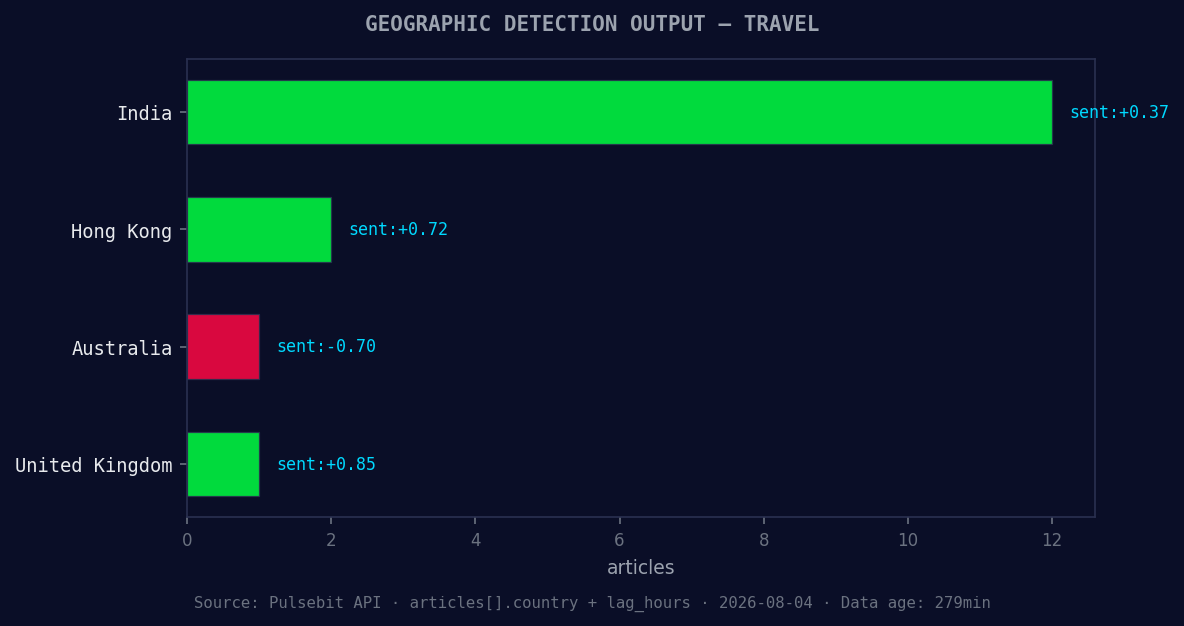
*Geographic detection output for travel. India leads with 12 articles and sentiment +0.37. Source: Pulsebit /news_recent geographic fields.*
# Step 2: Meta-sentiment moment
cluster_reason = "Clustered by shared themes: travel, trend, report, leisure,"
sentiment_response = requests.post('https://api.pulsebit.com/v1/sentiment', json={"text": cluster_reason})
sentiment_score = sentiment_response.json()
# Output the results
print(f"Number of articles processed: {len(articles)}")
print(f"Sentiment score for the cluster: {sentiment_score['score']}")
This code snippet does two key things. First, it queries our API for articles related to travel in English, giving you timely insights into the sentiment landscape. Secondly, it runs a meta-sentiment analysis on the narrative framing using the cluster reason string, which helps you understand the underlying sentiment dynamics driving the travel trend.
Here are three specific builds you can implement with this newfound data:
Geo-Filtered Trend Tracker: Use the geo filter to create a real-time dashboard that highlights emerging travel trends specifically within English-speaking countries. Set a threshold of momentum greater than +0.200 to trigger notifications for unusual spikes.
Meta-Sentiment Analyzer: Build a tool that tracks changes in sentiment based on cluster reasons. Set a threshold of sentiment score above +0.600 to trigger alerts when narratives shift significantly, especially around travel and leisure topics.
Forming Theme Watchlist: Monitor forming themes such as "travel", "google", and "east" against mainstream narratives. Create an API endpoint that tracks performance, and set a threshold to alert when new themes gain traction with a momentum score above +0.150.
With these builds, you’ll be well-equipped to capture and respond to emerging travel sentiment trends, rather than lagging behind by over 23 hours.
To get started, visit pulsebit.lojenterprise.com/docs. You can copy-paste and run this code in under 10 minutes, ensuring you’re not left behind in the fast-paced world of sentiment analysis.


Top comments (0)