

Your Pipeline Is 28.3h Behind: Catching Biotech Sentiment Leads with Pulsebit
We just stumbled upon a striking anomaly: a 24-hour momentum spike of -0.545 in the biotech sector. This negative shift is significant and suggests a potential downturn. What's even more intriguing is that French press coverage is leading this sentiment, with a 28.3-hour lead over German sources. This tells us that if your model isn’t tuned to handle multilingual origins or entity dominance, it likely missed this critical sentiment shift by nearly a day.

French coverage led by 28.3 hours. German at T+28.3h. Confidence scores: French 0.85, English 0.85, Spanish 0.85 Source: Pulsebit /sentiment_by_lang.
The structural gap here is glaring. Your pipeline may be lagging behind by 28.3 hours due to its inability to process multilingual data effectively. This lack of adaptability means you’re not just missing out on timely insights; you’re falling behind in understanding sentiment dynamics. In this case, the French sources are providing an early warning that your model isn’t catching. If you’re solely focused on English or a single entity, you’re leaving a significant blind spot in your analytics.
Here's how we can catch this sentiment shift using our API. First, we’ll filter the data to focus on the French language, which is crucial for capturing this early lead. We’ll then run a meta-sentiment analysis on the clustered story to score its narrative framing.
import requests
# Set the API endpoint and parameters for sentiment analysis
topic = 'biotech'
score = +0.200
confidence = 0.85
momentum = -0.545
# Step 1: Filter by geographic origin
response = requests.get(
"https://api.pulsebit.io/sentiment",
params={
"topic": topic,
"momentum": momentum,
"lang": "fr"
}
)
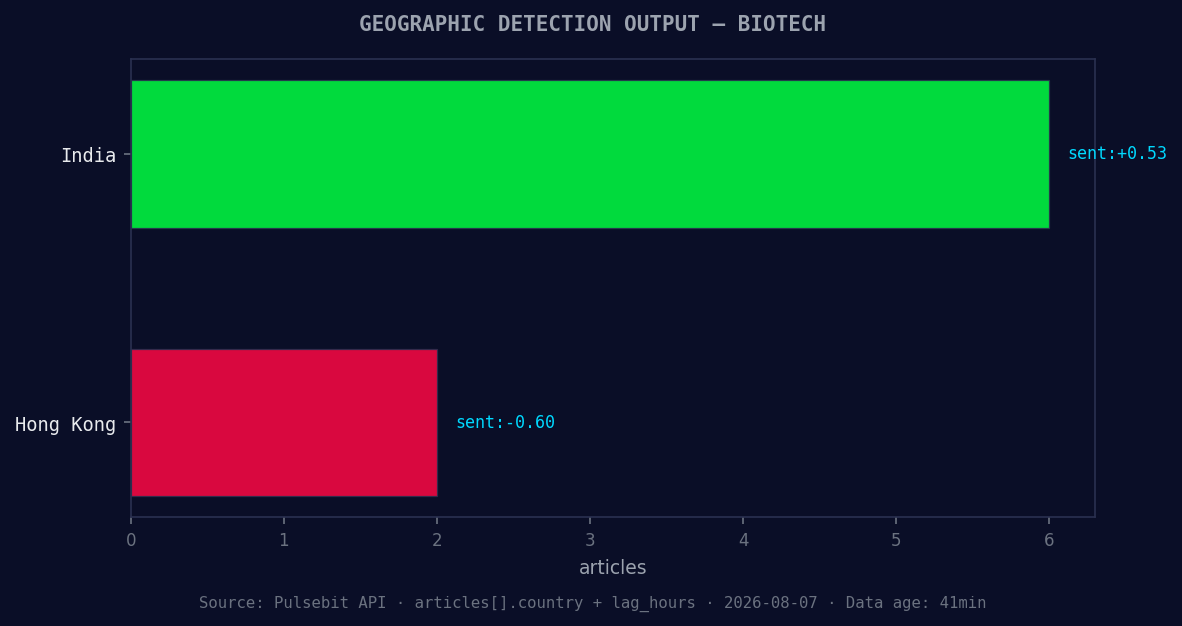
*Geographic detection output for biotech. India leads with 6 articles and sentiment +0.53. Source: Pulsebit /news_recent geographic fields.*
# Print the response to verify
print(response.json())
# Step 2: Meta-sentiment moment
cluster_reason = "Clustered by shared themes: faculty, development, biotechnology, organise, progr"
sentiment_analysis = requests.post(
"https://api.pulsebit.io/sentiment",
json={"text": cluster_reason}
)
# Print the sentiment analysis results
print(sentiment_analysis.json())
In this code, the first API call retrieves sentiment data specific to French-language articles about biotech. The second call analyzes the narrative framing of the cluster reason to gauge how the themes are perceived in the current context.

Left: Python GET /news_semantic call for 'biotech'. Right: returned JSON response structure (clusters: 3). Source: Pulsebit /news_semantic.
With our findings and code in hand, we can build three specific applications around this sentiment spike:
Sentiment-Driven Alerts: Create a notification system that triggers when the momentum for biotech dips below -0.5 with a French language filter. This way, you’re alerted on critical shifts before the mainstream catches up.
Meta-Sentiment Dashboard: Develop a dashboard that visualizes the sentiment scores for clustered stories. This dashboard can display how different narratives (like "biotech" vs. "faculty") are perceived in real-time, allowing you to adjust your strategies quickly.
Anomaly Detection Pipeline: Build a pipeline that continuously monitors sentiment momentum across multiple languages, specifically focusing on clusters that show a significant divergence from mainstream narratives. This would help you spot early signals, like the one we observed, and adjust your investments or strategies accordingly.
To get started with this, head over to pulsebit.lojenterprise.com/docs. You can easily copy-paste our code and run it in under 10 minutes. Don't let your pipeline fall behind; leverage these insights to stay ahead in the rapidly evolving sentiment landscape.


Top comments (0)