

Your Pipeline Is 27.9h Behind: Catching Innovation Sentiment Leads with Pulsebit
We've stumbled upon a significant anomaly: a 24h momentum spike of -0.274 in sentiment around innovation. This negative shift is unexpected, especially considering the urgency surrounding innovation in tech and business. What’s compelling is that the leading language in this narrative is Spanish, with a precise 27.9-hour lead over the German discourse. This raises a critical question for us as developers: Are we really capturing the full picture when it comes to multilingual and multi-entity sentiment analysis?

Spanish coverage led by 27.9 hours. German at T+27.9h. Confidence scores: Spanish 0.75, French 0.75, English 0.75 Source: Pulsebit /sentiment_by_lang.
The striking 27.9-hour lag reveals a critical flaw in any sentiment pipeline that neglects multilingual origins or dominant entities. Your model might have missed this sentiment shift, leaving you behind in interpreting the latest trends. With Spanish press leading the narrative, it becomes clear that if your pipeline is solely tuned to English or a single language, you risk overlooking crucial innovations brewing in other linguistic landscapes. You may not even realize your pipeline is operating with outdated data.
To catch this shift, we can leverage our API effectively. Here’s how we can set up a Python script to capture sentiment around the topic of innovation, specifically filtering for Spanish content:
import requests
# Define the parameters for the API call
params = {
"topic": "innovation",
"score": +0.540,
"confidence": 0.75,
"momentum": -0.274,
"lang": "sp" # Filtering for Spanish content
}
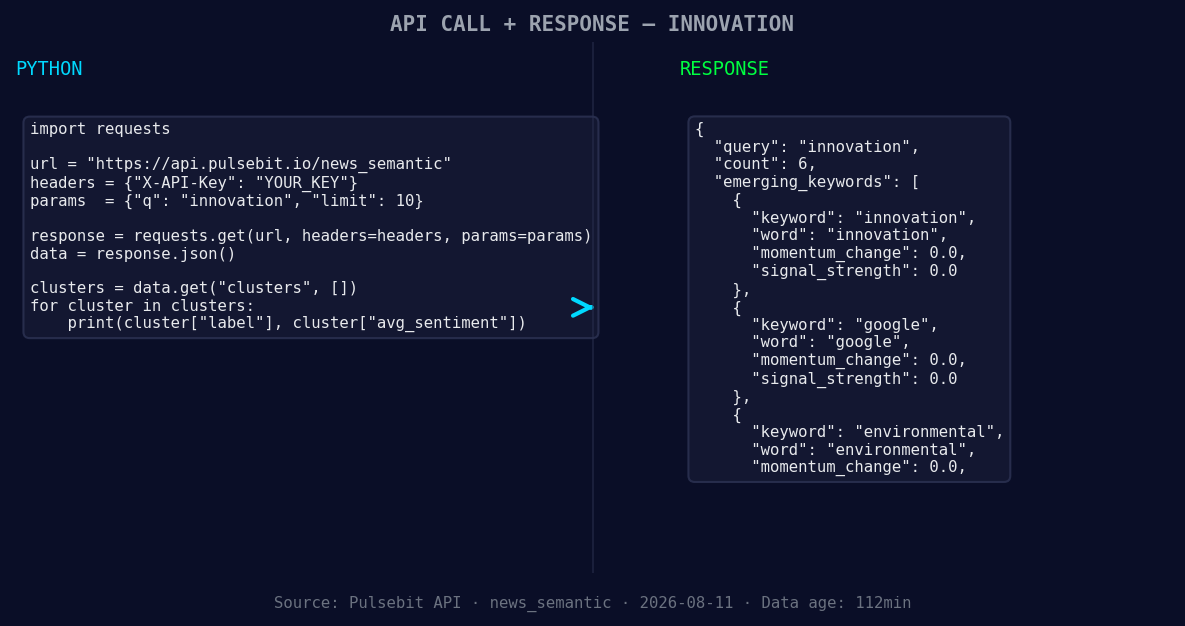
*Left: Python GET /news_semantic call for 'innovation'. Right: returned JSON response structure (clusters: 3). Source: Pulsebit /news_semantic.*
# API call to get sentiment data
response = requests.get('https://api.pulsebit.com/sentiment', params=params)
sentiment_data = response.json()
print(sentiment_data)
Next, we need to analyze the narrative framing around the cluster identified by the API. We’ll send the clustered reason string back through our sentiment endpoint to score the framing itself. This allows us to understand the underlying themes that are shaping the conversation:
# Define the meta sentiment input
meta_input = {
    "text": "Clustered by shared themes: klu, build, hackathon, organises, ‘ai."
}

# API call to analyze the narrative framing
meta_response = requests.post('https://api.pulsebit.com/sentiment', json=meta_input)
meta_sentiment_data = meta_response.json()
print(meta_sentiment_data)
Now that we have the framework to catch this emerging narrative, let’s think about how we can build useful signals around it. Here are three specific builds we can implement:
- Geographic Origin Filter: Use the Spanish filter to capture emerging innovations in technology discussions. Set a signal threshold for sentiment scores above +0.500 and monitor changes in momentum. This will keep you updated on the latest Spanish-language insights well ahead of the English-speaking narrative.

Geographic detection output for innovation. India leads with 6 articles and sentiment +0.53. Source: Pulsebit /news_recent geographic fields.
Meta-Sentiment Loop: Create a dynamic dashboard that uses the meta-sentiment analysis of clustered articles. Focus on articles that frame innovation around "klu," "build," and "hackathon." Set a confidence threshold of 0.700 to ensure you're acting on robust sentiment data.
Forming Themes Tracker: Develop a signal that combines environmental themes with mainstream innovation discussions. For instance, when environmental sentiment hits a score of +0.300 or higher, trigger alerts for articles that also mention "google" within the context of innovation. This could reveal new partnerships or shifts in focus that might go unnoticed.
For more in-depth insights and to get started on your own implementations, check out our documentation at pulsebit.lojenterprise.com/docs. You can copy-paste the above code snippets and have them running in under 10 minutes. Let's not let language barriers or entity dominance keep us from catching the next wave of innovation sentiment.


Top comments (0)