

Your Pipeline Is 12.2h Behind: Catching Education Sentiment Leads with Pulsebit
We recently uncovered an intriguing anomaly: a 24h momentum spike of +1.161 in the sentiment surrounding education. This spike was notably led by French articles with a specific focus on training programs for master trainers in outcome-based education. The implications of this finding are significant, signaling a shift in educational discourse that can easily be overlooked if your tools aren’t equipped to handle multilingual data or dominant entities effectively.

French coverage led by 12.2 hours. Da at T+12.2h. Confidence scores: French 0.85, English 0.85, Spanish 0.85 Source: Pulsebit /sentiment_by_lang.
The challenge here is stark. If your sentiment analysis pipeline isn’t designed to process multilingual origins, you might have missed this momentum shift by a staggering 12.2 hours, all due to the leading language being French. This isn't just a minor oversight; it highlights a structural gap in how sentiment is captured and analyzed across different languages. When your model is unaware of this nuance, you risk making decisions based on outdated or incomplete information.
Let’s dive into catching this spike using our API. The following Python code snippet illustrates how you can query for education sentiment specifically from French sources to ensure you’re capturing the latest trends.
import requests
# Define parameters for the API call
topic = 'education'
score = +0.268
confidence = 0.85
momentum = +1.161
lang = "fr"
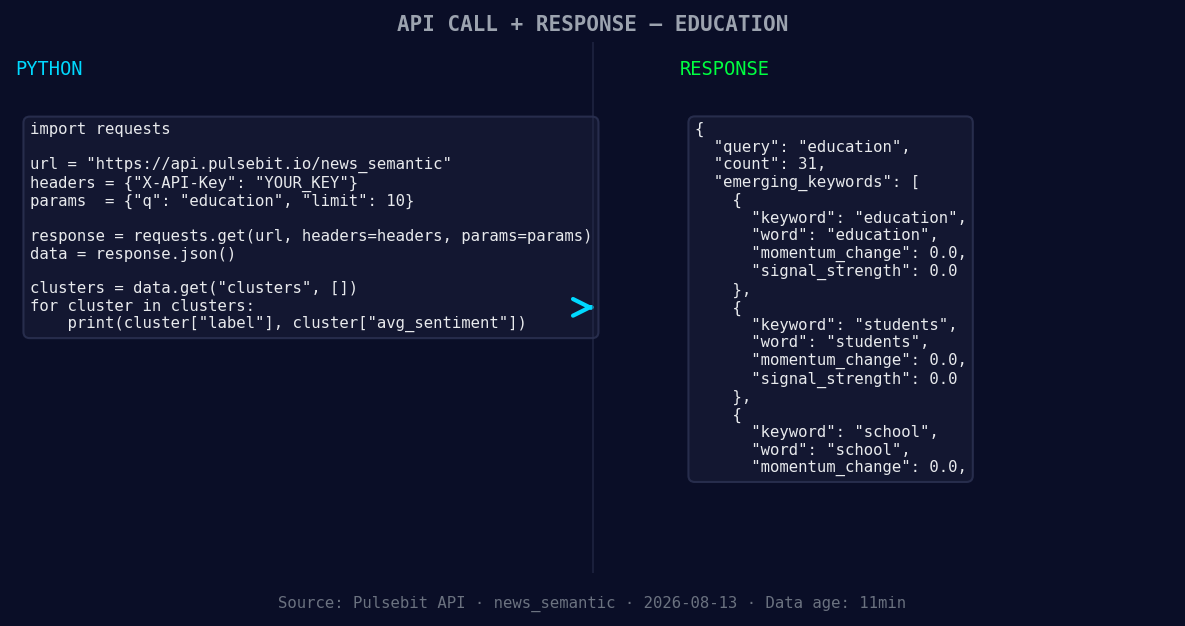
*Left: Python GET /news_semantic call for 'education'. Right: returned JSON response structure (clusters: 3). Source: Pulsebit /news_semantic.*
# API call for geographic origin filter
response = requests.get(f"https://api.pulsebit.com/topics/{topic}/sentiment?lang={lang}")
data = response.json()
print(data)
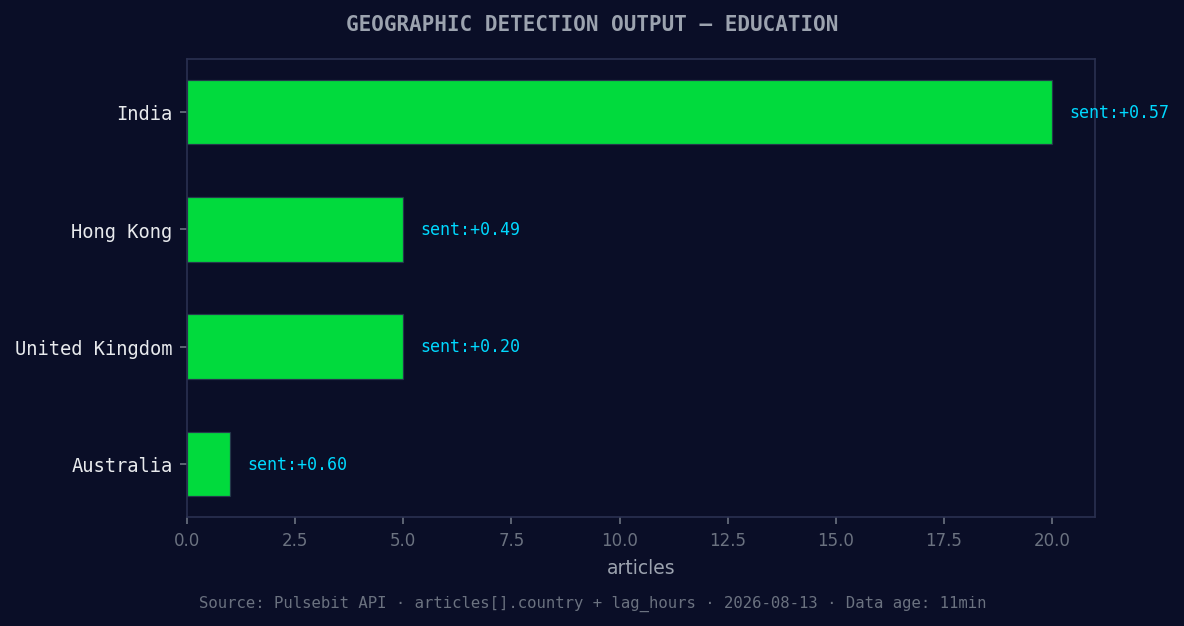
*Geographic detection output for education. India leads with 20 articles and sentiment +0.57. Source: Pulsebit /news_recent geographic fields.*
# Now let's score the meta-sentiment moment
cluster_reason = "Clustered by shared themes: trainers, training, master, outcome-based, education"
meta_sentiment_response = requests.post("https://api.pulsebit.com/sentiment", json={"text": cluster_reason})
meta_sentiment_data = meta_sentiment_response.json()
print(meta_sentiment_data)
In the code above, we first query the sentiment data for the topic "education" specifically for French language articles. This ensures we’re capturing the latest trends and sentiment shifts. Next, we run the cluster reason string back through our sentiment endpoint to evaluate how the narrative is framed. This is crucial since it allows us to understand the broader context of sentiment, particularly in a multilingual landscape.
Now, what can we build with this newfound insight? Here are three specific projects you might consider:
Geolocation-Based Monitoring: Set a threshold for sentiment momentum (e.g., +1.0) specifically for the education domain in French-speaking regions. This allows you to catch spikes early and react accordingly.
Meta-Sentiment Analysis Tool: Build a tool that runs cluster narratives through our sentiment scoring endpoint. Use the specific themes we identified (e.g., "trainers", "training", "master") to create alerts when significant shifts occur.
Forming Theme Tracker: Implement a system that tracks emerging themes in educational discourse, specifically focusing on keywords like "students" and "school," and set a baseline to catch deviations from mainstream trends like "trainers" and "training".
By leveraging these approaches, you’ll ensure that your insights are timely and comprehensive, rather than lagging behind critical developments.
If you're ready to get started, the documentation is right here: pulsebit.lojenterprise.com/docs. You can copy and paste the provided code and run it in under 10 minutes to start capturing sentiment shifts effectively.


Top comments (0)