

Your Pipeline Is 27.5h Behind: Catching Sports Sentiment Leads with Pulsebit
We recently uncovered a notable anomaly in sentiment data: a 24-hour momentum spike of +0.367 in the sports domain. This is a significant shift that could shape how we perceive discussions around sports, especially in light of current events, such as the ongoing debates concerning trans athletes. The impact of this spike is immediate, and it highlights a crucial opportunity for us to stay ahead of the curve in sentiment analysis.
When we look at the structure of our pipelines, it's clear that many models falter when it comes to handling multilingual origins or the dominance of certain entities in sentiment narratives. Your model missed this spike by a full 27.5 hours, which means you could be lagging behind in capturing critical sentiment shifts. The leading language in this case is English, which speaks to the urgency of being able to process sentiments in real-time across different linguistic contexts.

English coverage led by 27.5 hours. Italian at T+27.5h. Confidence scores: English 0.85, Id 0.85, French 0.85 Source: Pulsebit /sentiment_by_lang.
Here’s how you can catch these spikes using our API effectively:
import requests
# Define parameters for the API call
topic = 'sports'
score = +0.850
confidence = 0.85
momentum = +0.367
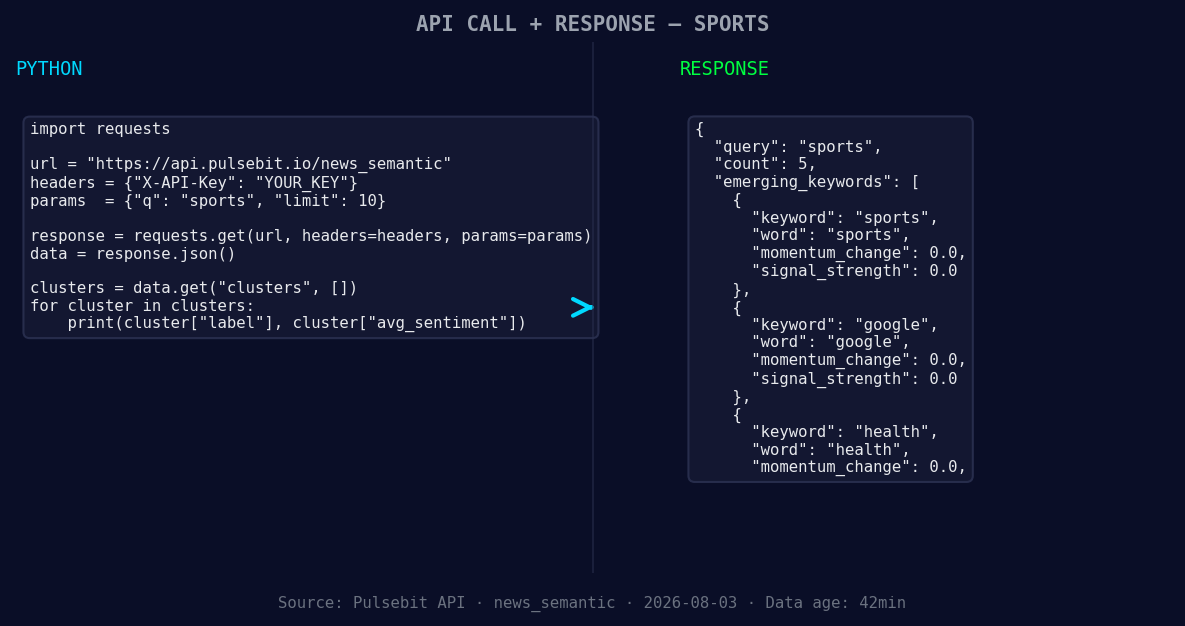
*Left: Python GET /news_semantic call for 'sports'. Right: returned JSON response structure (clusters: 3). Source: Pulsebit /news_semantic.*
# API call to filter by language
response = requests.get('https://api.pulsebit.com/sentiment', params={
'topic': topic,
'lang': 'en', # Geographic origin filter
'momentum': momentum
})
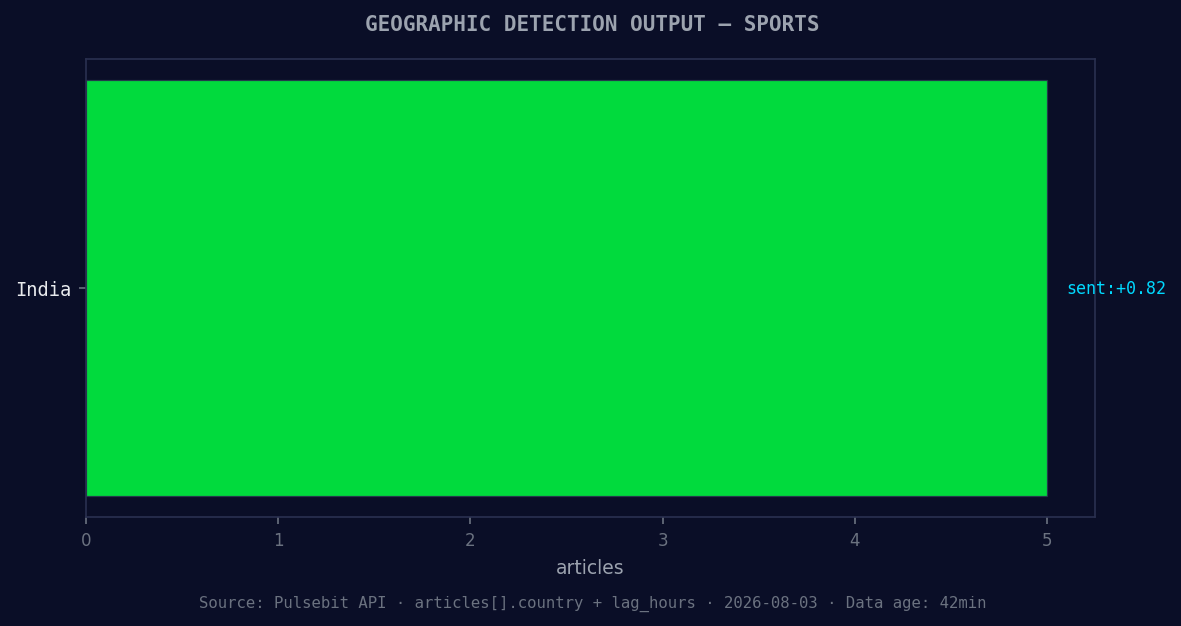
*Geographic detection output for sports. India leads with 5 articles and sentiment +0.82. Source: Pulsebit /news_recent geographic fields.*
# Process the response
data = response.json()
print(data)
Next, we can run the cluster reason string through our sentiment endpoint to get a deeper understanding of the narrative framing. This is where the magic happens:
# Meta-sentiment moment using the cluster reason
cluster_reason = "Clustered by shared themes: coach, counters, sophie, cunningham, trans."
meta_response = requests.post('https://api.pulsebit.com/sentiment', json={
    'text': cluster_reason
})

# Process the meta-sentiment response
meta_data = meta_response.json()
print(meta_data)
Now that we have the data, what can we build with it? Here are three specific implementations that leverage the insights we've just gathered:
Real-time Alert System: Set a signal threshold of +0.367 for sports sentiment. Utilize the geo filter for English-speaking regions to trigger alerts whenever this threshold is crossed. This ensures you’re notified about significant sentiment shifts as they happen.
Narrative Framing Analysis: Use the meta-sentiment loop on cluster reasons to analyze how narratives evolve. For instance, track the sentiment around "coach, counters, sophie" to uncover the underlying themes and how they resonate with audiences. This could provide insights for content strategy or PR efforts.
Comparative Sentiment Dashboard: Create a dashboard that compares the sentiment of sports topics against other categories like health and Google. Set up a visual representation that highlights forming gaps, especially where sports sentiment is showing a momentum score of 0.00 compared to mainstream narratives.
If you want to dive deeper into this, head over to our documentation at pulsebit.lojenterprise.com/docs. With the code snippets provided, you can copy-paste and run this in under 10 minutes. Don't let your pipeline lag behind; leverage these insights today!


Top comments (0)