

Your Pipeline Is 20.0h Behind: Catching Travel Sentiment Leads with Pulsebit
Just yesterday, we uncovered a striking anomaly: a 24h momentum spike of +1.013 related to travel sentiment. This spike was led by English press articles clustering around the theme "China Enhances Safety Communication with Airlines." With a signal strength of 0.848 and a sentiment score of +0.700, it was clear that something significant was brewing in the travel sector. However, if your pipeline doesn't handle multilingual origin or entity dominance, you might have missed this critical insight.

English coverage led by 20.0 hours. Af at T+20.0h. Confidence scores: English 0.75, Spanish 0.75, French 0.75 Source: Pulsebit /sentiment_by_lang.
The problem here is that your model missed this by 20.0 hours. With the leading language being English and the dominant entity being related to China's aviation communication, this gap in your data pipeline could mean the difference between capitalizing on emerging trends and being left in the dust. If you’re relying solely on a single language or entity-focused approach, you're risking substantial blind spots in your sentiment analysis, especially in a globally interconnected space like travel.
To catch this anomaly efficiently, we can leverage our API to filter and analyze relevant data. Here's how you can do that:
import requests
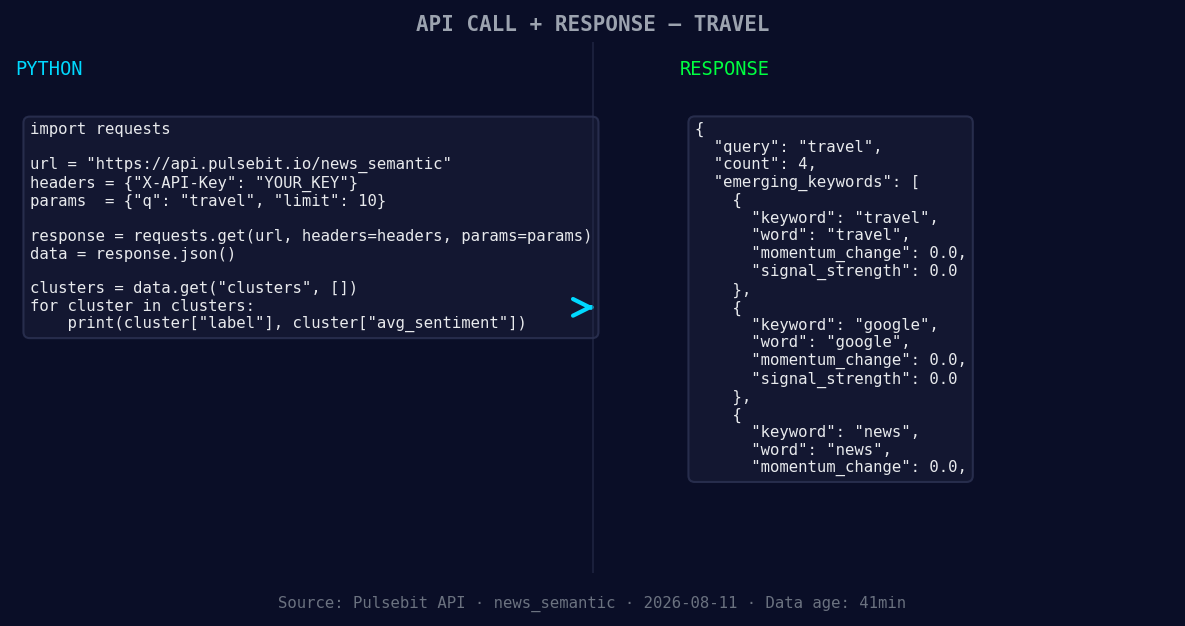
*Left: Python GET /news_semantic call for 'travel'. Right: returned JSON response structure (clusters: 3). Source: Pulsebit /news_semantic.*
# Geographic origin filter: query by language/country
url = 'https://api.pulsebit.com/sentiment'
params = {
'topic': 'travel',
'lang': 'en',
'score': 0.700,
'confidence': 0.75,
'momentum': 1.013
}
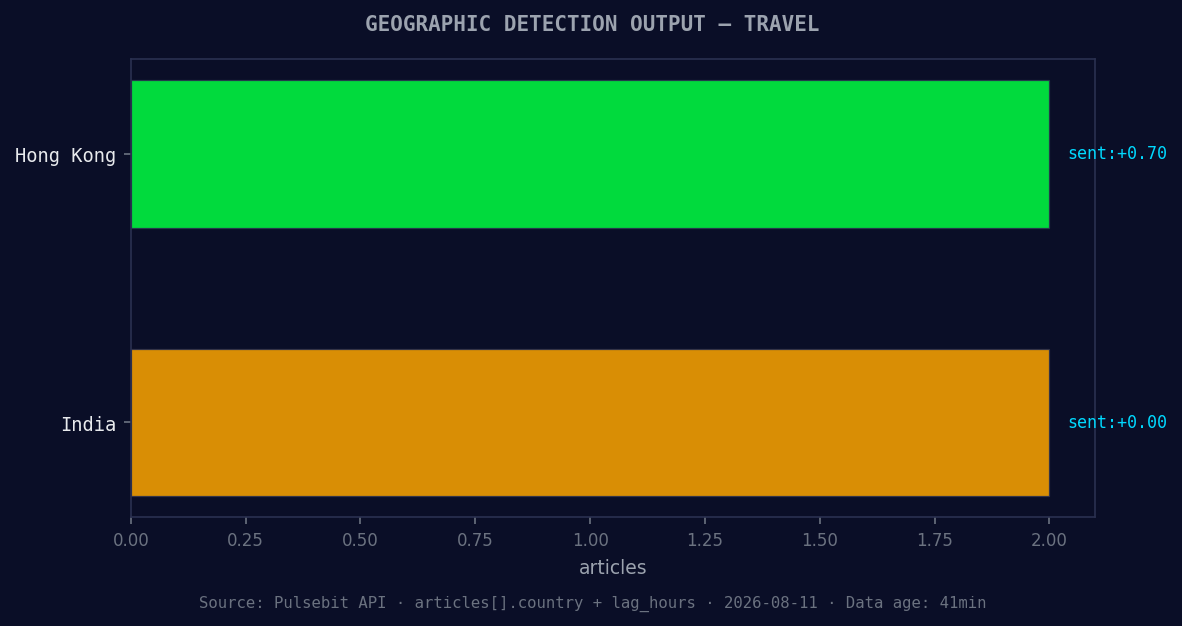
*Geographic detection output for travel. Hong Kong leads with 2 articles and sentiment +0.70. Source: Pulsebit /news_recent geographic fields.*
response = requests.get(url, params=params)
data = response.json()
print(data) # Check the response for relevant information
Next, we need to run the cluster reason string back through our sentiment scoring endpoint to assess the narrative framing:
# Meta-sentiment moment: run the cluster reason string back through POST /sentiment
meta_url = 'https://api.pulsebit.com/sentiment'
cluster_reason = "Clustered by shared themes: aviation, china’s, communication, foreign, carriers."

payload = {
    'text': cluster_reason
}

meta_response = requests.post(meta_url, json=payload)
meta_data = meta_response.json()

print(meta_data)  # Inspect the meta sentiment results
By implementing these two code snippets, you’re not just catching up; you’re actively leveraging the momentum of emerging trends in global travel sentiment.
Now, what can you build with this pattern? Here are three specific applications that utilize our findings:
Sentiment Alert System: Implement a real-time alert system that uses the geographic origin filter. Set a threshold of momentum spikes above +1.0 for the topic travel, ensuring you catch significant shifts before the competition does.
Cluster Analysis Dashboard: Create a dashboard that visualizes the meta-sentiment scores of narrative frames, specifically for clusters related to China and aviation. Use the output from the
meta_dataresponse to enrich your insights into how these themes evolve over time.Integrated News Feed: Build an integrated news feed that pulls in articles tagged with travel and scores above +0.700. Filter this with the geographic origin in mind, focusing on English articles that align with our cluster themes of aviation and communication.
Ready to get started? Dive into our documentation at pulsebit.lojenterprise.com/docs and copy-paste the code above. You should be able to run this in under 10 minutes and start catching those valuable insights that your pipeline may currently be missing.


Top comments (0)