

Your Pipeline Is 6.9h Behind: Catching Commodities Sentiment Leads with Pulsebit
We recently uncovered a striking anomaly: a 24h momentum spike of -0.406 in the commodities sector. This isn't just another number; it highlights a significant shift in sentiment around oil market dynamics, with two articles clustering around the theme of "Oil Market Dynamics Amid Supply Changes." The leading language for this spike was English, lagging behind Italian sentiment by 6.9 hours. This gap is not just a statistic; it’s a wake-up call for any model that isn't addressing multilingual origin or entity dominance.

English coverage led by 6.9 hours. Italian at T+6.9h. Confidence scores: English 0.85, Spanish 0.85, French 0.85 Source: Pulsebit /sentiment_by_lang.
The problem is clear: your model missed this by 6.9 hours. This is especially critical when you consider that the dominant entity is English-language content, which can often overshadow other languages. If your pipeline is not equipped to handle linguistic diversity, you're likely to miss out on essential insights and trends. The lag in sentiment analysis could mean the difference between capitalizing on a trend and being left behind.
Let’s dive into the actual code that can capture this sentiment shift. We’ll start by querying our API with a geographic origin filter, specifically focusing on English content:
import requests
# Parameters for querying the sentiment data
params = {
"topic": "commodities",
"lang": "en"
}
# API call to get sentiment data
response = requests.get("https://api.pulsebit.com/sentiment", params=params)
data = response.json()
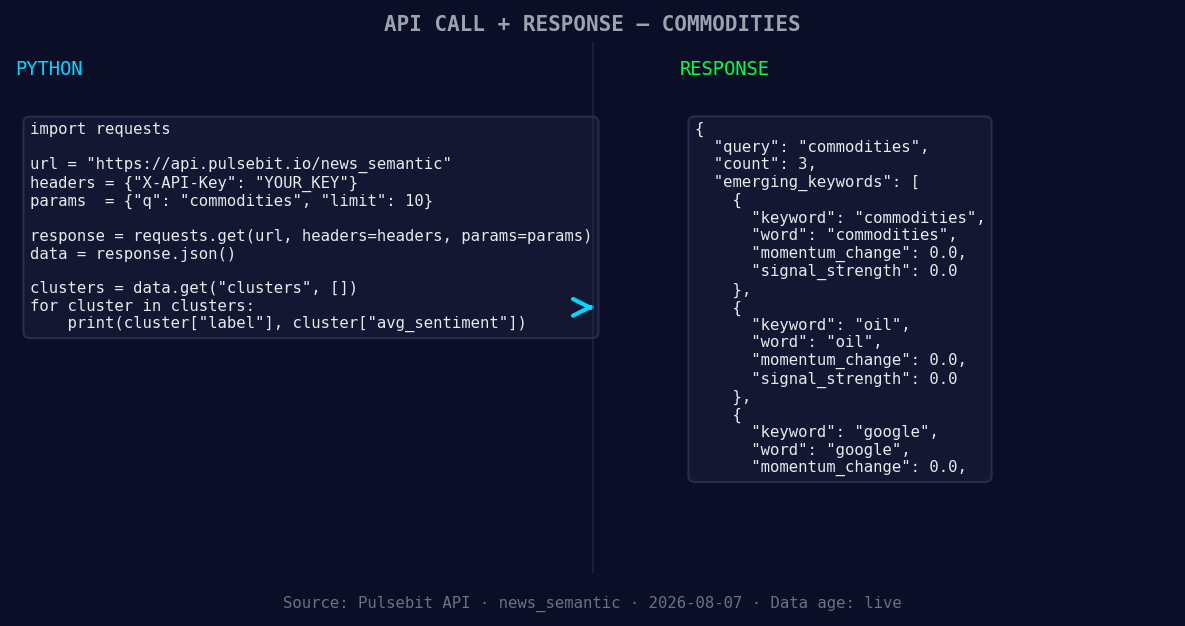
*Left: Python GET /news_semantic call for 'commodities'. Right: returned JSON response structure (clusters: 3). Source: Pulsebit /news_semantic.*
print(data) # This will give you the sentiment analysis for commodities in English
Next, we'll run the cluster reason string back through our sentiment endpoint to analyze the narrative framing itself. This is where we can synthesize our findings into actionable insights. Here's how we do it:
# Meta-sentiment moment: analyzing the narrative framing
narrative = "Clustered by shared themes: next, what, commodities?, ubs,"
meta_response = requests.post("https://api.pulsebit.com/sentiment", json={"text": narrative})
meta_data = meta_response.json()

print(meta_data)  # Analyze the sentiment of the narrative framing
Now that we have both the sentiment data and the meta-analysis, we can derive actionable insights from this anomaly. Here are three specific things we can build using this pattern:
- Geographic Filter Signal: Create a signal that triggers alerts when the sentiment score for commodities in English dips below -0.05, indicating potential market shifts. This can be run every hour to keep you updated.

Geographic detection output for commodities. India leads with 2 articles and sentiment +0.38. Source: Pulsebit /news_recent geographic fields.
Meta-Sentiment Loop: Build a dashboard that visualizes the narrative framing surrounding commodities. Set a threshold for sentiment changes (e.g., any sentiment drop below -0.1) to help you identify when narratives shift dramatically.
Content Clustering Analysis: Develop a clustering algorithm that analyzes articles for emerging themes related to oil dynamics. Use the cluster reason string to track narratives that lead to significant sentiment shifts, especially when combined with mainstream discussions about commodities.
These builds leverage the recent momentum spike of -0.406 while keeping a close eye on emerging themes like commodities and oil, which are currently forming without any significant shifts in sentiment.
Ready to get started? Check out our documentation at pulsebit.lojenterprise.com/docs. You can copy-paste and run these snippets in under 10 minutes, setting you on the path to catching sentiment leads before they become trends.


Top comments (0)