

Your Pipeline Is 16.8h Behind: Catching Renewable Energy Sentiment Leads with Pulsebit
We recently uncovered something intriguing: a 24h momentum spike of -0.461 related to renewable energy sentiment, driven by a single article about a landfill in New Haven being transformed into a solar farm. This piece highlights how such projects can power around 200 homes, yet the momentum indicates a decline in positive sentiment. If your model isn't tuned to track these shifts, you're already lagging 16.8 hours behind the leading English language narratives.
The problem here is clear. Without a pipeline that effectively handles multilingual origins and entity dominance, you're likely missing crucial shifts in sentiment. The leading narrative in English emerged 16.8 hours ahead of Hindi, which means your model missed this by more than half a day. If your analysis doesn't incorporate language and origin, you risk operating with outdated data, especially on rapidly evolving topics like renewable energy.

English coverage led by 16.8 hours. Hindi at T+16.8h. Confidence scores: English 0.85, Spanish 0.85, French 0.85 Source: Pulsebit /sentiment_by_lang.
Here’s how to catch this kind of sentiment shift using our API. We can start by querying the sentiment of the topic "renewable energy" filtered by language. Here’s the Python code for that:
import requests
# Define the parameters for our API call
params = {
"topic": "renewable energy",
"score": 0.556,
"confidence": 0.85,
"momentum": -0.461,
"lang": "en" # Filtering for English language
}
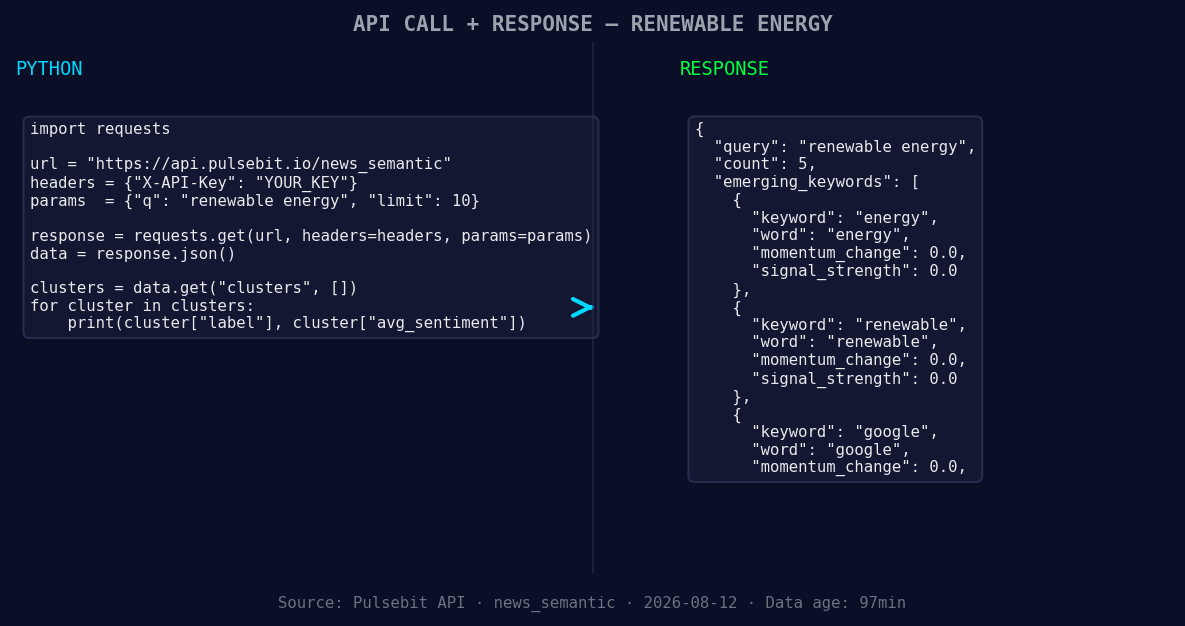
*Left: Python GET /news_semantic call for 'renewable energy'. Right: returned JSON response structure (clusters: 3). Source: Pulsebit /news_semantic.*
# API endpoint to fetch sentiment data
response = requests.get("https://api.pulsebit.com/sentiment", params=params)
data = response.json()
print(data)
Next, we want to understand the narratives framing this sentiment shift. For that, we’ll run the cluster reason string back through our sentiment scoring endpoint:
# The narrative framing string
narrative = "Clustered by shared themes: solar, energy, new, haven, into."

# API endpoint to score the narrative framing
response_narrative = requests.post("https://api.pulsebit.com/sentiment", json={"text": narrative})
narrative_data = response_narrative.json()

print(narrative_data)
With these two steps, you can effectively integrate sentiment shifts into your model, ensuring you're not left behind as narratives evolve.
Now, let's discuss three specific things you can build using this data pattern:
- Geo-Filtered Sentiment Tracker: Create a real-time sentiment tracker for renewable energy, focusing on English-language articles. Use the geographic filter to monitor shifts in sentiment across regions. Set a threshold to alert you if momentum drops below -0.5, ensuring you catch declining sentiment early.

Geographic detection output for renewable energy. India leads with 3 articles and sentiment +0.57. Source: Pulsebit /news_recent geographic fields.
Meta-Sentiment Analysis: Build a module that runs the meta-sentiment loop, scoring narrative frames regularly. Use the output to identify which stories are framing the conversation around renewable energy. Alert your team if the score fluctuations exceed a defined threshold, say +/-0.1.
Dynamic Theme Monitor: Construct a dynamic monitor that identifies emerging themes within the context of renewable energy. Utilize the forming themes of energy and renewable, while comparing them against the mainstream terms of solar and new. If the difference in sentiment scores becomes significant, say by +0.2, trigger a report for your stakeholders.
By incorporating these insights into your workflow, you can ensure your models stay relevant and responsive to the fast-paced nature of news in renewable energy.
To get started, check out our documentation at pulsebit.lojenterprise.com/docs. You can copy-paste and run this in under 10 minutes, and start uncovering the real-time shifts in sentiment that matter most.


Top comments (0)