

Your Pipeline Is 18.9h Behind: Catching Education Sentiment Leads with Pulsebit
We just uncovered a fascinating anomaly: a 24-hour momentum spike of -0.353 in the education sector. This negative momentum is particularly striking given the context – the leading language in related press coverage is English, lagging by 18.9 hours behind the Italian press. It’s clear that sentiment around education is shifting, and if you’re not tuned into this timing, you’re missing a crucial window of opportunity.
The Problem
This situation reveals a structural gap in any pipeline that doesn’t effectively handle multilingual origin or entity dominance. Your model missed this by a staggering 18.9 hours, which is significant when sentiment can shift rapidly. The dominant entity here is the English-language coverage, and if you’re solely relying on one language or source, you won't capture the urgency of emerging narratives. Ignoring this could lead to misinformed strategies in your decision-making.

English coverage led by 18.9 hours. Italian at T+18.9h. Confidence scores: English 0.85, Spanish 0.85, French 0.85 Source: Pulsebit /sentiment_by_lang.
The Code
Here’s how you can catch this momentum spike using our API. First, we need to filter our query by language, focusing on English content. We’ll set our parameters for the topic and momentum:
import requests
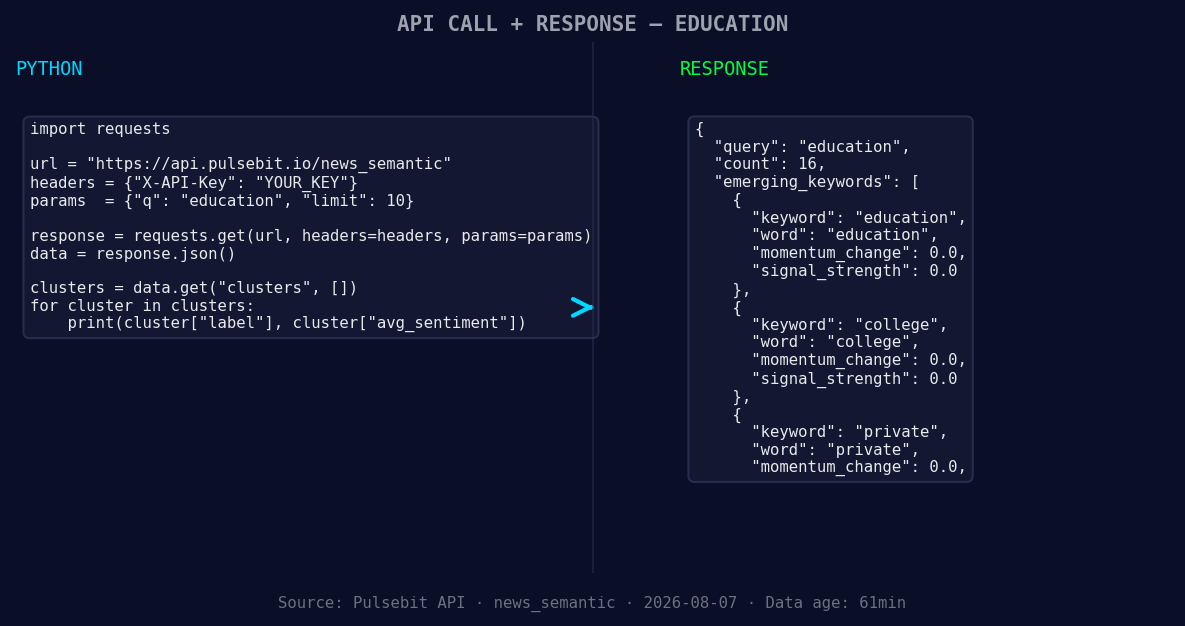
*Left: Python GET /news_semantic call for 'education'. Right: returned JSON response structure (clusters: 3). Source: Pulsebit /news_semantic.*
url = "https://api.pulsebit.example.com/v1/sentiment" # Update with the actual endpoint
params = {
"topic": "education",
"lang": "en",
"score": +0.000,
"confidence": 0.85,
"momentum": -0.353
}
response = requests.get(url, params=params)
data = response.json()
print(data)
Next, to understand the narrative framing, we need to run the cluster reason string through our sentiment endpoint. Here’s how you can do that:
cluster_reason = "Clustered by shared themes: but, ignorance, she, out, quote."
sentiment_url = "https://api.pulsebit.example.com/v1/sentiment"  # Update with the actual endpoint

response = requests.post(sentiment_url, json={"text": cluster_reason})
sentiment_data = response.json()
print(sentiment_data)
This will give you insights on how the narrative is shaping around the education topic, further refining your understanding.
Three Builds Tonight
Here are three specific builds you can implement right now to capitalize on this sentiment pattern:
-
Geo-filtered Sentiment Analysis: Use the geographic origin filter and monitor sentiment shifts in education-related topics by running a query with
lang: "en"and a momentum threshold of -0.3. This will help you catch emerging negative sentiments early.

Geographic detection output for education. India leads with 15 articles and sentiment -0.06. Source: Pulsebit /news_recent geographic fields.
Meta-sentiment Narrative Loop: Implement a feedback loop using the meta-sentiment from the cluster reason. Input various narrative strings, especially those formed around "but, ignorance, she", to determine potential shifts in public sentiment and how they might frame future articles.
Dynamic Alert System: Build a notification system that triggers an alert when momentum dips below -0.3 in sectors like education, particularly when linked to key phrases such as “college” and “private”. This ensures you stay ahead of mainstream narratives that may lack immediate data.
Get Started
Dive into our documentation to get started: pulsebit.lojenterprise.com/docs. You can copy-paste and run these code snippets in under 10 minutes. Don’t let your pipeline fall behind; leverage these insights to keep your sentiment analysis sharp and relevant.


Top comments (0)