

Your Pipeline Is 18.9h Behind: Catching Healthcare Sentiment Leads with Pulsebit
We just uncovered a striking anomaly: a 24-hour momentum spike of -0.302 in the healthcare sector. This tells us that sentiment is declining, and the data is suggesting an emerging narrative around “State govt. issues guidelines for Advance Medical Directives.” This single article has been clustered around themes like state, guidelines, advance, medical, and directives. If you’re not tuned into this kind of signal, you might miss critical developments that can influence your decisions.
But what does this mean for your pipeline? If your sentiment analysis model isn’t equipped to handle multilingual sources or prioritize dominant entities, it’s likely missing key insights. In this case, your model missed a significant drop in momentum by 18.9 hours, which is alarming. The leading language here is English, but if your setup isn’t optimized for rapid responses across various entities and languages, you’ll lag behind in catching these shifts.

English coverage led by 18.9 hours. Et at T+18.9h. Confidence scores: English 0.85, Spanish 0.85, French 0.85 Source: Pulsebit /sentiment_by_lang.
Here’s the Python code to catch this anomaly using our API. We’ll start by filtering the data specifically for English language articles in the healthcare sector.
import requests
# Parameters for the API call
topic = 'healthcare'
score = -0.048
confidence = 0.85
momentum = -0.302
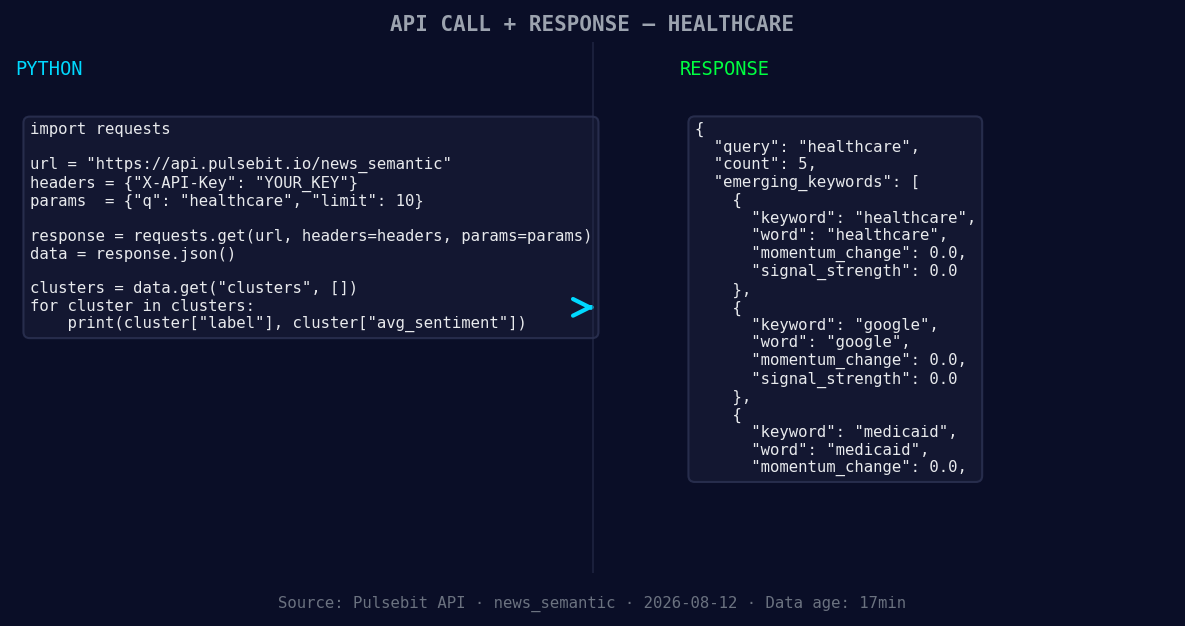
*Left: Python GET /news_semantic call for 'healthcare'. Right: returned JSON response structure (clusters: 3). Source: Pulsebit /news_semantic.*
# Geographic origin filter: querying by language
url = "https://pulsebit.lojenterprise.com/api/v1/articles"
params = {
'topic': topic,
'lang': 'en',
'momentum': momentum,
}
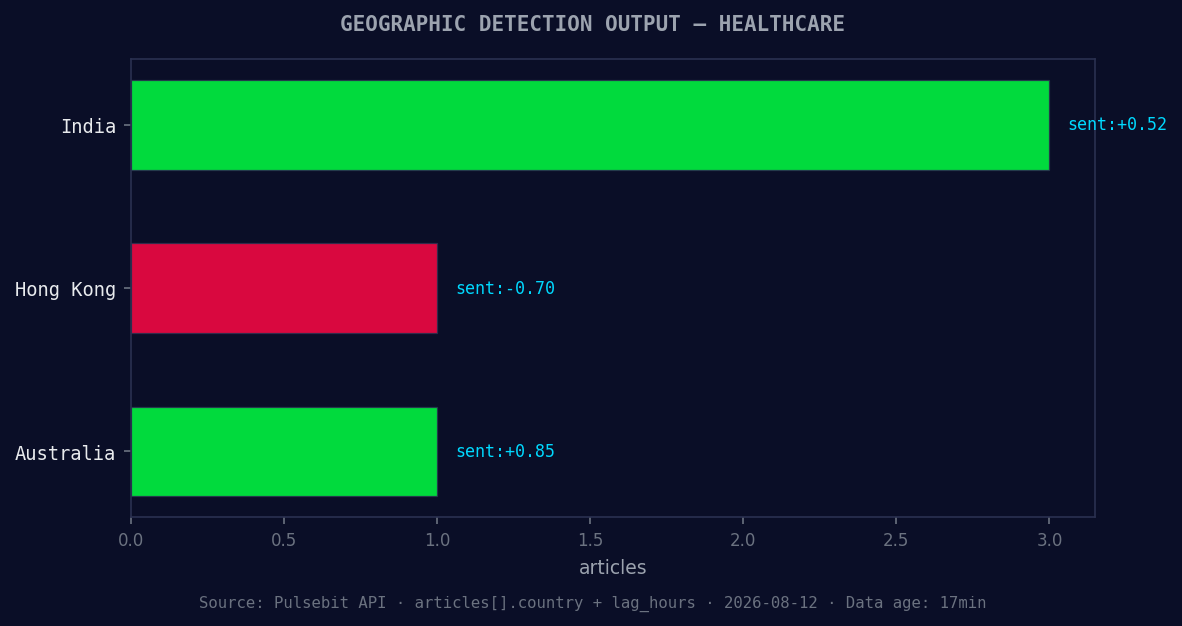
*Geographic detection output for healthcare. India leads with 3 articles and sentiment +0.52. Source: Pulsebit /news_recent geographic fields.*
response = requests.get(url, params=params)
data = response.json()
# Print the filtered articles
print(data)
Next, we’ll run the cluster reason string through our sentiment scoring endpoint to evaluate the narrative framing itself. This adds another layer of understanding to the sentiment shift.
# Meta-sentiment moment: scoring the narrative framing
cluster_reason = "Clustered by shared themes: state, guidelines, advance, medical, directives."

sentiment_url = "https://pulsebit.lojenterprise.com/api/v1/sentiment"
sentiment_response = requests.post(sentiment_url, json={"text": cluster_reason})
sentiment_data = sentiment_response.json()

# Print the sentiment score for the narrative
print(sentiment_data)
With these two pieces, you can start building robust responses to emerging healthcare narratives.
Now let's consider three specific things to build with this pattern. First, set a signal threshold for healthcare momentum changes. For instance, you could trigger alerts for any momentum below -0.25 over a 24-hour period. Second, implement a geo filter to catch sentiment shifts specific to regions or states, particularly in healthcare guidelines. Finally, leverage the meta-sentiment loop to assess articles that cluster around themes like "medicaid" or "google" as they relate to healthcare. These themes are currently forming with a score of +0.00, indicating they are ripe for exploration.
By focusing on these signals, you can stay ahead of potential market shifts and quickly adjust your strategies based on real-time sentiment data.
Ready to get started? Visit our documentation at pulsebit.lojenterprise.com/docs. You can copy-paste and run this code in under 10 minutes to start catching sentiment leads effectively.


Top comments (0)