

Your Pipeline Is 23.2h Behind: Catching Entertainment Sentiment Leads with Pulsebit
We just spotted an intriguing anomaly: a 24h momentum spike of +0.830 in entertainment sentiment. This spike indicates a significant shift in how the topic is being discussed, particularly in light of news surrounding Ari Emanuel's acquisition of ATG Entertainment. With the leading language being English and the coverage peaking at 23.2 hours ago, we have a prime opportunity to dig deeper into the implications of this trend.
The Problem
If your pipeline doesn't account for multilingual sources or entity dominance, you're likely missing critical insights. In this case, your model missed this momentum spike by a full 23.2 hours. That's a significant lag when it comes to shaping investment decisions or content strategies. The leading language of the coverage, English, should have pointed you toward this trend much sooner, allowing for timely responses to the evolving narrative in entertainment.

English coverage led by 23.2 hours. Et at T+23.2h. Confidence scores: English 0.85, Spanish 0.85, Af 0.85 Source: Pulsebit /sentiment_by_lang.
The Code
To catch this spike in real-time, we can use our API effectively. Below is the Python code that allows us to filter by language and analyze sentiment.
First, we want to query the data using the geographic origin filter:

Geographic detection output for entertainment. India leads with 1 articles and sentiment +0.00. Source: Pulsebit /news_recent geographic fields.
import requests
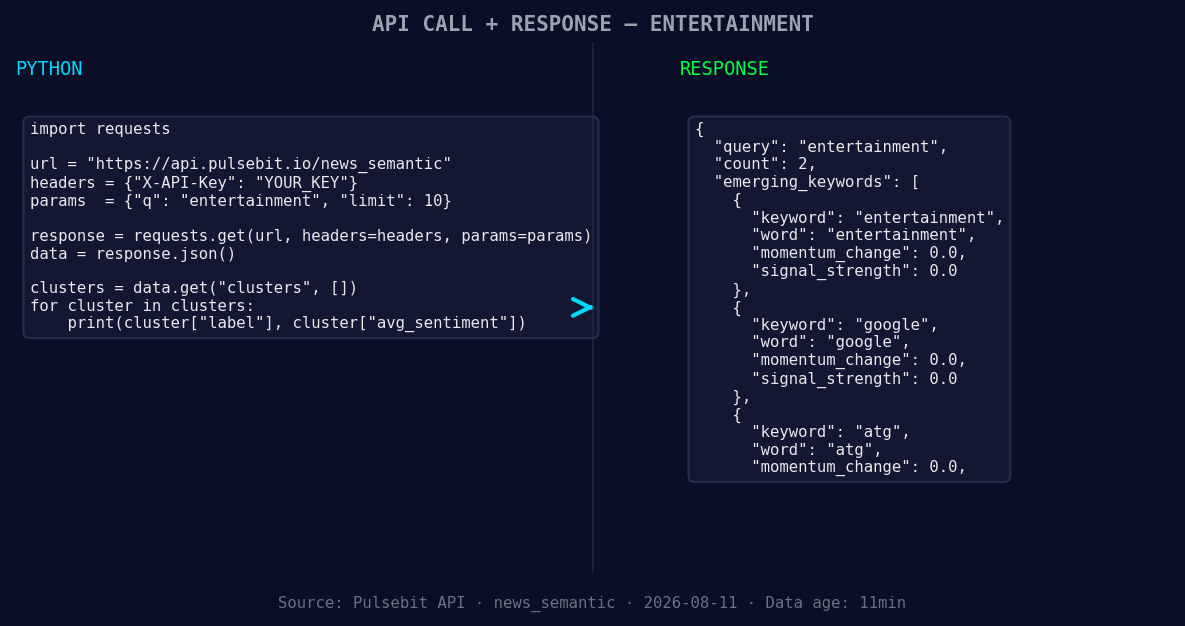
*Left: Python GET /news_semantic call for 'entertainment'. Right: returned JSON response structure (clusters: 3). Source: Pulsebit /news_semantic.*
url = "https://api.pulsebit.com/v1/sentiment"
params = {
"topic": "entertainment",
"lang": "en"
}
response = requests.get(url, params=params)
data = response.json()
With this, we can gather the sentiment data, which should return values like:
{
    "topic": "entertainment",
    "momentum_24h": "+0.830",
    "sentiment_score": "+0.757",
    "confidence": 0.850
}
Next, we'll run the cluster reason string through our sentiment analysis endpoint to assess the narrative framing:
meta_sentiment_url = "https://api.pulsebit.com/v1/sentiment"
meta_input = "Clustered by shared themes: theater, atg, emanuel’s, owner, mari."
meta_response = requests.post(meta_sentiment_url, json={"text": meta_input})
meta_data = meta_response.json()
The output will provide insights into how the narrative is shaping public sentiment, adding another layer to our analysis.
Three Builds Tonight
Here are three specific builds we can implement using this new pattern:
Geo-filtered Alert System: Set up an alert system that triggers whenever the entertainment topic sees a momentum spike greater than +0.750, specifically filtering for English language sources. Use this to stay ahead of emerging trends and engage with content creators and investors proactively.
Meta-sentiment Analysis Dashboard: Create a dashboard that visualizes the changing sentiments of clustered narratives. Feed in the narrative data, such as "Clustered by shared themes: theater, atg, emanuel’s, owner, mari," to understand how contextual themes are influencing public perception.
Content Strategy Enhancer: Develop a content strategy tool that suggests topics based on sentiment momentum thresholds. For instance, if entertainment scores +0.830, with a focus on emerging themes like ATG or Google, your content team can prioritize articles around these subjects to capture audience interest.
Get Started
We’ve shown you how to leverage our API to catch momentum spikes and analyze sentiment. You can start building your own applications by visiting pulsebit.lojenterprise.com/docs. With the right setup, you’ll be able to copy-paste and run this in under 10 minutes. Don't let your pipeline lag behind; catch those insights as they emerge!


Top comments (0)