

Your Pipeline Is 24.6h Behind: Catching Cloud Sentiment Leads with Pulsebit
We recently came across a notable anomaly: a 24h momentum spike of -0.406. This caught our attention, especially since the leading language driving this sentiment was Spanish, with a 24.6h lead time. The topic in focus was a trending story about the Kerala government’s desilting push, revealing a disconnect in how multilingual data is processed in sentiment pipelines.

Spanish coverage led by 24.6 hours. Hindi at T+24.6h. Confidence scores: Spanish 0.85, French 0.85, English 0.85 Source: Pulsebit /sentiment_by_lang.
When you’re working with sentiment data, missing a shift like this by 24.6 hours can mean losing crucial insights. The Spanish press was ahead, capturing the sentiment around the Chulliyar project, while your pipeline may have been lagging, focused on mainstream narratives in other languages. This underscores a significant structural gap: how well does your model handle multilingual contexts and entity dominance? If it's not equipped to manage these nuances, you're likely missing out on critical insights.
Let’s look at how we can catch this momentum spike using our API. Here's a Python snippet that illustrates how to filter for the Spanish language and analyze sentiment:
import requests
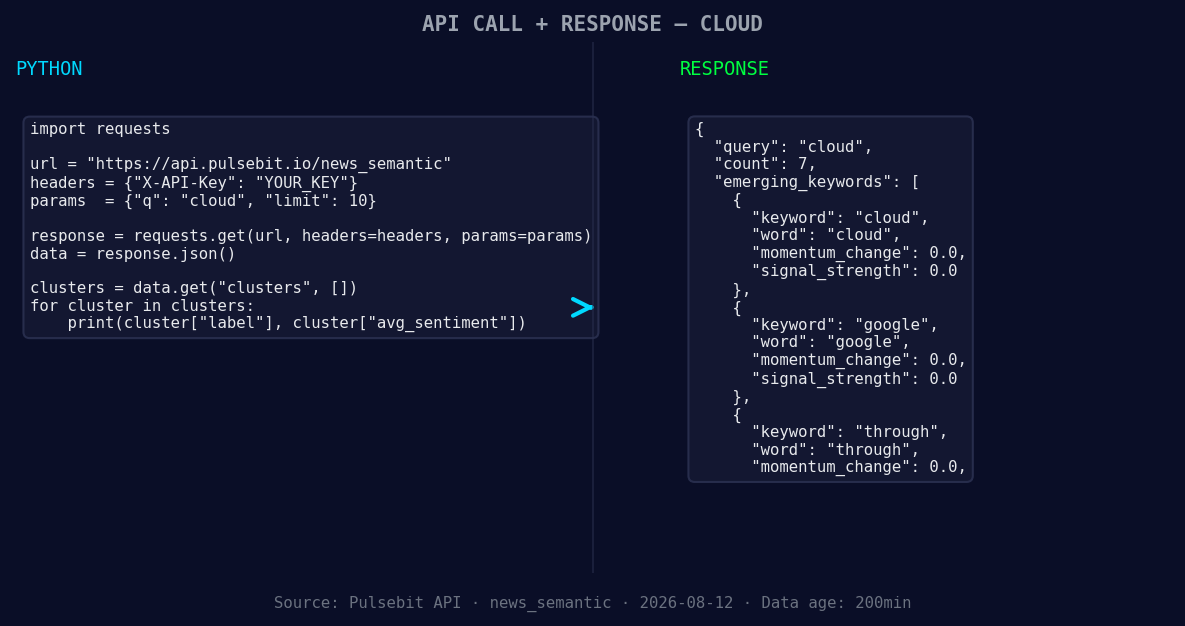
*Left: Python GET /news_semantic call for 'cloud'. Right: returned JSON response structure (clusters: 3). Source: Pulsebit /news_semantic.*
# Step 1: Geographic origin filter
url = "https://api.pulsebit.com/sentiment"
params = {
"topic": "cloud",
"lang": "sp",
"momentum": -0.406,
"score": 0.00,
"confidence": 0.85
}
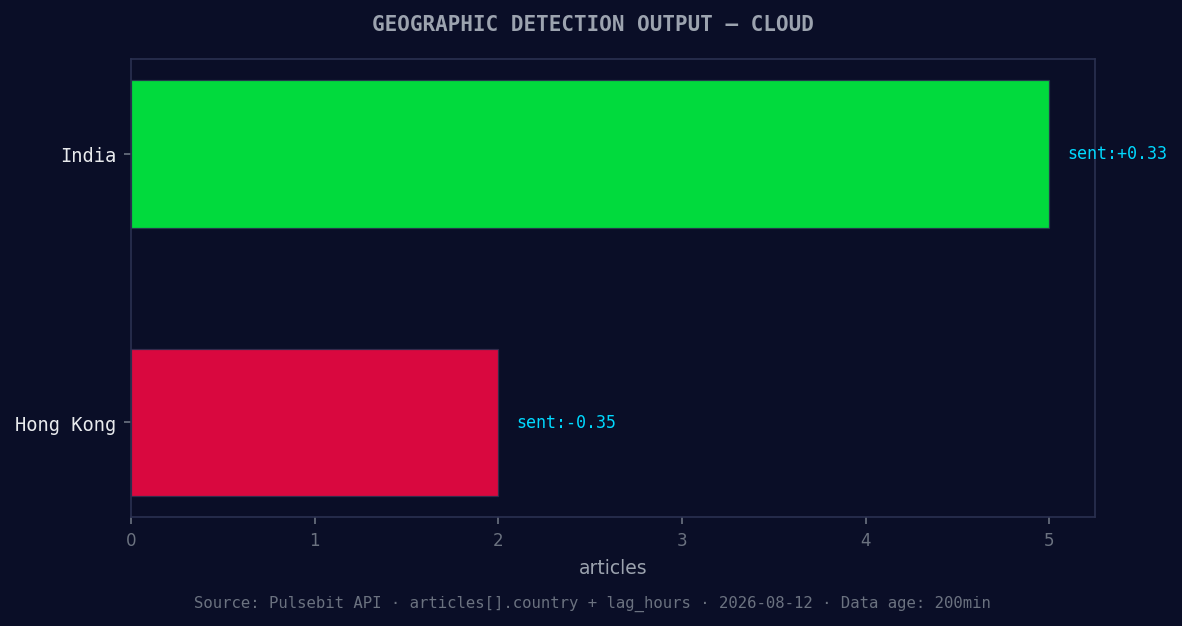
*Geographic detection output for cloud. India leads with 5 articles and sentiment +0.33. Source: Pulsebit /news_recent geographic fields.*
response = requests.get(url, params=params)
data = response.json()
print(data)
# Step 2: Meta-sentiment moment
narrative_string = "Clustered by shared themes: desilting, over, chulliyar, project, kerala."
meta_sentiment_url = "https://api.pulsebit.com/sentiment"
meta_response = requests.post(meta_sentiment_url, json={"text": narrative_string})
meta_data = meta_response.json()
print(meta_data)
This code does two things. First, it queries the sentiment around the topic "cloud" specifically for Spanish content. Second, it runs the cluster reason string through our sentiment analysis endpoint to score the narrative framing itself. This step is crucial since it helps us understand how the context shapes the sentiment.
Now, let’s imagine three specific builds we can create using this insight:
Signal Detection with Geo Filter: Create a real-time monitoring system that triggers alerts for any negative momentum in topics related to specific regions. For example, set a threshold at -0.4 for any language you want to monitor, allowing you to catch these spikes early.
Meta-Sentiment Analysis Tool: Build a reporting dashboard that utilizes the meta-sentiment loop. Use the narrative framing as input to generate insights into how the media portrays events. This could be particularly useful for PR teams to preemptively address negative narratives.
Forming Themes Tracker: Develop a tool that tracks forming themes like "cloud," "google," and "through" while comparing them to mainstream narratives such as "desilting," "over," and "chulliyar." Use our API to continuously monitor and visualize sentiment changes across these clusters.
You can get started with these builds at pulsebit.lojenterprise.com/docs. With just a few lines of code, you can copy-paste and run this in under 10 minutes, bringing you closer to catching critical sentiment shifts in real time.


Top comments (0)