

Your pipeline is 28.1h behind: catching world sentiment leads with Pulsebit
We just stumbled upon a fascinating anomaly: a 24-hour momentum spike of +0.185. This spike reveals a notable shift in sentiment surrounding the small Auchtertool village, where a significant data centre plan has sparked 1,600 objections. With such a dramatic increase in momentum, we can't afford to overlook what might be brewing in the global conversation around this topic.
The problem becomes clear when we realize that your model likely missed this momentum shift by 28.1 hours. If you’re not handling multilingual origins or the dominance of certain entities, you could be left in the dark. The leading language in this case is English, but the local sentiment might be more complex, influenced by regional factors that your current pipeline might not capture effectively.

English coverage led by 28.1 hours. Tl at T+28.1h. Confidence scores: English 0.85, French 0.85, Spanish 0.85 Source: Pulsebit /sentiment_by_lang.
Here’s a Python snippet to catch this spike and analyze it:
import requests
# Define the parameters for the API call
topic = 'world'
score = -0.043
confidence = 0.85
momentum = +0.185
lang = "en"
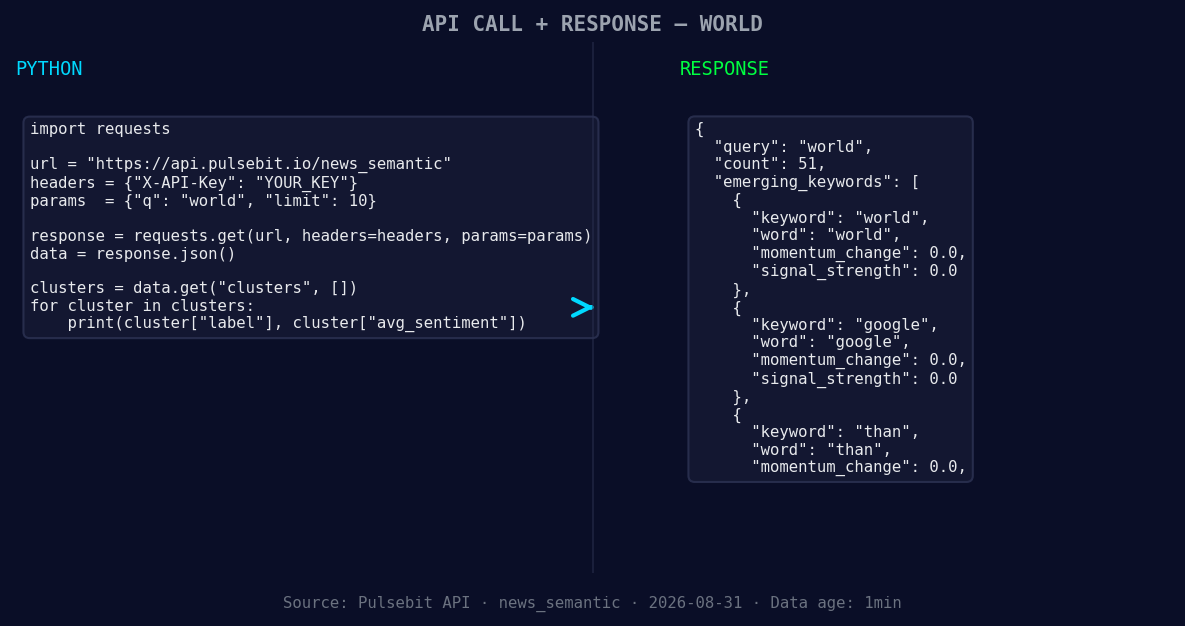
*Left: Python GET /news_semantic call for 'world'. Right: returned JSON response structure (clusters: 3). Source: Pulsebit /news_semantic.*
# Geographic origin filter
response_geo = requests.get(
f"https://api.pulsebit.com/sentiment?topic={topic}&lang={lang}"
)
geo_data = response_geo.json()
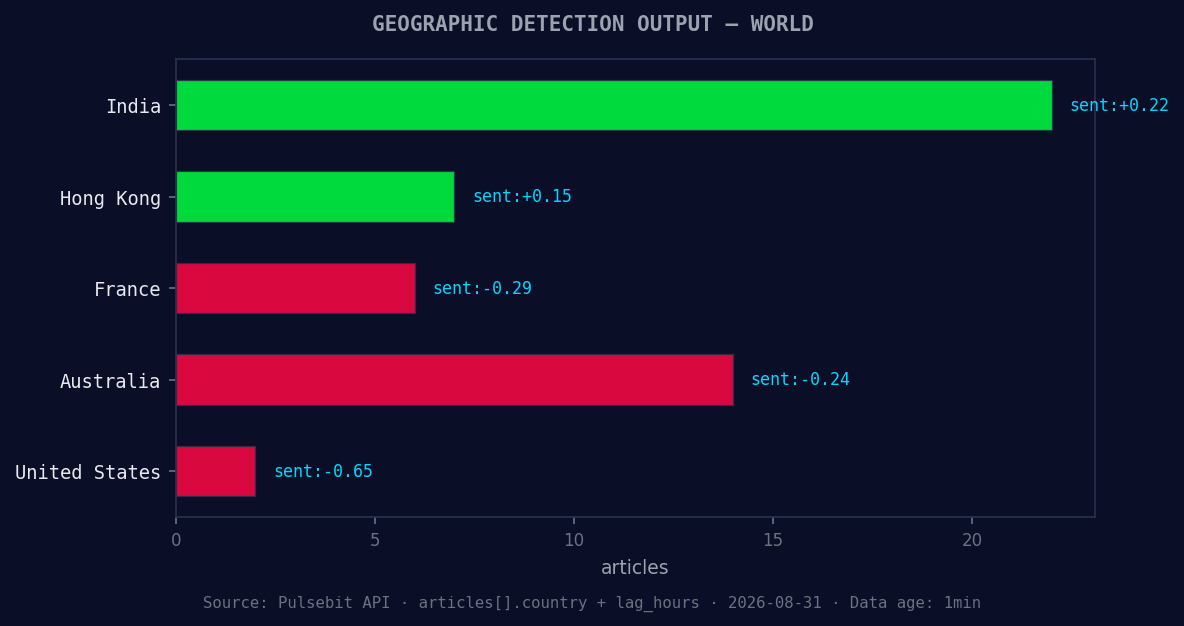
*Geographic detection output for world. India leads with 22 articles and sentiment +0.22. Source: Pulsebit /news_recent geographic fields.*
# Check the response
print(f"Geo Response: {geo_data}")
# Meta-sentiment moment
cluster_reason = "Clustered by shared themes: auchtertool, village, data, centre, 600."
response_meta = requests.post(
"https://api.pulsebit.com/sentiment",
json={"text": cluster_reason}
)
meta_data = response_meta.json()
# Check the response
print(f"Meta Sentiment Response: {meta_data}")
In the first part, we use the geographic origin filter to query our sentiment data specifically for English-language articles. This is crucial because it allows us to hone in on locally relevant sentiment that might otherwise be diluted by a broader, less relevant dataset.
Next, we run the cluster reason string through our sentiment endpoint. The narrative framing itself can offer critical context. By analyzing the sentiment around the cluster reason, we gain deeper insights into how the community feels about the issue at hand. This step is essential for understanding the nuances that raw data alone might miss.
With this newfound perspective, here are three builds we can work on tonight:
Geo-Filtered Sentiment Analysis: Set a threshold of momentum greater than +0.1 for the topic "world" and filter by language "en". This will help identify emerging stories before they escalate.
Meta-Sentiment Loop: Implement a function that automatically feeds cluster reason strings through our sentiment endpoint and sets a confidence threshold of 0.85. This will allow us to continuously monitor and refine our understanding of community sentiment.
Forming Theme Tracker: Create a real-time dashboard that highlights forming themes like "world(+0.00)" or "google(+0.00)" alongside mainstream narratives such as "auchtertool, village, data". This can help visualize how local stories are interacting with global narratives.
If you want to get started, check out our documentation at pulsebit.lojenterprise.com/docs. With a solid 10 minutes of setup, you can copy-paste and run this code to catch emerging trends in your data streams. Don’t let your pipeline lag behind; let’s harness the power of real-time sentiment to stay ahead.


Top comments (0)