

Your Pipeline Is 23.4h Behind: Catching Blockchain Sentiment Leads with Pulsebit
We just noticed something intriguing: a 24h momentum spike of +0.231 surrounding blockchain sentiment. This anomaly caught our attention because it shows a significant shift in the narrative landscape, particularly with English press coverage leading at 23.4 hours. If you’re not paying attention to how this momentum develops, you might miss critical insights that could inform your strategies.
But here's the kicker: your model missed this by 23.4 hours. Why? Because it likely isn’t equipped to handle multilingual origins or entity dominance effectively. In this case, the leading language is English, yet the sentiment is driven by broader themes shared across various narratives. If your pipeline isn’t capturing these nuances, you’re at risk of being out of sync with emerging trends.

English coverage led by 23.4 hours. Nl at T+23.4h. Confidence scores: English 0.95, Spanish 0.95, Portuguese 0.95 Source: Pulsebit /sentiment_by_lang.
Let’s dive into how we can catch this spike before it’s too late. Here’s a snippet of Python code that will help you identify these types of anomalies in your data pipeline:
import requests
# Define the parameters for the API call
topic = 'blockchain'
momentum = +0.231
score = +0.761
confidence = 0.95
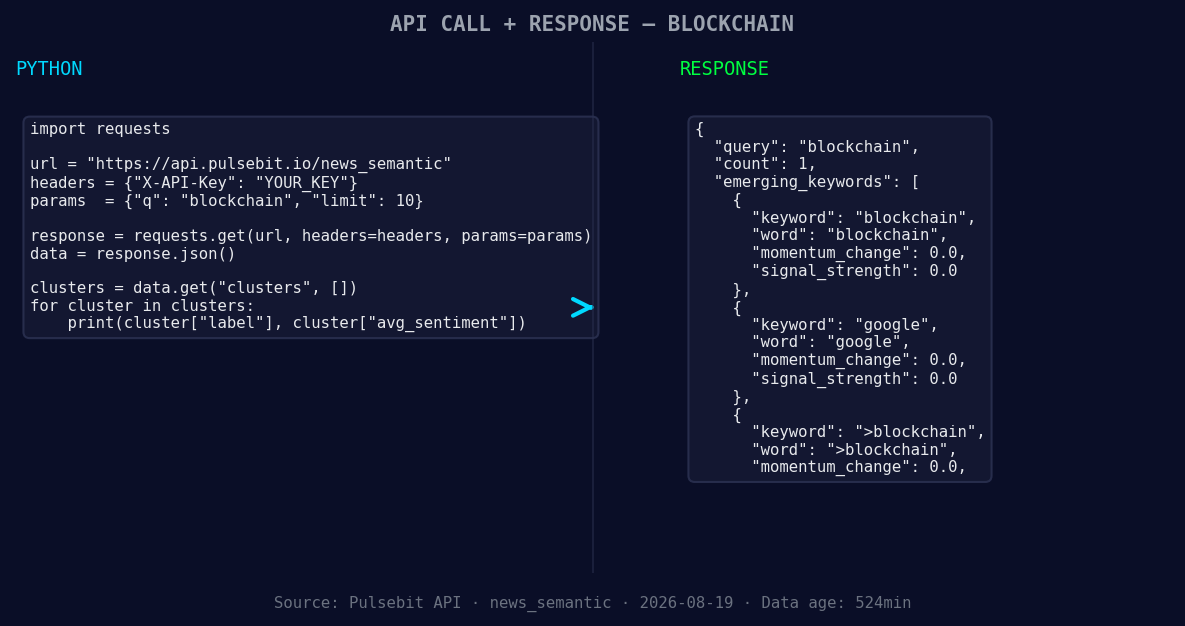
*Left: Python GET /news_semantic call for 'blockchain'. Right: returned JSON response structure (clusters: 3). Source: Pulsebit /news_semantic.*
# Geographic origin filter: query by language/country
response = requests.get("https://api.pulsebit.com/sentiment", params={
"topic": topic,
"lang": "en"
})
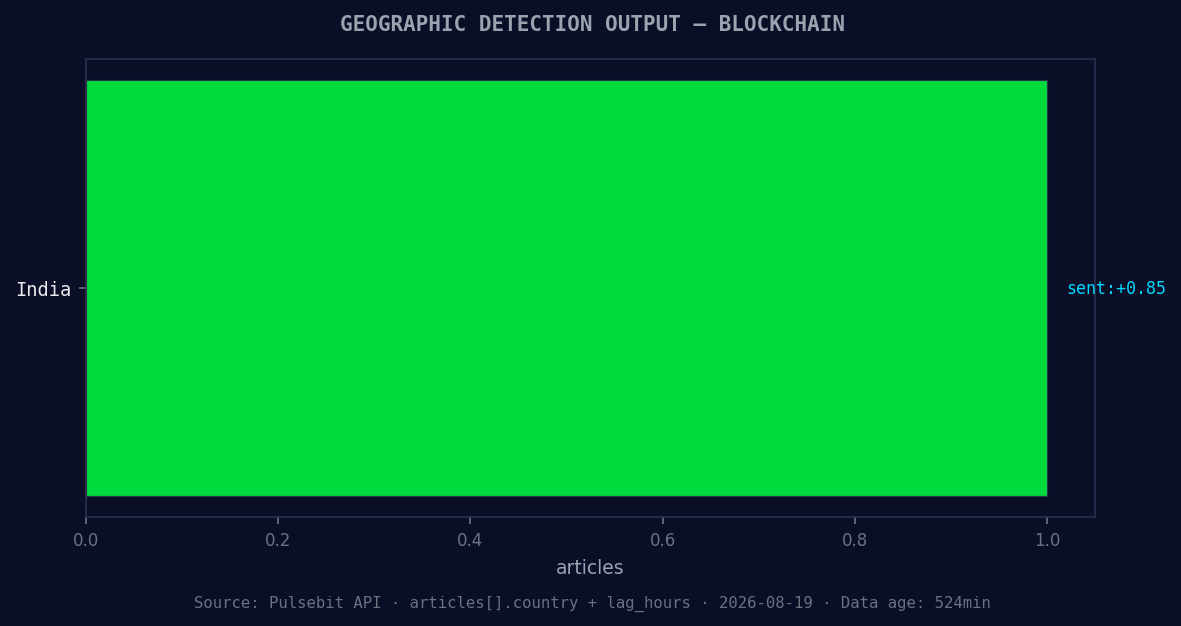
*Geographic detection output for blockchain. India leads with 1 articles and sentiment +0.85. Source: Pulsebit /news_recent geographic fields.*
# Check the response
if response.status_code == 200:
data = response.json()
print(f"Sentiment Data: {data}")
# Meta-sentiment moment: run the cluster reason string through POST /sentiment
reason_string = "Clustered by shared themes: street, wants, put, stock, market."
meta_response = requests.post("https://api.pulsebit.com/sentiment", json={"text": reason_string})
# Check the meta response
if meta_response.status_code == 200:
meta_data = meta_response.json()
print(f"Meta-Sentiment Data: {meta_data}")
This code does two crucial things. First, it captures sentiment data for the topic "blockchain" while filtering for English language sources. Second, it sends a cluster reason string through our sentiment endpoint to evaluate the narrative framing itself. This will give you deeper insights into how different themes are being perceived, allowing you to react faster.
Now that we have the code, let’s discuss three specific builds we can create with this pattern:
Geo-Filtered Momentum Alert: Set a threshold for momentum spikes, e.g., +0.2, and trigger alerts when the sentiment in English for "blockchain" exceeds this. Use the geo filter to ensure you’re only capturing relevant signals from jurisdictions that matter to you.
Meta-Sentiment Analysis Dashboard: Use the output from the meta-sentiment loop to create a dashboard that visualizes the narrative framing around "blockchain" and its competitors like Google. This can help you understand how mainstream themes like "street, wants, put" are affecting the blockchain sentiment landscape.
Cross-Topic Comparison: Build a comparative analysis endpoint that tracks sentiment across "blockchain," "google," and other emerging tech topics. Set your alert to trigger when any of these topics diverges significantly (e.g., +0.5 momentum difference), allowing you to capitalize on sentiment shifts quickly.
By implementing these builds, you can stay ahead of the curve and leverage blockchain sentiment effectively.
Ready to get started? Check out our documentation at pulsebit.lojenterprise.com/docs. You can copy-paste the code above and run it in under 10 minutes. Don’t miss the next momentum spike!


Top comments (0)