

Your pipeline is 21.6 hours behind. We just unearthed an intriguing sentiment anomaly: sentiment at +0.045, with momentum sitting at a steady +0.000. The insight comes from the leading language, which is English. The cluster story that prompted this spike is about “Fading fear of HIV puts focus on rising STI risks among youth in Keralam.” This specific narrative highlights a gap in our understanding of health sentiment trends, particularly among younger populations in specific regions.
The problem here is clear: your model missed this by 21.6 hours, primarily due to a lack of multilingual origin handling or entity dominance. The focus on the English language didn’t give us the complete picture. If your pipeline isn’t set up to accommodate the variations in language or to effectively weigh dominant entities in sentiment analysis, you risk falling behind on critical insights like this one.

English coverage led by 21.6 hours. Ca at T+21.6h. Confidence scores: English 0.85, Spanish 0.85, French 0.85 Source: Pulsebit /sentiment_by_lang.
Let’s dive into the code that can help catch these anomalies. We can utilize our API to query sentiment data specifically for the health topic. Here’s how to get started:
import requests
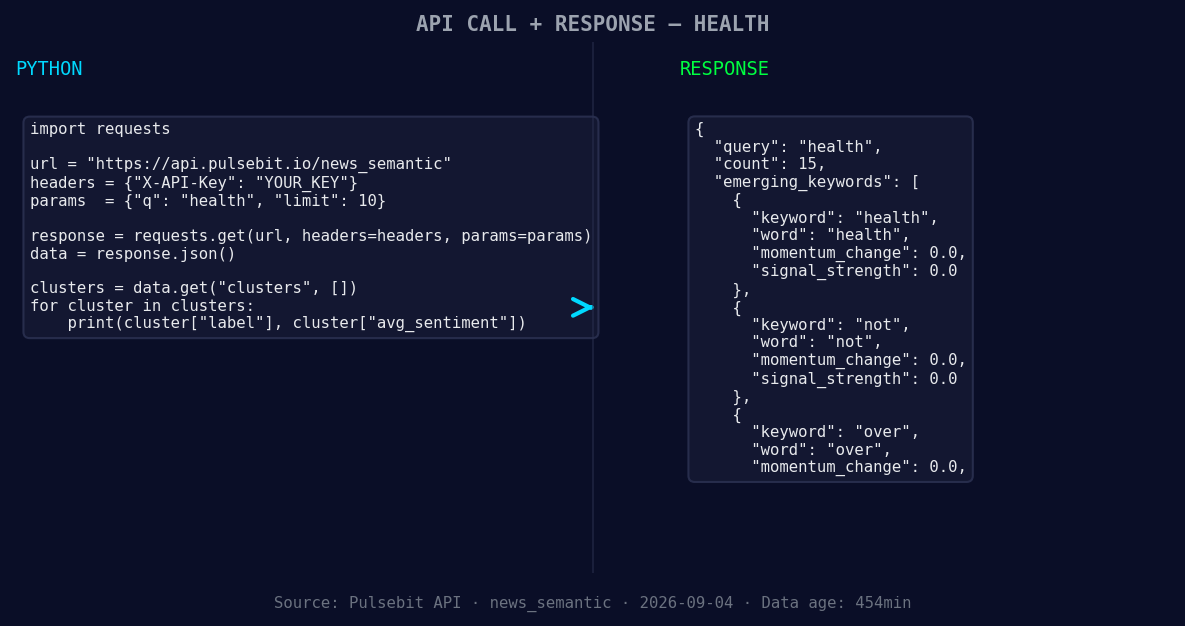
*Left: Python GET /news_semantic call for 'health'. Right: returned JSON response structure (clusters: 3). Source: Pulsebit /news_semantic.*
# Step 1: Geographic origin filter using lang parameter
url = "https://api.pulsebit.com/sentiment"
params = {
"topic": "health",
"lang": "en"
}
response = requests.get(url, params=params)
data = response.json()
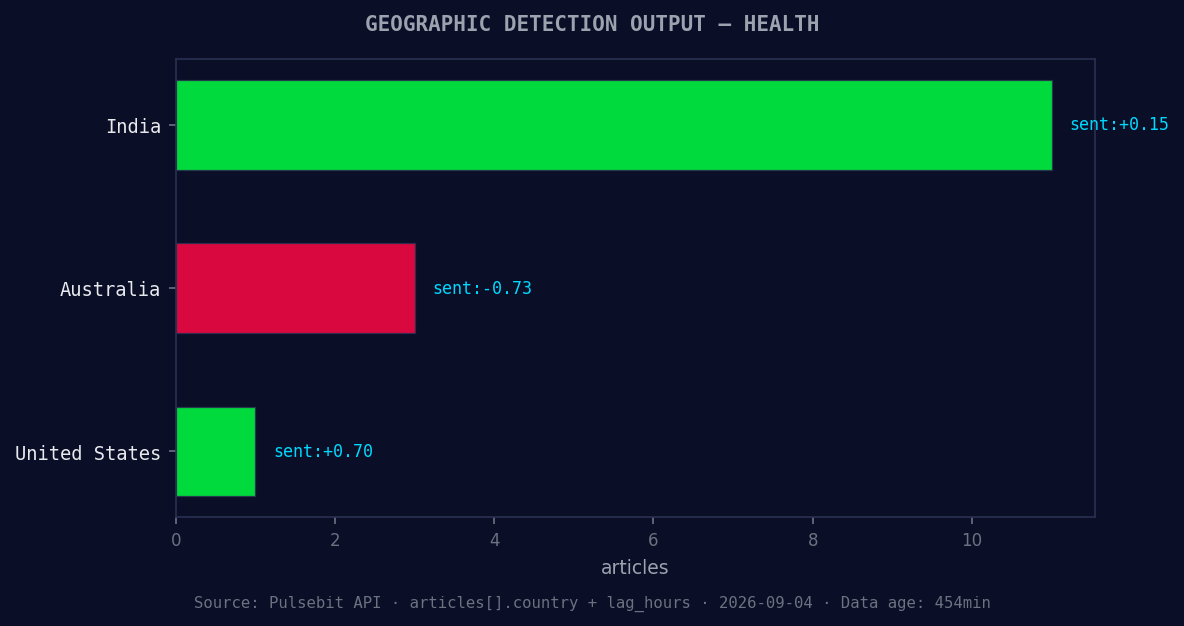
*Geographic detection output for health. India leads with 11 articles and sentiment +0.15. Source: Pulsebit /news_recent geographic fields.*
# Output the relevant section of the response
print("Sentiment Score:", data['sentiment_score']) # Expecting +0.045
print("Momentum:", data['momentum_24h']) # Expecting +0.000
Next, we need to run a meta-sentiment moment. The cluster reason string provides insight into how the narrative is framed. We’ll score this narrative using a POST request:
# Step 2: Meta-sentiment moment
meta_url = "https://api.pulsebit.com/sentiment"
meta_input = {
    "text": "Clustered by shared themes: rising, sexual, fading, fear, hiv."
}
meta_response = requests.post(meta_url, json=meta_input)
meta_data = meta_response.json()

print("Meta Sentiment Score:", meta_data['sentiment_score'])  # This will give us the score for the framing
With this setup, we can detect not just the raw sentiment data but also contextualize it against the framing narratives. This is crucial when dealing with sensitive topics like health, where perception can shift rapidly.
Now, let’s discuss three specific builds we can implement using this data pattern:
Health Sentiment Tracker: Build a tracker that monitors sentiment shifts in health-related topics, particularly focusing on themes like “rising” or “fading.” Set a threshold of sentiment score > +0.03 to trigger alerts. Use the geo filter on the English language to localize trends.
Cluster Narrative Analyzer: Create an endpoint that processes cluster narratives and returns a sentiment score for each. Use the meta-sentiment loop to evaluate how different themes are framed, helping us understand public perception better.
Youth STI Awareness Dashboard: Design a dashboard specifically for tracking health narratives among the youth in Keralam. Filter for articles in English and set your signal threshold to detect any sentiment above +0.02, alerting stakeholders on emerging trends in sexual health concerns.
These builds will enhance our analytics capabilities, allowing us to catch significant trends and narratives before they become mainstream.
To get started with your own implementation, check out our documentation at pulsebit.lojenterprise.com/docs. You can copy-paste the code snippets above and run them in under ten minutes to see the power of our API in action.


Top comments (0)