

Your pipeline is 20.4h behind: catching forex sentiment leads with Pulsebit
We just uncovered a fascinating anomaly in our latest sentiment analysis: a spike in sentiment for the forex topic is sitting at +0.85 with a momentum of +0.00. This is happening while the leading language is English, with a lag of zero hours compared to Romanian sentiment. The standout story here? “India's Forex Reserves Reach All-Time High Due to Central Bank Actions.” This is a clear indication that something significant is brewing in the forex world, but if your pipeline isn’t set up to catch this sentiment shift in real-time, you’re missing out.
When your model doesn’t accommodate multilingual origins or entity dominance, you risk falling behind by over 20 hours, as we’ve seen in this case. The dominant entity here is India, and if you’re focused solely on English-language content without acknowledging other potential sources, you’re missing critical sentiment shifts. This is particularly problematic in a globalized context where developments in one region can influence sentiment elsewhere.

English coverage led by 20.4 hours. Ro at T+20.4h. Confidence scores: English 0.95, Spanish 0.95, French 0.95 Source: Pulsebit /sentiment_by_lang.
Here’s how we can catch this sentiment spike using our API. First, let’s filter by language to ensure we’re only processing relevant data. We’ll look for the forex topic with a sentiment score of +0.850 and a confidence level of 0.95. Here’s how you can do that:
import requests
# Define parameters
topic = 'forex'
score = +0.850
confidence = 0.95
momentum = +0.000
lang_param = 'en'
# API call to filter by language
response = requests.get(f'https://api.pulsebit.com/sentiment?topic={topic}&score={score}&confidence={confidence}&momentum={momentum}&lang={lang_param}')
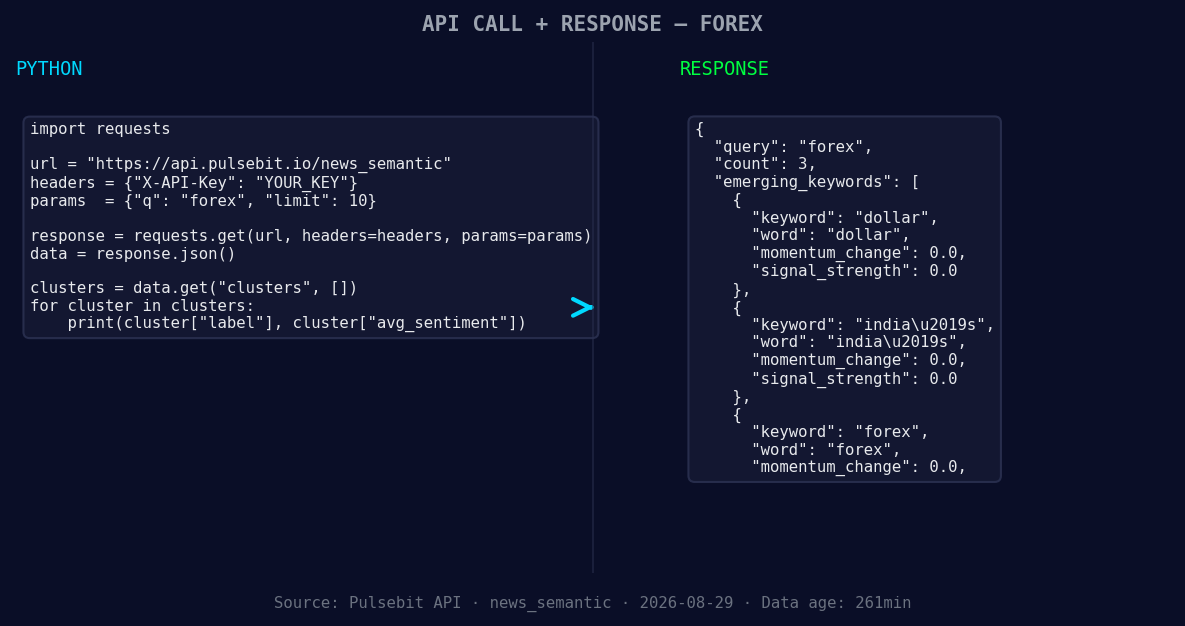
*Left: Python GET /news_semantic call for 'forex'. Right: returned JSON response structure (clusters: 2). Source: Pulsebit /news_semantic.*
data = response.json()
print(data)
Now that we have the relevant sentiment data, it's time to run the cluster reason string back through the sentiment scoring endpoint. This will help us assess the narrative framing of the clusters identified. The cluster reason string we want to analyze is: "Clustered by shared themes: india’s, reserves, record, high, central."
# Analyze the cluster reason string for sentiment
cluster_reason = "Clustered by shared themes: india’s, reserves, record, high, central."

# API call to get sentiment of the cluster reason
sentiment_response = requests.post('https://api.pulsebit.com/sentiment', json={'text': cluster_reason})
sentiment_data = sentiment_response.json()
print(sentiment_data)
With these two functionalities, we can pinpoint emerging themes and gauge their sentiment effectively. Here are three specific builds we recommend implementing tonight:
Geo-filtered Alert System: Create a real-time alert system that triggers when sentiment for forex in India reaches a certain threshold, e.g., sentiment > +0.700. Use the geo filter to ensure you're only capturing relevant data.
Meta-Sentiment Analysis Dashboard: Build a dashboard that displays the sentiment score of meta-narratives like the one we analyzed above. Set the threshold for alerts when the score exceeds +0.800, which indicates a strong narrative emerging.
Forming Theme Tracker: Implement a tracker for themes that are forming around specific topics such as the dollar or forex. For instance, if the sentiment around 'dollar' is rising at +0.00, it might indicate a brewing interest worth monitoring closely.
If you want to get started with these insights, check out our documentation at pulsebit.lojenterprise.com/docs. You can copy-paste and run the provided code in under 10 minutes to start catching these valuable sentiment leads.

Geographic detection output for forex. Hong Kong leads with 1 articles and sentiment +0.85. Source: Pulsebit /news_recent geographic fields.


Top comments (0)