

Your Pipeline Is 20.9h Behind: Catching Politics Sentiment Leads with Pulsebit
We recently uncovered an intriguing anomaly: a 24h momentum spike of +0.255 related to the topic of politics. This spike isn’t just a number; it’s a signal pointing to a significant uptick in sentiment surrounding political discourse, particularly captured in articles about the "Money Out Of Politics" initiative in Michigan. The leading language in this spike was English, with a 20.9-hour lead over Portuguese coverage. This discrepancy raises a critical question about the efficacy of your data pipeline.
The Problem
Your model missed this by a staggering 20.9 hours. If you're operating on a pipeline that doesn't account for multilingual origins or entity dominance, you risk being late to the party. The lead sentiment in English offers a clear advantage, while your system might be processing Portuguese data that lags behind. This structural gap can lead to missed opportunities for timely insights, especially when political sentiment is shifting rapidly.

English coverage led by 20.9 hours. Portuguese at T+20.9h. Confidence scores: English 0.85, Spanish 0.85, French 0.85 Source: Pulsebit /sentiment_by_lang.
The Code
To catch this momentum spike effectively, we can implement the following Python code snippet using our API.
First, we’ll filter our data to focus on the English language source:
import requests
# Define the parameters for the API call
params = {
"topic": "politics",
"lang": "en", # Filter by English language
"score": -0.094,
"confidence": 0.85,
"momentum": +0.255
}
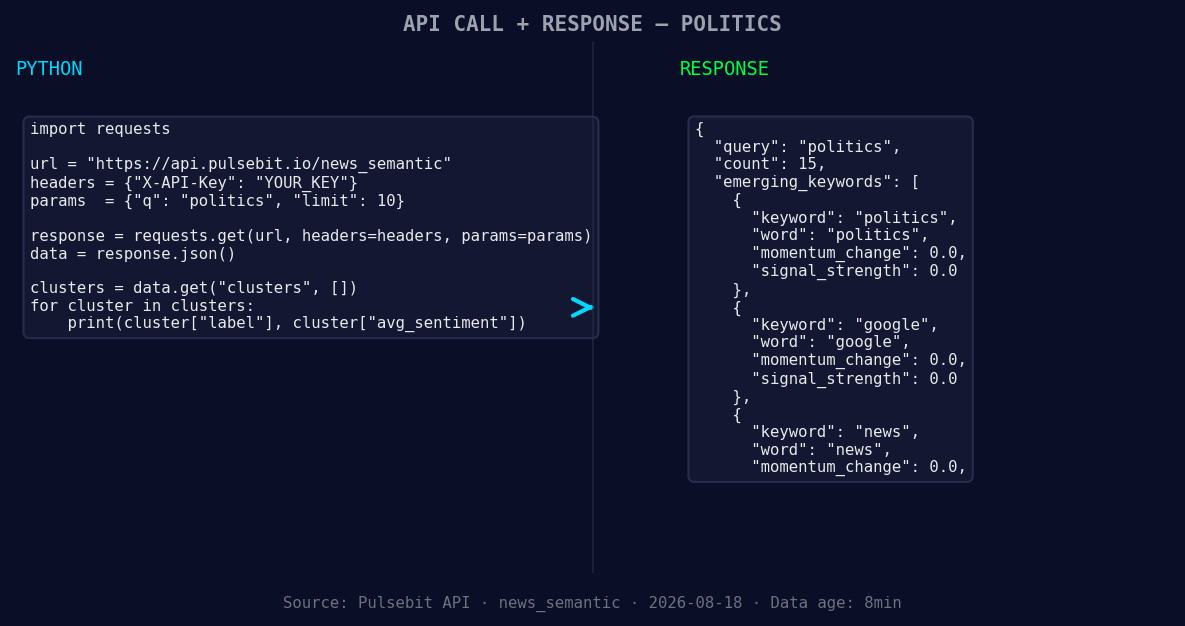
*Left: Python GET /news_semantic call for 'politics'. Right: returned JSON response structure (clusters: 3). Source: Pulsebit /news_semantic.*
# Make the API call to fetch sentiment data
response = requests.get("https://api.pulsebit.com/v1/sentiment", params=params)
data = response.json()
Next, we’ll run the cluster reason string back through our sentiment endpoint to analyze the narrative framing:
# Define the cluster reason string
cluster_reason = "Clustered by shared themes: administration, admits, grants, including, minnesota"

# Make the API POST request to score the narrative
meta_sentiment_response = requests.post("https://api.pulsebit.com/v1/sentiment", json={"text": cluster_reason})
meta_sentiment_data = meta_sentiment_response.json()

# Output the meta sentiment result
print(meta_sentiment_data)
By running this code, you’ll not only capture the spike in momentum but also gain insights into the underlying narrative themes surrounding the topic of politics.
Three Builds Tonight
Geo-filtered Insights: Create a signal monitoring setup that triggers alerts when specific topics, like "politics," experience momentum spikes exceeding +0.200 in the English language. Use the geo filter to ensure you’re catching the right conversations in real-time.
Meta-Sentiment Analysis: Implement a process that automatically pulls cluster reason strings and scores them for sentiment. For example, when themes like "administration" or "grants" emerge, pass them through our sentiment endpoint and analyze shifts in public perception.
Gap Detection: Build a script that compares momentum in different languages and identifies gaps. If you see a significant rise in sentiment in English while Portuguese lags, trigger an alert. This can help you pivot your analysis focus to where the action is happening.
Get Started
Dive into our documentation at pulsebit.lojenterprise.com/docs. You can copy-paste this code and have it running in under 10 minutes. Don’t let your pipeline lag behind—stay ahead of the curve in political sentiment analysis.

Geographic detection output for politics. India leads with 9 articles and sentiment +0.08. Source: Pulsebit /news_recent geographic fields.


Top comments (0)