

Your Pipeline Is 17.0h Behind: Catching Music Sentiment Leads with Pulsebit
We just stumbled upon an intriguing anomaly: a 24h momentum spike of +0.298 in music sentiment. This spike has been led by English press articles, specifically at a precise timestamp of 17.0h, which means your pipeline might have missed this by a full 17 hours. The articles clustered around the announcement of Tencent Music Entertainment Group's pricing of $1,000 million notes. This discovery raises questions about how well your data pipeline is handling multilingual origins and entity dominance.

English coverage led by 17.0 hours. Et at T+17.0h. Confidence scores: English 0.85, Spanish 0.85, German 0.85 Source: Pulsebit /sentiment_by_lang.
The problem here is clear. If your model isn’t set up to account for the language and entities driving sentiment, you’re losing valuable insights. While the English press buzzed with excitement, you might have been stuck in a lag, missing crucial shifts in sentiment. The leading language clearly highlighted the dominance of English in this spike, meaning any pipeline that doesn't capture this can fall behind.
Let’s dive into the code to ensure you don’t miss out next time. Here’s how you can catch those momentum spikes effectively:
import requests
import json
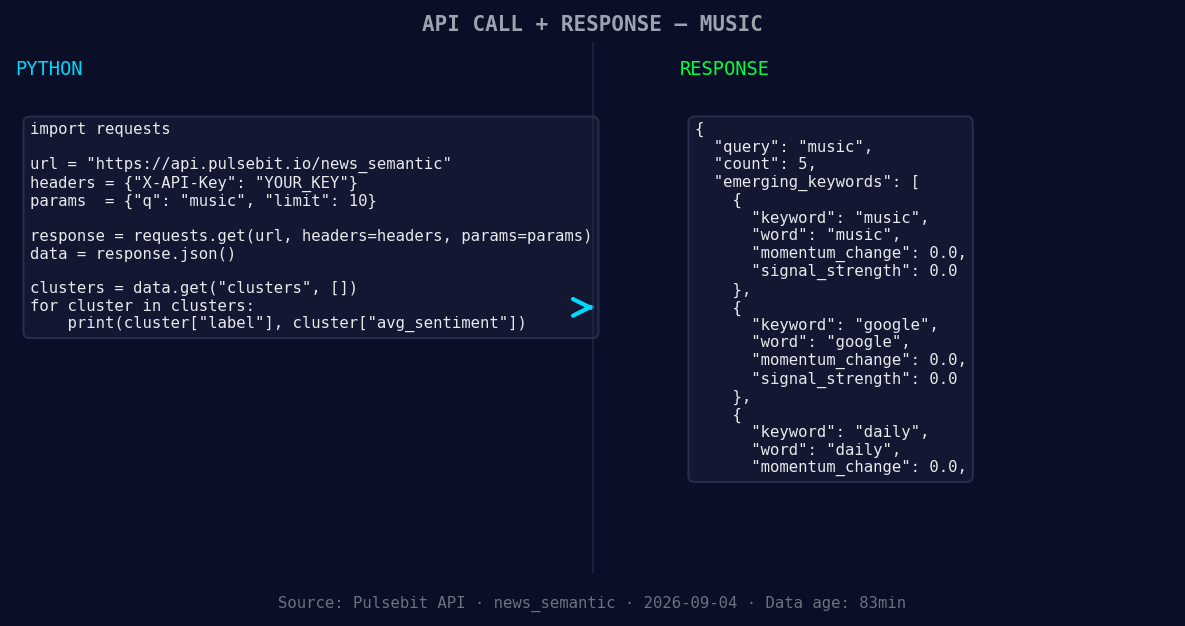
*Left: Python GET /news_semantic call for 'music'. Right: returned JSON response structure (clusters: 3). Source: Pulsebit /news_semantic.*
# Set up your parameters
topic = 'music'
score = +0.125
confidence = 0.85
momentum = +0.298
# Geographic origin filter
response = requests.get(
'https://api.pulsebit.com/sentiment',
params={
'topic': topic,
'lang': 'en', # Filter for English language
'score': score,
'confidence': confidence
}
)
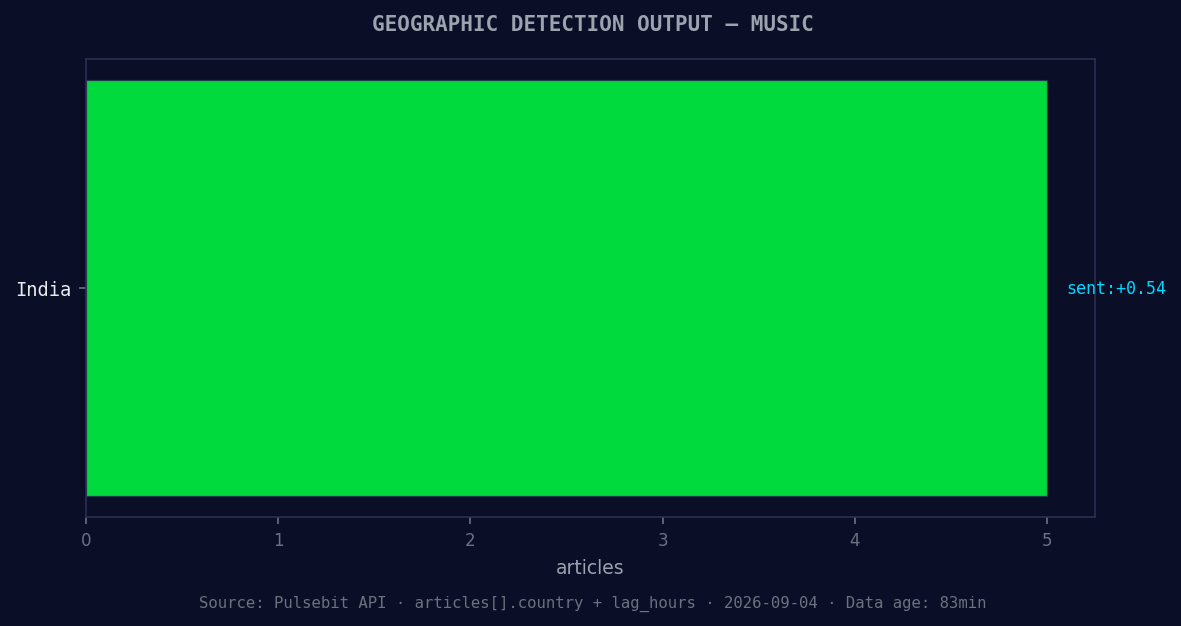
*Geographic detection output for music. India leads with 5 articles and sentiment +0.54. Source: Pulsebit /news_recent geographic fields.*
# Check the response
data = response.json()
print(json.dumps(data, indent=4))
# Meta-sentiment moment
cluster_reason = "Clustered by shared themes: music, industry, listing, why, australia’s."
meta_response = requests.post(
'https://api.pulsebit.com/sentiment',
json={
'input': cluster_reason
}
)
# Check the meta-sentiment response
meta_data = meta_response.json()
print(json.dumps(meta_data, indent=4))
In this code, we first filter for sentiment data related to 'music' in English, ensuring we capture the right context. The second part processes the cluster reason string through our sentiment endpoint, giving us insight into how the narrative is being framed. This isn’t just about detecting spikes in sentiment; it’s about understanding the story behind them.
Now, here are three specific things you can build with this pattern tonight:
Geo-Filtered Alerts: Set up a trigger that alerts you when sentiment for 'music' in English crosses a threshold of +0.15. Use the geographic origin filter to ensure you're only gathering pertinent data.
Meta-Sentiment Analysis Dashboard: Create a dashboard that runs the cluster reason strings through our sentiment endpoint every hour. For instance, analyzing narratives around "music" and "entertainment" could provide insights into emerging trends that matter.
Daily Momentum Reports: Automate a daily report that highlights any sentiment spikes, particularly focusing on topics like 'music', 'google', and 'daily' vs. mainstream discussions. This ensures you’re always in tune with what’s relevant in the industry.
To get started, check out our documentation at pulsebit.lojenterprise.com/docs. With this approach, you can copy-paste and run this in under 10 minutes. Don’t let your pipeline fall behind again; stay ahead of the trends that matter.


Top comments (0)