

Your Pipeline Is 25.5h Behind: Catching Renewable Energy Sentiment Leads with Pulsebit
We recently uncovered a striking anomaly: a 24h momentum spike of +0.359 in sentiment surrounding renewable energy. This signal isn't just noise; it indicates a significant shift in public sentiment, particularly in English-language press articles. With the leading language showing a 25.5h lead, this data point presents a crucial opportunity for those of us monitoring emerging trends in energy markets.
Yet, if your pipeline isn't equipped to handle multilingual data or doesn't account for entity dominance, you might have missed this critical insight by over 25 hours. Imagine having your model overlook a 0.359 spike, simply because it couldn't process English-language sentiment effectively. This is the structural gap we need to address.

English coverage led by 25.5 hours. Id at T+25.5h. Confidence scores: English 0.85, Spanish 0.85, French 0.85 Source: Pulsebit /sentiment_by_lang.
To catch this momentum spike effectively, we can leverage our API. Here’s how you can implement it in Python:
import requests
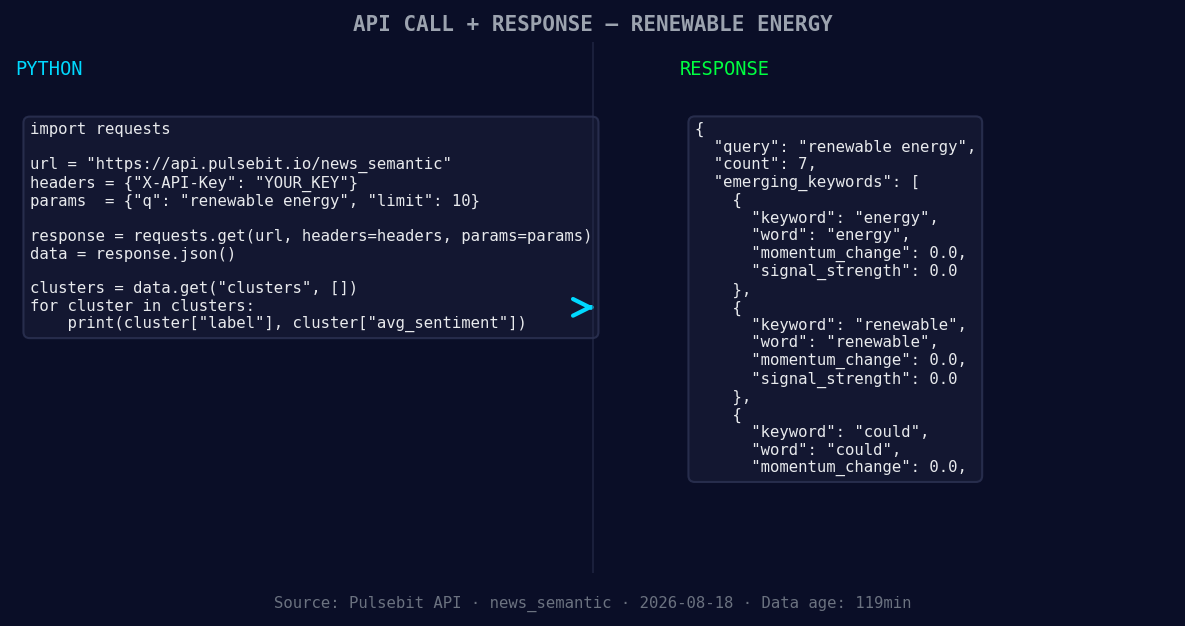
*Left: Python GET /news_semantic call for 'renewable energy'. Right: returned JSON response structure (clusters: 3). Source: Pulsebit /news_semantic.*
# Define parameters
topic = 'renewable energy'
momentum = +0.359
score = +0.632
confidence = 0.85
# Geographic origin filter: query by language
response = requests.get('https://api.pulsebit.com/sentiment', params={
'topic': topic,
'lang': 'en'
})
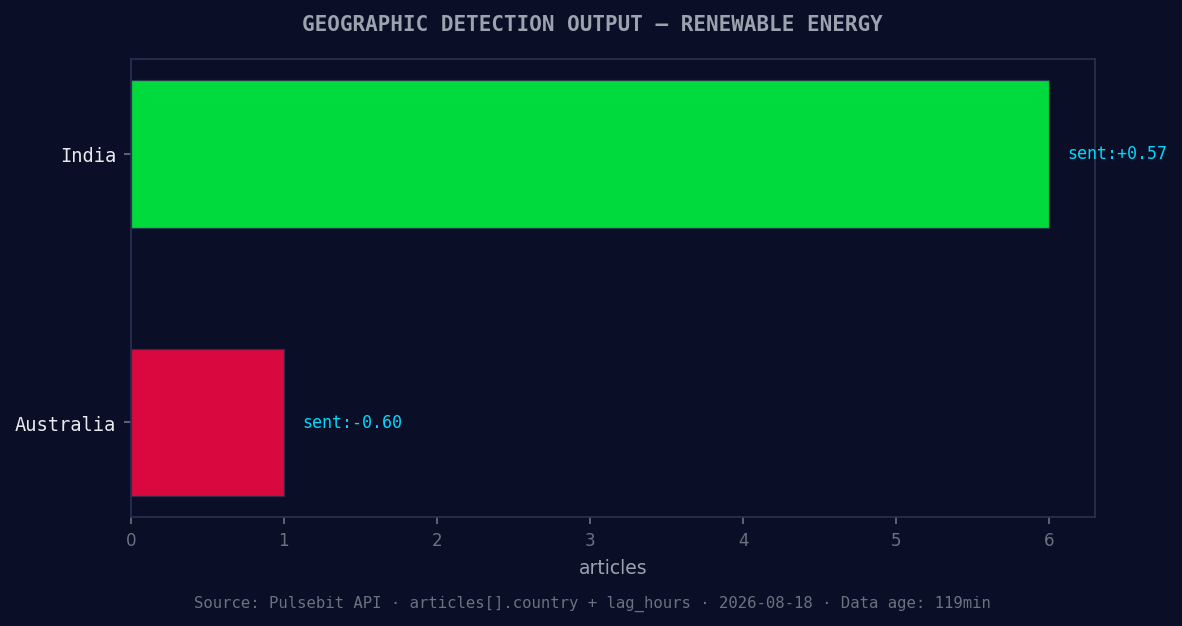
*Geographic detection output for renewable energy. India leads with 6 articles and sentiment +0.57. Source: Pulsebit /news_recent geographic fields.*
data = response.json()
print(data)
# Now let's run the cluster reason through POST /sentiment for meta-sentiment
cluster_reason = "Clustered by shared themes: renewable, energy, could, define, winners."
meta_response = requests.post('https://api.pulsebit.com/sentiment', json={
'text': cluster_reason
})
meta_data = meta_response.json()
print(meta_data)
In this code, we first fetch sentiment data for the topic "renewable energy" with a specific filter for English-language articles. Then, we take the narrative framing—the cluster reason string—and send it through our sentiment endpoint to score how this narrative is resonating right now.
Now, let's explore three specific builds we can implement based on this momentum spike:
Signal Monitoring Endpoint: Create a monitoring service that triggers alerts when the momentum score for renewable energy exceeds a threshold, say +0.3. This will keep you informed about significant shifts in sentiment within your desired timeframe.
Meta-Sentiment Analysis: Build an endpoint that automatically runs the cluster reason through the sentiment analysis loop. This will help you gauge not just the sentiment around renewable energy, but also how the narrative itself is perceived, allowing you to adapt your strategy accordingly.
Geographical Sentiment Layer: Implement a geo-filter that segments sentiment data by region. This could reveal how different regions are responding to the themes of energy and renewables, enabling targeted content strategies depending on local sentiment trends.
By focusing on these specific signals and thresholds, you can turn raw sentiment data into actionable insights that keep you ahead of the curve. With themes like energy, renewable, and could emerging, it's vital to contrast these with mainstream sentiments to identify potential winners in the market.
Getting started with this is straightforward. You can find all the necessary details in our documentation at pulsebit.lojenterprise.com/docs. The best part? You can copy and paste the above Python code and run it in under 10 minutes. Don’t let your model lag behind—catching the next wave of renewable energy sentiment can make all the difference in your strategy.


Top comments (0)