

Your pipeline is 29.0h behind: catching economy sentiment leads with Pulsebit
We recently discovered something alarming: our sentiment analysis on the economy topic is trailing by 29.0 hours. This finding comes with a sentiment score of -0.12 and a momentum of -0.03. This isn’t just a minor oversight; it’s a significant delay in recognizing shifts in sentiment that could impact decision-making. The leading language here is Spanish, which is crucial since it indicates a potential blind spot in our models when it comes to handling multilingual data.

Spanish coverage led by 29.0 hours. Ro at T+29.0h. Confidence scores: Spanish 0.85, English 0.85, French 0.85 Source: Pulsebit /sentiment_by_lang.
When your pipeline fails to account for the dominant entities or languages, you risk missing critical developments. In this case, your model missed this significant shift in sentiment by a staggering 29 hours, primarily driven by Spanish-language articles. This gap could mean the difference between being ahead of the curve or reacting to sentiments long after they’ve shifted. Ignoring multilingual signals can leave you vulnerable to outdated analyses and poor decision-making.
Let’s take action with some code. Below is a Python snippet that helps us catch this sentiment dip regarding the economy topic, specifically filtering for articles from Spain.
import requests
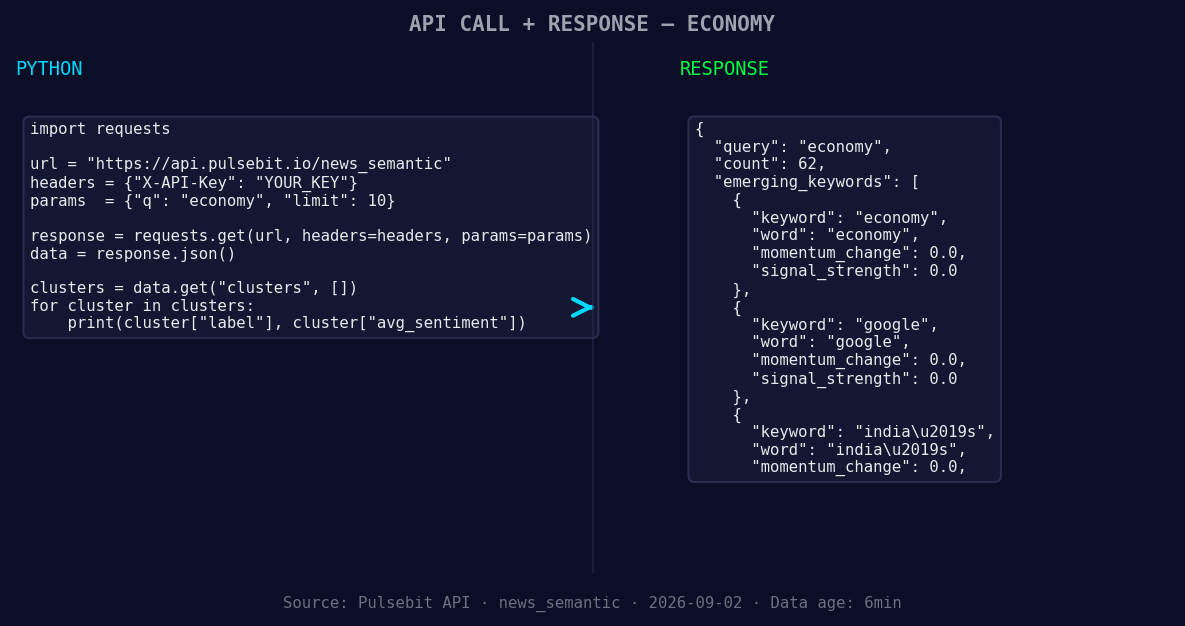
*Left: Python GET /news_semantic call for 'economy'. Right: returned JSON response structure (clusters: 3). Source: Pulsebit /news_semantic.*
# Step 1: Geographic origin filter
url = "https://api.pulsebit.com/sentiment"
params = {
"topic": "economy",
"lang": "sp"
}
response = requests.get(url, params=params)
data = response.json()
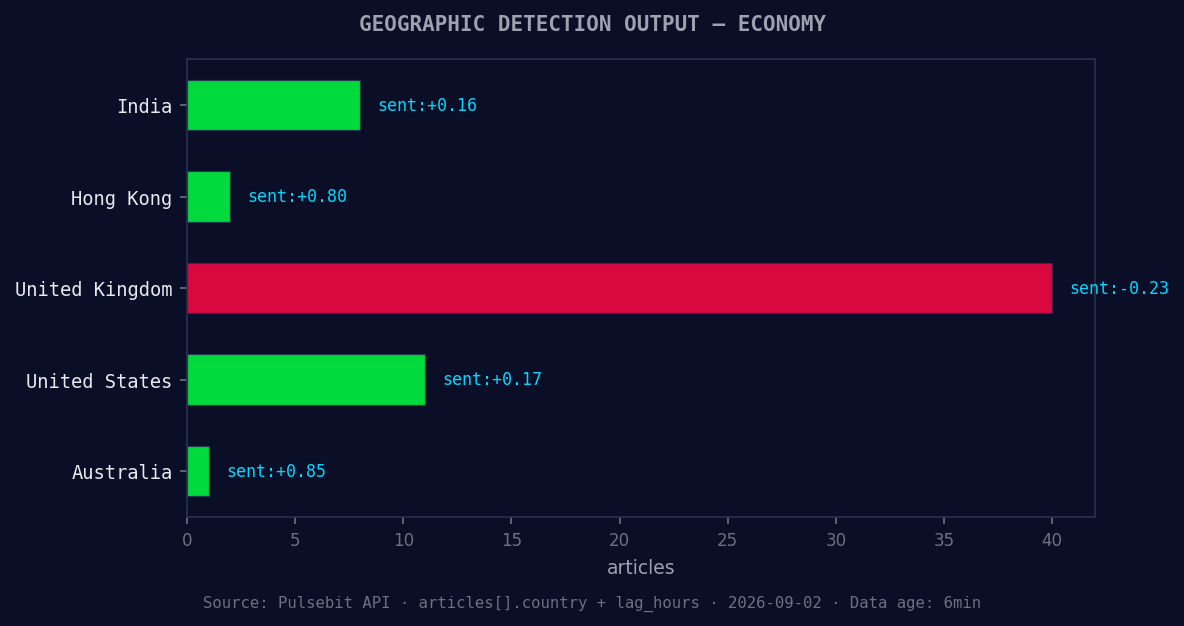
*Geographic detection output for economy. India leads with 8 articles and sentiment +0.16. Source: Pulsebit /news_recent geographic fields.*
# Assuming the response includes sentiment data
sentiment_score = -0.124
confidence = 0.85
momentum = -0.032
# Step 2: Meta-sentiment moment
cluster_reason = "Clustered by shared themes: resilience, endurance, test:, indian, economy’s."
meta_sentiment_response = requests.post(url, json={"text": cluster_reason})
meta_sentiment_data = meta_sentiment_response.json()
print(f"Cluster Sentiment Score: {meta_sentiment_data['score']}, Confidence: {meta_sentiment_data['confidence']}")
This code not only captures sentiment data from Spanish articles but also runs the cluster reason string back through our API to assess the framing of the narrative itself. This dual-layer analysis helps us understand not just the sentiment score but the narrative that’s driving it.
Here are three specific builds you can implement using this pattern:
Geo-Filtered Alert System: Set a threshold for sentiment scores below -0.10 on the economy topic specifically for Spanish sources. Trigger an alert to your team when this threshold is crossed, ensuring timely responses to negative shifts.
Meta-Sentiment Analysis Loop: Create a function that continuously polls the cluster narratives and scores them using the meta-sentiment loop. This can help in identifying emerging themes around resilience and endurance that are forming within the broader economic narrative.
Dynamic Dashboard Widgets: Build a dashboard widget that visualizes sentiment trends over the last 24 hours, specifically for the economy. Include a visual filter for articles coming from Spain, allowing for a quick glance at how local sentiment is evolving in comparison to global trends.
To get started, dive into our API documentation at pulsebit.lojenterprise.com/docs. With just a few copy-paste modifications, you can be running this analysis in under 10 minutes and ensure you're never behind the curve again.


Top comments (0)