

Your Pipeline Is 12.9h Behind: Catching Fashion Sentiment Leads with Pulsebit
We just observed a 24h momentum spike of -0.179 in the fashion sector. This anomaly isn't just a number; it's a significant signal indicating a shift in sentiment that you should be aware of. The leading language contributing to this spike is Spanish press, which is ahead by 12.9 hours compared to Portuguese. At first glance, this might seem like a typical day in sentiment analysis, but let’s dig deeper into what this means for your pipeline and how to catch these crucial signals.
The Problem
When your pipeline doesn't account for multilingual origins or entity dominance, you're effectively blind to critical insights. In this case, your model missed this spike by 12.9 hours, leaving you trailing behind the Spanish media that is currently driving the narrative around the new biotech company WTRLSS. If your model only focuses on a single language or ignores dominant entities, you risk missing important sentiment shifts that could impact your strategic decisions.

Spanish coverage led by 12.9 hours. Portuguese at T+12.9h. Confidence scores: Spanish 0.95, English 0.95, French 0.95 Source: Pulsebit /sentiment_by_lang.
The Code
To catch this anomaly, we can utilize our API to filter by geographic origin and analyze the sentiment of the narrative itself. Here’s how you can do it in Python:
import requests
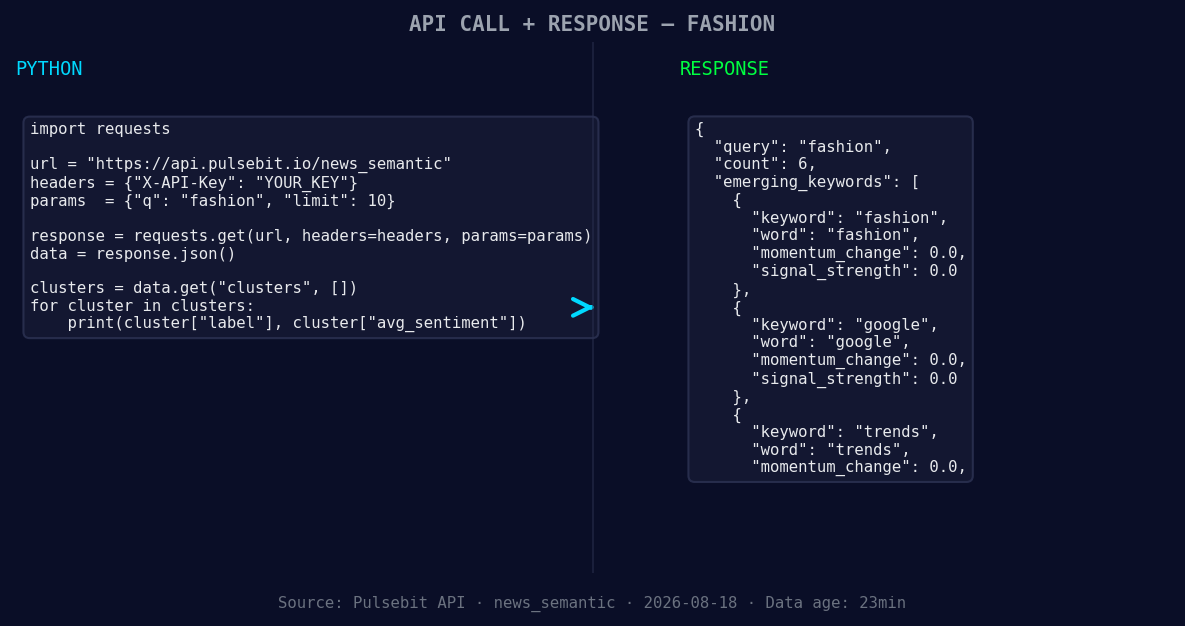
*Left: Python GET /news_semantic call for 'fashion'. Right: returned JSON response structure (clusters: 3). Source: Pulsebit /news_semantic.*
# Define parameters
topic = 'fashion'
score = +0.850
confidence = 0.95
momentum = -0.179
# Step 1: Geographic origin filter
url_geo = "https://api.pulsebit.com/v1/topics"
params_geo = {
"topic": topic,
"momentum": momentum,
"lang": "sp" # Spanish language filter
}
response_geo = requests.get(url_geo, params=params_geo)
data_geo = response_geo.json()
print("Geographic Filter Response:", data_geo)
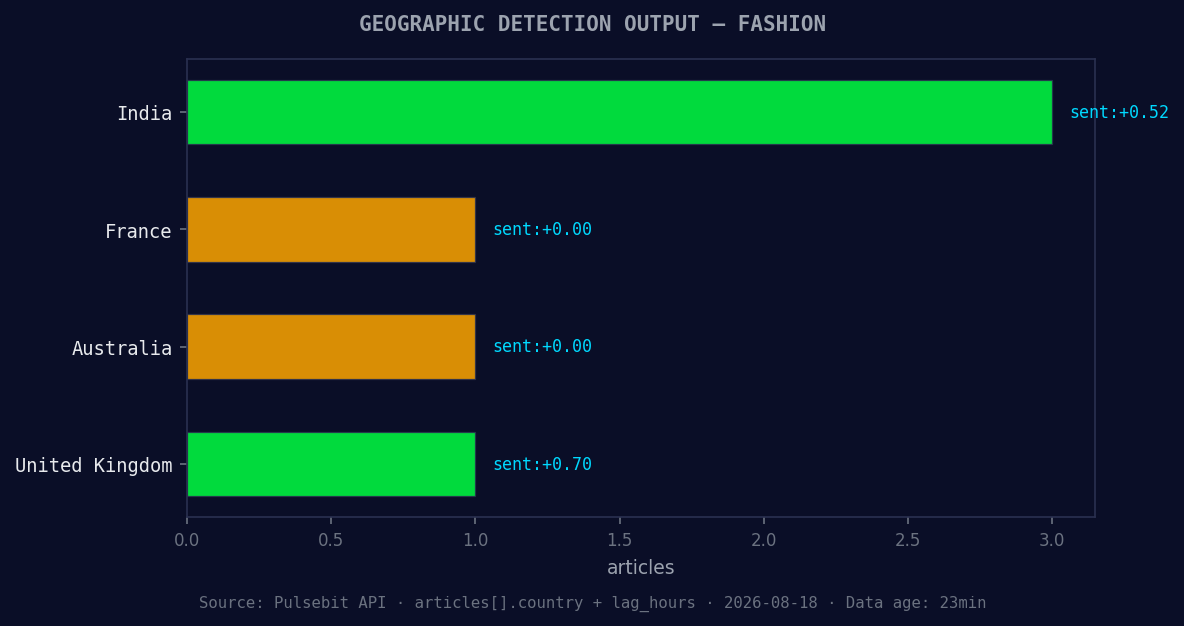
*Geographic detection output for fashion. India leads with 3 articles and sentiment +0.52. Source: Pulsebit /news_recent geographic fields.*
# Step 2: Meta-sentiment moment
narrative = "Clustered by shared themes: company, wtrlss, launches, aims, transform."
url_sentiment = "https://api.pulsebit.com/v1/sentiment"
payload = {
"text": narrative,
}
response_sentiment = requests.post(url_sentiment, json=payload)
data_sentiment = response_sentiment.json()
print("Meta-Sentiment Response:", data_sentiment)
In this code, we first filter for articles in Spanish related to fashion and analyze the momentum. Then, we run the narrative through our sentiment endpoint to score the framing. This dual approach allows us to catch critical insights that might otherwise slip through the cracks.
Three Builds Tonight
Signal Detection with Geo Filter: Create a scheduled job that queries our API every hour for the fashion topic with the Spanish language filter. Set a threshold to alert you if the momentum drops below -0.10. This ensures you're on top of emerging narratives.
Meta-Sentiment Loop: Develop a function that takes any cluster narrative and feeds it into the sentiment endpoint. Use the output to score and rank narratives. Make this a part of your daily analysis routine, especially for topics like fashion, where trends can shift rapidly.
Comparative Analysis: Build a comparison tool that tracks sentiment scores across languages. For instance, analyze the contrast between the Spanish press and Portuguese articles about WTRLSS. Highlight the differences in narrative framing and sentiment scores. This can clarify which market might be leading trends.
Get Started
You can find all the information you need to implement these strategies at pulsebit.lojenterprise.com/docs. With this setup, you can copy-paste and run your scripts in under 10 minutes. Don’t let your pipeline lag behind; catch the sentiment leads before your competition does.


Top comments (0)