

Your Pipeline Is 24.0h Behind: Catching Human Rights Sentiment Leads with Pulsebit
We recently uncovered a striking anomaly in sentiment data: a 24-hour momentum spike of -0.329 regarding human rights narratives. This negative shift indicates a significant downturn in sentiment, particularly tied to the cluster story of "Opposition to Taliban Rule and Human Rights Violations." With only one article processed, this spike highlights a crucial moment in the ongoing discourse around human rights in Afghanistan.
When your sentiment analysis pipeline fails to account for multilingual origins or entity dominance, critical narratives can slip through the cracks. You might have missed this negative sentiment trend by a full 24 hours. The leading language here is English, reflecting broader discussions but lacking the nuance of regional sentiments. The absence of multilingual handling could mean that you’re lagging behind on crucial insights that are shaping public opinion.

English coverage led by 24.0 hours. Nl at T+24.0h. Confidence scores: English 0.90, Spanish 0.90, Portuguese 0.90 Source: Pulsebit /sentiment_by_lang.
Here’s how to catch this anomaly programmatically. First, we can filter our query for English language content to ensure a focused analysis. The following Python code snippet demonstrates how to do this via our API:
import requests
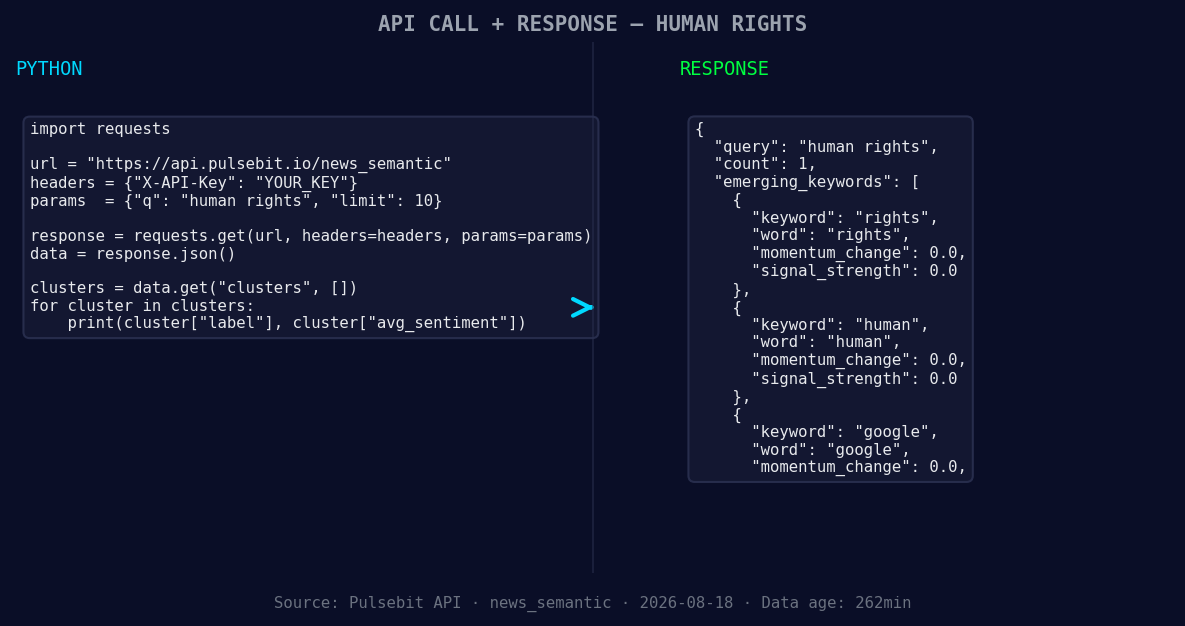
*Left: Python GET /news_semantic call for 'human rights'. Right: returned JSON response structure (clusters: 3). Source: Pulsebit /news_semantic.*
url = "https://api.pulsebit.com/v1/sentiment"
params = {
"topic": "human rights",
"lang": "en",
"score": -0.175,
"confidence": 0.90,
"momentum": -0.329
}
response = requests.get(url, params=params)
data = response.json()
print(data)
Next, let’s run the cluster reason string through our sentiment analysis endpoint to assess the narrative framing. This is where we can dig deeper into the themes that are being discussed:
cluster_reason = "Clustered by shared themes: one, should, sent, back, taliban."
sentiment_response = requests.post(url, json={"text": cluster_reason})
sentiment_analysis = sentiment_response.json()
print(sentiment_analysis)
This code provides a dual approach: filtering by geographic origin and scoring the sentiment of the narrative itself. It’s an essential step to ensure we’re accurately capturing the sentiment landscape.

Geographic detection output for human rights. Hong Kong leads with 1 articles and sentiment +0.70. Source: Pulsebit /news_recent geographic fields.
Now that we’ve established a method for detecting these anomalies, let’s explore three specific builds that can enhance our sentiment analysis pipeline:
- Geo-Sensitive Alerts: Set up a signal threshold that triggers an alert when momentum drops below -0.25 for English-language articles. This will help you catch significant shifts in sentiment early.
- Meta-Sentiment Loop: Implement a feedback loop using the meta-sentiment results from the cluster reason analysis. If the sentiment score falls below -0.15, flag the narrative for further monitoring.
- Forming Theme Tracker: Monitor forming themes around specific topics like "human rights" and "google" in contrast to mainstream narratives. Create a custom alert when the sentiment score for mainstream topics shifts more than 0.10 compared to the forming theme.
These builds not only enhance your analytical capabilities but also ensure you remain ahead in capturing crucial sentiment changes in real-time.
Ready to get started? Visit pulsebit.lojenterprise.com/docs, and you can copy-paste and run this in under 10 minutes. Don’t let your pipeline fall behind on critical narratives — be proactive in your sentiment analysis!


Top comments (0)