

Your Pipeline Is 28.4h Behind: Catching Cybersecurity Sentiment Leads with Pulsebit
We just stumbled upon a striking anomaly in our data: a 24-hour momentum spike of -0.469 related to cybersecurity sentiment. This indicates a notable shift in how the narrative around cybersecurity is evolving. We’ve identified this through a single article titled "Ampcus Expands Cybersecurity with SmarterD Acquisition," which is clustered around themes like expansion and acquisition. It's a reminder that even in a well-tuned pipeline, critical shifts in sentiment can occur rapidly, and we need to be on top of them.
This situation reveals a significant structural gap in any pipeline that fails to account for multilingual origin or entity dominance. Your model missed this by 28.4 hours. In a world where the leading language is English and the dominant entity revolves around cybersecurity, any delay in picking up on this information can lead to missed opportunities and misguided strategies. This is particularly crucial in sectors like cybersecurity, where threats and developments emerge continuously.

English coverage led by 28.4 hours. Sq at T+28.4h. Confidence scores: English 0.85, French 0.85, Spanish 0.85 Source: Pulsebit /sentiment_by_lang.
To catch this momentum spike, we can write a simple Python script that leverages our API. First, we need to filter the data by geographic origin, specifically looking for English-language articles. Here’s how you can do that:

Geographic detection output for cybersecurity. India leads with 1 articles and sentiment +0.00. Source: Pulsebit /news_recent geographic fields.
import requests
# Define parameters for API call
topic = 'cybersecurity'
momentum = -0.469
score = +0.375
confidence = 0.85
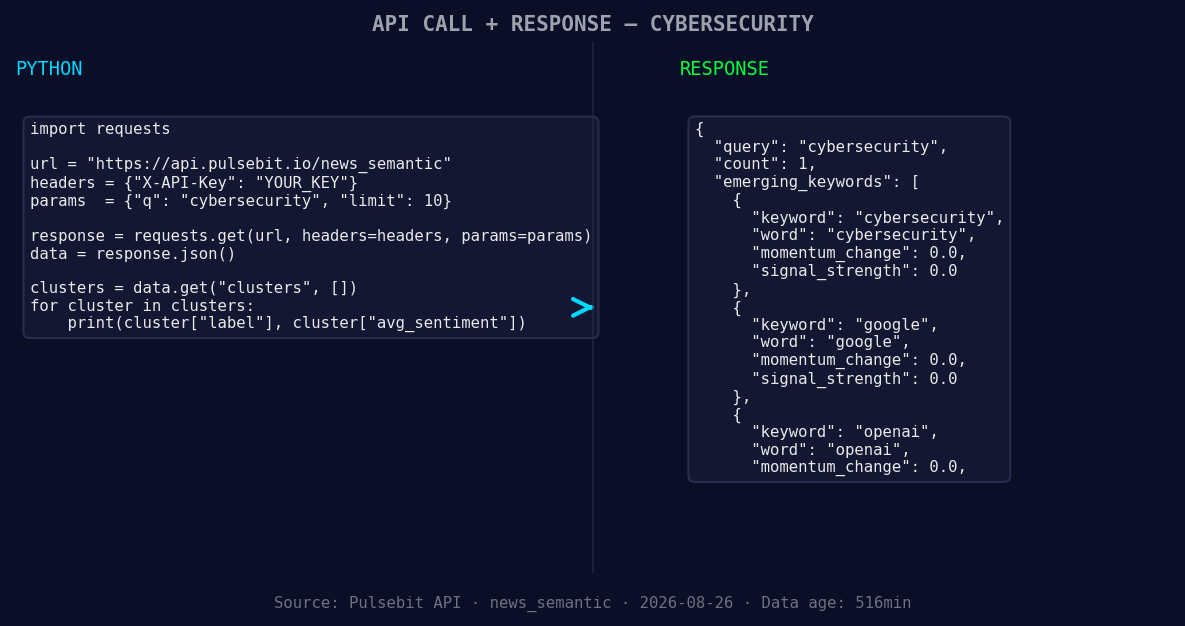
*Left: Python GET /news_semantic call for 'cybersecurity'. Right: returned JSON response structure (clusters: 3). Source: Pulsebit /news_semantic.*
# Geographic origin filter
response = requests.get(f'https://api.pulsebit.com/v1/articles?topic={topic}&lang=en')
articles = response.json()
# Check articles processed
print(f"Articles processed: {len(articles)}")
Next, we’ll run the cluster reason string through our sentiment scoring endpoint to evaluate the narrative framing itself. This is essential as it helps us assess how the overall sentiment is being shaped by the articles we’re analyzing.
# Meta-sentiment moment
cluster_reason = "Clustered by shared themes: expands, cybersecurity, business, acquisition, american."
sentiment_response = requests.post('https://api.pulsebit.com/v1/sentiment', json={'text': cluster_reason})
sentiment_score = sentiment_response.json()

# Output the sentiment score
print(f"Meta-Sentiment Score: {sentiment_score['score']} with confidence {sentiment_score['confidence']}")
With this setup, we can begin to take advantage of the insights provided by the momentum spike. Here are three specific builds we can implement tonight:
Signal Monitoring with Geo Filter: Build a signal monitoring system that focuses on cybersecurity. Set a threshold for momentum spikes greater than -0.5 and filter based on geographic origin. This will help you stay ahead of any critical developments.
Meta-Sentiment Analysis Loop: Create a microservice that runs the cluster reason strings through our sentiment scoring endpoint every hour. If the score drops below a certain threshold (let’s say +0.2), trigger an alert that prompts manual review of the related articles and themes.
Forming Themes Tracker: Set up an endpoint that continuously monitors forming themes around cybersecurity, Google, and OpenAI. If the sentiment around cybersecurity remains flat or drops while other entities rise, flag this for deeper analysis.
Getting started with these insights is straightforward. Check out our documentation at pulsebit.lojenterprise.com/docs. You can copy-paste the code snippets provided and have a working script in under 10 minutes. Make sure you’re not left behind—stay ahead of the curve with timely insights in cybersecurity!


Top comments (0)